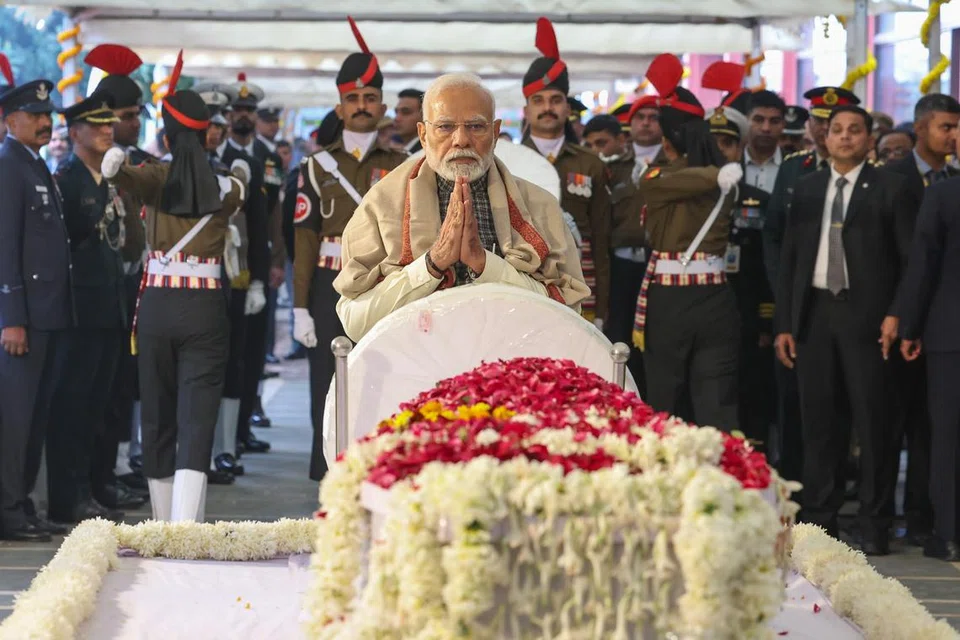
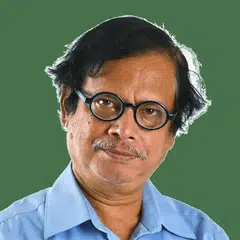

Former Indian prime minister Manmohan Singh, who died at the end of last year, was the man of a very difficult moment for India, but his legacy reaches well beyond his times.
The year 1991, when Dr Singh became finance minister, was a make-or-break one in contemporary India. The country was literally facing the precipice of economic collapse, a parlous state of affairs demonstrated by its foreign exchange reserves being sufficient to cover only a few weeks of essential imports.
The crisis had resulted from a balance-of-payments deficit, but its structural causes pointed to deeper systemic faults: the limits of the Permit Raj and other protectionist ills that were associated with India’s mixed economy.
The mixed economy had undoubtedly served India well by protecting its economic autonomy in earlier times. But shielding India from the world, in the form of both investments and competition, would not serve a national purpose any more because all that it did was to protect a politically privileged class of Indian capitalists while leaving the vast masses vulnerable to economic under-performance and hence unemployment and reduced purchasing power.
Dr Singh introduced economic reforms that liberalised the economy and opened it to the world. That transformed both India and the world.
Indians benefited from the global market that could provide them with better goods and services than their domestic economy, and the world benefited from the entry of an economic power that could follow in the early footsteps of China’s opening-up to the world. Together, “Chindia” could and did much to provide fresh ballast to the global economy, which faced stagnation in the advanced market democracies.
Dr Singh did not have an easy time. I remember my leftist friends in India denouncing him for having paved the way for a new takeover of India by a reinvented East India Company (which had facilitated the British military conquest of the country through its trade policies in the 18th century).
I pleaded with them: Dr Singh, a distinguished economist, is well-versed in the ways of evil imperialists/capitalists to know how to block them. Give him a chance, I said. The East India Company will not be back, in British or American or any other form.
It is not back. That, to me, is Dr Singh’s key nationalist achievement. He opened up India to the world without selling off the family assets.
Today, the new India that he set in motion is a substantial economy. It has achieved this new global role without having sacrificed its democratic character.
India’s democratic fabric comes under strain occasionally, but the system survives. It is that survival which underlines India’s rise to global powerhood, one baby Manmohan Singh step at a time.
Dr Singh was less successful as India’s prime minister from 2004 to 2014, not least because the actual power in his ruling Congress party lay with someone else. He was but the economic poster boy who now had a political face as well.
Yet, even as prime minister in a government wracked by inefficiency and corruption, he remained above controversy. Morally incapable of corruption, cerebrally incapable of poor thinking or inefficiency, Dr Singh represented India at its best.
Thank you, Dr Manmohan Singh.
Mortals come and go. What remains is “Sat Sri Akal” (a clarion call given by the 10th Sikh Guru Gobind Singh that God and Truth are the same thing).