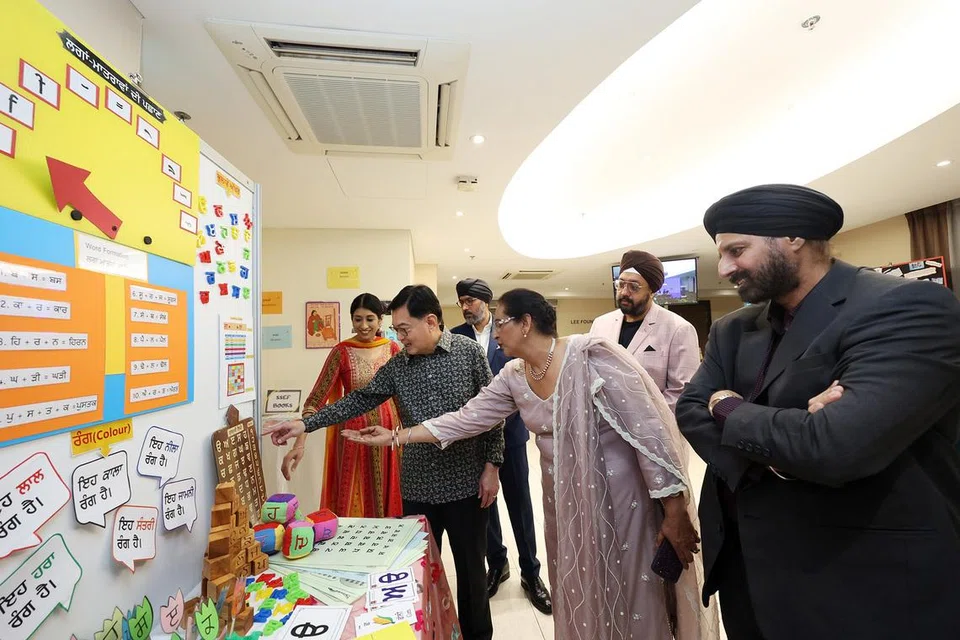
An ancient Indo-Aryan language is being taught in Singapore through modern day technology. That language is Punjabi and it is taught to around 500 students annually through classes conducted by the Singapore Sikh Education Foundation (SSEF).
The non-profit organisation oversees the SSEF Punjabi School, which teaches students from the primary level to A-levels, and the SSEF Kindergarten that caters to students aged three to six.
In her welcome address at SSEF’s 35th anniversary event last Saturday, chairperson Gurdial Kaur elaborated on the organisation’s pivot to embracing technology during the pandemic, when mainstream schools shifted to home-based learning.
Within two weeks of school closures, SSEF established an online Learning Management System (LMS) using an open source platform to ensure structured lesson delivery.
Teachers had to rapidly embrace new digital platforms by self-taping video lessons that were compiled into Google Slides and systematically uploaded to the LMS. They used Google Meet to conduct face-to-face lessons.
They kept students engaged through interactive elements – gamified spelling, grammar quizzes and storytelling videos – with the aim of increasing students’ exposure to Punjabi narratives while making the learning process more fun and immersive.
“While some students took time to adjust, many found the flexibility and accessibility of digital learning beneficial, allowing them to revisit lessons at their own pace,” said Madam Kaur.
The Singapore Indian Development Association (Sinda) stepped in to aid the SSEF as well as various community groups such as the Sikh Welfare Council to fund the necessary devices and management of the LMS. This support ensured students had access to digital resources.
“This experience reinforced the understanding that technology must not only be seen as a temporary solution but as an essential long-term tool to enhance education,” SSEF said in their 35th Anniversary publication.
Punjabi language classes are currently held every Saturday at two weekend centres: Xinghua Primary School (SSEF Punjabi School) and the Singapore Khalsa Association (SSEF Kindergarten). SSEF is working with the Board for the Teaching and Testing of South Asian Languages to introduce a new LMS portal so that future classes can adopt a hybrid model of in-person sessions and e-learning. The school’s curriculum has also evolved from relying solely on photocopied worksheets to developing a comprehensive syllabus that includes its own textbooks, detailed lesson plans and workbooks.
In his speech, Deputy Prime Minister Heng Swee Keat, the event’s guest-of-honour, emphasised the importance of a bilingual education and its role in strengthening multiculturalism in Singapore.
He had also penned the foreword for SSEF’s 35th Anniversary publication, in which he commended the organisation’s dedication to providing high-quality and accessible Punjabi education in Singapore and its foresight in embracing digital transformation.
Sakti Singaravelu