
India has set its sights on an ambitious new chapter in space exploration, with the government approving a historic allocation of US$2.7 billion ($3.6 billion) to fund a series of pioneering projects.
These plans aim to propel the country’s space programme to new heights, encompassing the next phase of lunar exploration, an orbiter mission to Venus, the construction of the country’s maiden space station and the development of a reusable, heavy-lift rocket for satellite launches, reported the BBC.
This funding is the largest single allocation India’s space programme has received. However, experts say this is far from extravagant, given the scale and complexity of these ventures.
Instead, it highlights the cost-effectiveness that has become a hallmark of the Indian Space Research Organisation’s (Isro) approach, drawing global admiration for achieving high-impact results on a modest budget.
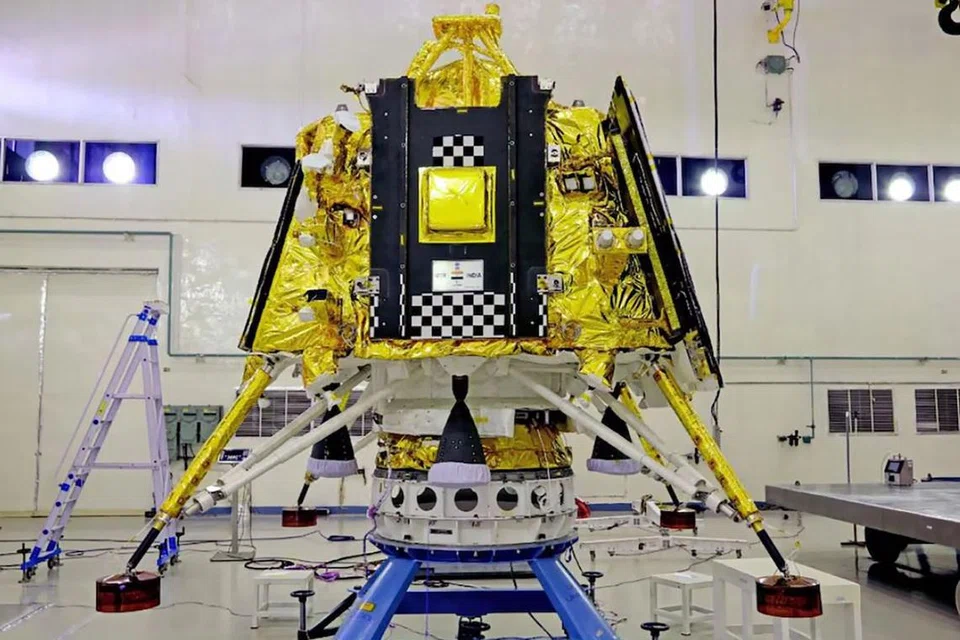
Isro’s thrifty yet groundbreaking missions have often left the world astonished. Its Mars orbiter Mangalyaan cost just $98 million, while last year’s Chandrayaan-3 Moon mission required only $99 million – both significantly cheaper than Hollywood’s $133 million sci-fi thriller Gravity (2013).
In comparison, United States space agency Nasa’s Maven Mars orbiter cost $775 million, and Russia’s Luna-25, which crashed two days before Chandrayaan-3’s successful landing, cost $177 million.
India’s economical achievements are rooted in a philosophy dating back to the 1960s, when Dr Vikram Sarabhai, the visionary behind Isro, convinced the government that a space programme could serve the needs of a young, resource-strapped India. His vision laid the groundwork for a programme that would do more with less – a principle that has fuelled Isro’s growth since.
Retired civil servant Sisir Kumar Das, who managed Isro’s finances for more than 20 years, traces Isro’s lean ethos back to its inception. “In the 1960s, scientists worked with bicycles and bullock carts to transport rockets,” he told the BBC.
Dr Sarabhai had to convince the government that a space programme was not just a sophisticated luxury.
“He explained that satellites could help India serve its citizens better,” Mr Das said.
India’s space programme has long thrived on resourcefulness. Photographs from the early years show scientists transporting rockets on cycles. Today, Isro’s budget remains a fraction of Nasa’s with $2.06 billion allocated this year, compared to Nasa’s $33 billion.
Mr Das attributed Isro’s low costs to its reliance on indigenously developed technology, a strategy that emerged after international sanctions following India’s first nuclear test in 1974. This embargo spurred Indian scientists to create home-grown technology, avoiding the high costs of imports.
“It was a blessing in disguise. Our scientists developed everything locally, which kept costs low and innovation high,” he said.
Dr Mylswamy Annadurai, who led India’s Moon and Mars missions, said Isro’s budget constraints often “force us to innovate”.
“Our teams are small, dedicated and work extended hours without overtime because of their commitment,” he said.