


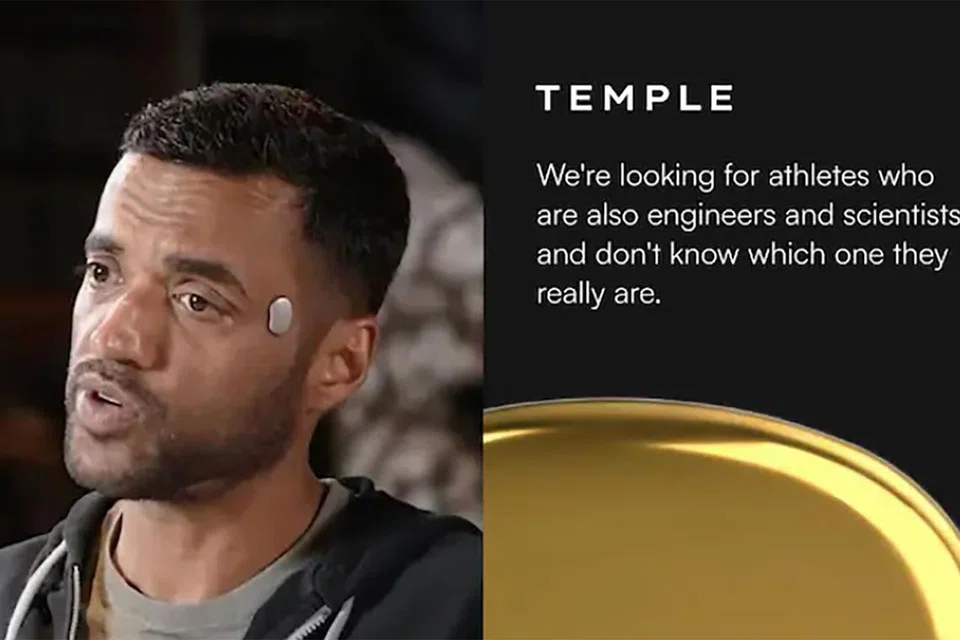
Zomato founder Deepinder Goyal has stirred debate online after announcing an unusual hiring criterion for his health-tech startup Temple: applicants must meet strict body-fat limits.
In a post on X, Mr Goyal said Temple is recruiting engineers for several advanced technology roles, including machine learning specialists, neural decoding researchers, embedded systems engineers and computational neuroscientists. However, he added that candidates should have less than 16 per cent body fat for men and 26 per cent for women to be eligible.
Temple is currently developing a wearable device aimed at elite athletes, reported NDTV. According to Mr Goyal, the experimental device is designed to measure brain blood flow in real time and continuously, something he says existing wearables cannot do with similar precision.
“At Temple, we are building the ultimate wearable for elite performance athletes – a device that measures what no other wearable in the world measures,” Mr Goyal wrote. “We are building for people who push their bodies to the edge. We want to be those people, not just serve them.”
He said the startup is looking for engineers who are not only technically skilled but also serious about fitness, ideally people who would personally test the device while helping refine it. Candidates who currently do not meet the body-fat criteria can still apply, but would remain on probation for three months until they reach the target.
The hiring announcement quickly went viral on social media, drawing mixed reactions, reported The Times of India. Some users praised Mr Goyal’s emphasis on performance and discipline, while others questioned whether body-fat percentage should be a recruitment filter for engineering roles.
“I don’t think there exists an embedded systems engineer with less than 16 per cent body fat,” one user joked, while another quipped: “We got body-fat hiring criteria before GTA 6.”
Temple itself grew out of Mr Goyal’s personal interest in health optimisation. Over the years, he has experimented with tracking blood markers, fasting routines, meditation and other longevity practices.
The startup’s wearable device, currently in the prototype stage, aims to explore whether monitoring long-term brain blood flow could help better understand ageing and human performance.
