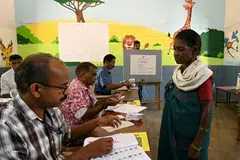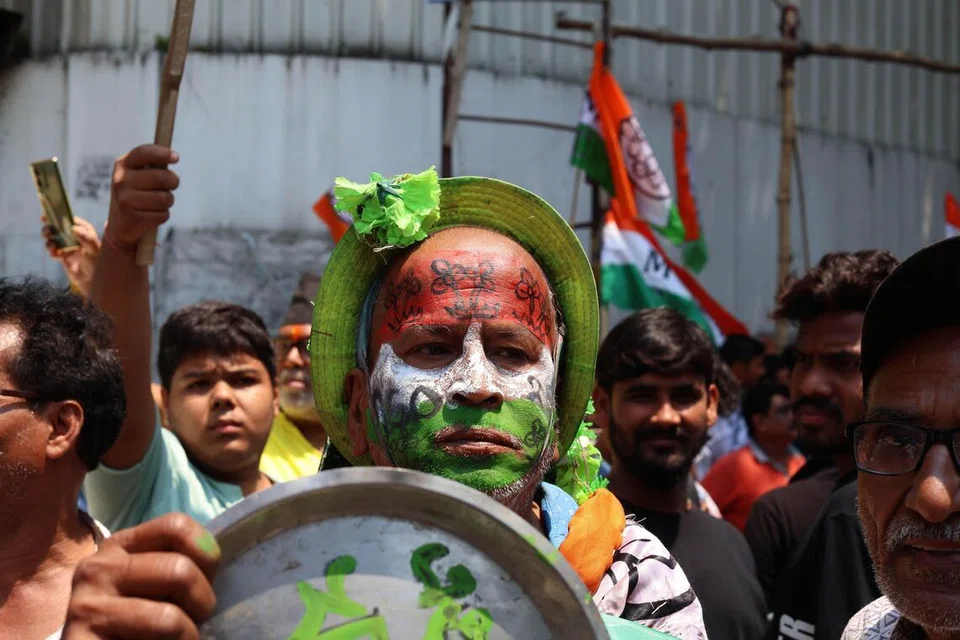
West Bengal’s Assembly election campaign has been overshadowed by a fierce row over the Special Intensive Revision (SIR) of electoral rolls, after the Election Commission of India said about 9 million names were deleted from the State’s voter list, including around 2.71 million people removed after adjudication under the contested “logical discrepancy” category.
The revision comes just ahead of the two-phase Assembly polls on April 23 and April 29, with results due on May 4, reported the Times of India.
The Election Commission has defended the exercise as a clean-up meant to remove duplicate, outdated or ineligible entries and ensure what Chief Election Commissioner Gyanesh Kumar has called a “pure electoral roll”, with no eligible voter excluded and no ineligible person included.
Election officials have said Bengal is the only state in India where an added layer of adjudication followed the SIR, after millions of records were flagged for discrepancies such as mismatches in names, titles or age.
According to figures reported from the revised rolls, roughly 6 million names were kept under adjudication, and nearly 45 per cent of those cases were eventually found ineligible.
Murshidabad district recorded the highest number of deletions under the “logical discrepancy” category, while Nadia saw the highest rejection rate by percentage. Other districts with large numbers of deletions included North 24 Parganas, Malda, South 24 Parganas and Purba Bardhaman.
The immediate consequence is that many people with unresolved appeals will not be able to vote in the first phase because the rolls have already been frozen, noted the BBC.
The Supreme Court has said those with pending appeals against exclusion cannot vote for now, even as it raised concerns about the process and the timing of the exercise so close to the election.
The court has also stressed the need for a robust appellate procedure, while tribunals set up to hear challenges are still becoming fully operational.
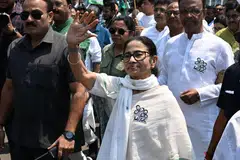
That legal and administrative limbo has turned the issue into one of the most explosive themes of the campaign. Chief Minister Mamata Banerjee and the ruling Trinamool Congress have accused the Election Commission of selectively targeting Muslims, Matuas and other vulnerable groups in order to help the rival Bharatiya Janata Party electorally, reported the Times of India.
Ms Banerjee has publicly alleged that names were “handpicked” for deletion in districts such as Murshidabad, Malda, North 24 Parganas, South 24 Parganas and Nadia, and has promised legal support for those approaching tribunals.
The BJP has rejected those charges. Union minister and senior BJP leader Sukanta Majumdar has argued that only Indian citizens should remain on the rolls and said that genuine voters who approach the tribunals will be reinstated if found eligible.
Other BJP leaders have accused the Trinamool Congress of encouraging bogus voting and then politicising a correction exercise that, they say, was long overdue. The party’s Bengal campaign has also foregrounded border infiltration as a major issue, including in its election manifesto.
Independent experts and political observers, however, say the scale and timing of the deletions have raised serious democratic concerns.
The Hindu newspaper, in an explainer, said the SIR had created a “trust deficit” between the constitutional poll body and the elected state government.
Political scientist Sibaji Pratim Basu told the BBC that there was no precedent for an election being conducted with so many voting rights still under suspension, while anthropologist Mukulika Banerjee said that denying people the vote also strips them of a deeply meaningful form of public voice.
On the ground, the controversy has produced both fear and anger, reported the BBC. Families in border districts such as Murshidabad, Malda, Nadia and North 24 Parganas have been left scrambling for documents and waiting for tribunal relief, while opposition parties argue that the revision could materially affect outcomes in closely fought seats.
The Election Commission, for its part, says the appellate mechanism will soon be fully functional. But with polling about to begin, the political damage is already done.
In West Bengal, the battle is no longer only over who will govern the state, but also over who gets to remain on the voter list long enough to help decide it.