In a dramatic political shift in Venezuela, the removal and capture of President Nicolás Maduro has unexpectedly spotlighted a long-standing spiritual connection between the country’s leadership and India’s spiritual guru Sathya Sai Baba.
Both Mr Maduro and his interim successor, Delcy Rodríguez, have maintained deep personal ties to the Indian spiritual legacy, highlighting a unique Indo-Venezuelan relationship rooted not in politics or trade but in faith.
Mr Maduro, long known for his socialist rhetoric and defiance of the West, has quietly harboured a spiritual devotion that few outside Venezuela were aware of.
Introduced to Sathya Sai Baba’s teachings by his wife, Cilia Flores, before their marriage, Mr Maduro found solace in the philosophy of the Indian guru, known for promoting love, peace, and service to humanity.
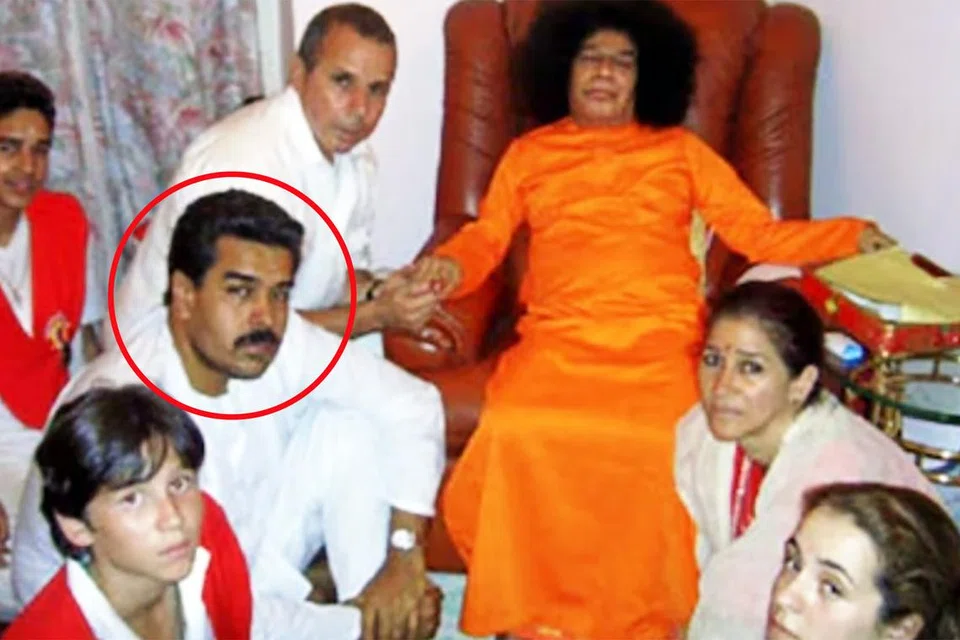
In 2005, the couple made a pilgrimage to Prasanthi Nilayam, Sai Baba’s ashram in Puttaparthi, Andhra Pradesh. A photograph from the visit shows a young Mr Maduro and Mrs Flores seated on the floor before the spiritual master – a moment Maduro later described as transformative.
After Sai Baba’s death in 2011, Mr Maduro, then Venezuela’s foreign minister, advocated for an official condolence motion. The National Assembly passed a resolution and declared a day of national mourning – a first for any Latin American country in honour of the Indian guru.
Sai Baba’s portrait was said to hang prominently in Mr Maduro’s Miraflores Palace office, alongside revolutionaries like Simón Bolívar and Hugo Chávez.
Despite expelling many foreign institutions during his rule, Mr Maduro ensured that the Sathya Sai Organisation continued to operate in Venezuela, where it had been present since 1974 and remains one of Latin America’s largest Sai communities.
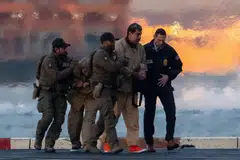
Even in the final months before his capture by US forces in November 2025, Mr Maduro broke from political messaging to mark Sai Baba’s 100th birth anniversary. “I always remember him when we met… May the wisdom of this great teacher continue to enlighten us,” he said in a public statement, calling the guru a “being of light”.
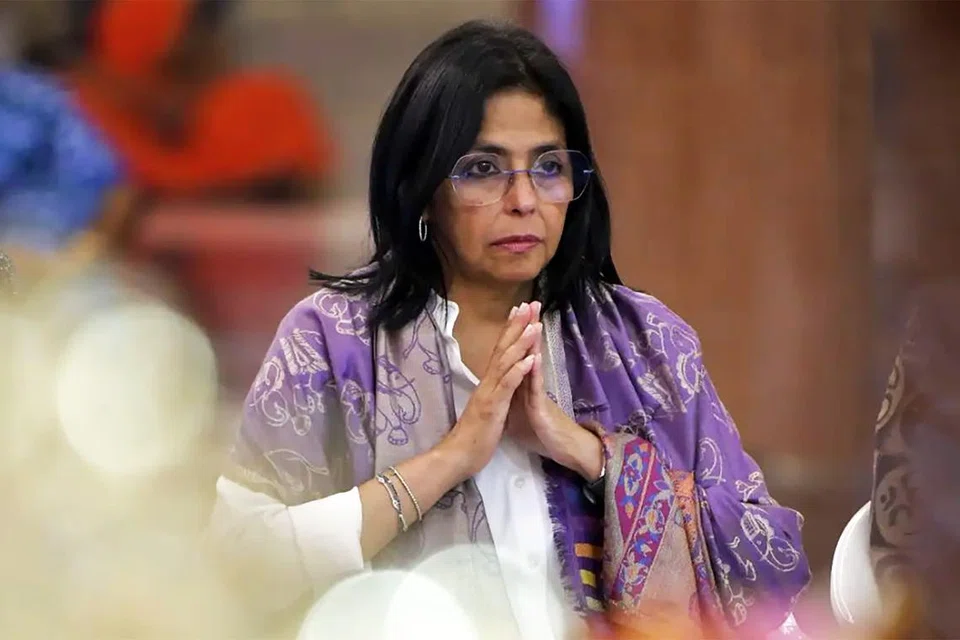
Mr Maduro’s spiritual leanings appear to have found continuity in his successor. Ms Rodríguez, Venezuela’s former vice-president and now interim president following Mr Maduro’s detention, also shares a deep personal connection with Sathya Sai Baba. Her spiritual devotion has been evident in multiple personal visits to the Puttaparthi ashram over the years.
Ms Rodríguez first visited Prasanthi Nilayam in 2019 and returned in August 2023 and October 2024 – often accompanied by Venezuelan Ambassador, Capaya Rodríguez, and other ministers.
A video by the Sri Sathya Sai Media Centre from August 2023 documents her visit during a break from the G20 Summit, where she paid homage at Sai Baba’s memorial and spoke of the serenity and spiritual grounding she experienced at the ashram.
Her October 2024 visit followed the BRICS Summit in Kazan, Russia, during which she met Indian Vice-President Jagdeep Dhankhar before making a private spiritual detour to Puttaparthi.
On each visit, she was welcomed by Mr RJ Ratnakar, managing trustee of the Sathya Sai Central Trust. Though the Trust has refrained from commenting on individual devotees, insiders confirm Ms Rodriguez’s regular and sincere engagement with the Sai Baba community.
Ms Rodríguez’s ascent to the presidency amid Venezuela’s political upheaval reinforces a unique pattern –both she and her predecessor share a spiritual kinship with India, rooted in the teachings of Sai Baba.
While their political ideologies may be shaped by socialism and Latin American revolutionary tradition, their private lives have been profoundly influenced by Indian spiritual thought.
In 2024, the Venezuelan government – under Mr Maduro’s leadership – sent out National Day invitations bearing the “Om” symbol, a move that signalled the extent of Indian spiritual influence in official state imagery. It was a striking gesture at a time when the country remained diplomatically isolated but spiritually connected to India.
The Sri Sathya Sai Organisation has quietly continued to flourish in Venezuela, even as economic collapse and political instability rocked the nation.
With over five decades of presence, Sai Baba’s message of selfless service has been adopted in community initiatives and spiritual events across the country.