India’s government has pledged sweeping reforms to the country’s examination system as it faces mounting pressure from a rapidly expanding student protest movement that has emerged as one of the biggest political challenges to Prime Minister Narendra Modi’s administration.
Education Minister Dharmendra Pradhan said the government remained committed to addressing students’ concerns over examination irregularities, marking his first public comments since nationwide protests erupted over the alleged leak of medical entrance examination papers that affected more than two million candidates.
“Our government remains 100 per cent committed to discussing NEET and addressing every genuine concern of our youth on the floor of the house,” Mr Pradhan said in a post on X on July 21. He added that students deserved “answers, reforms and accountability” rather than political point-scoring.
His remarks came a day after Prime Minister Narendra Modi also broke his silence on the issue, calling for a “foolproof” public examination system and vowing that those responsible for examination leaks would face strict punishment.
According to Reuters, Mr Modi told lawmakers that the government had acted immediately after irregularities were detected, with 13 people arrested, and stressed that stronger safeguards were needed to protect students’ futures.
The government’s response follows days of escalating demonstrations led by the self-styled Cockroach Janta Party (CJP), a youth movement that began as an online satire before evolving into a nationwide campaign demanding Mr Pradhan’s resignation and comprehensive reforms to India’s examination system.
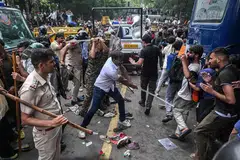
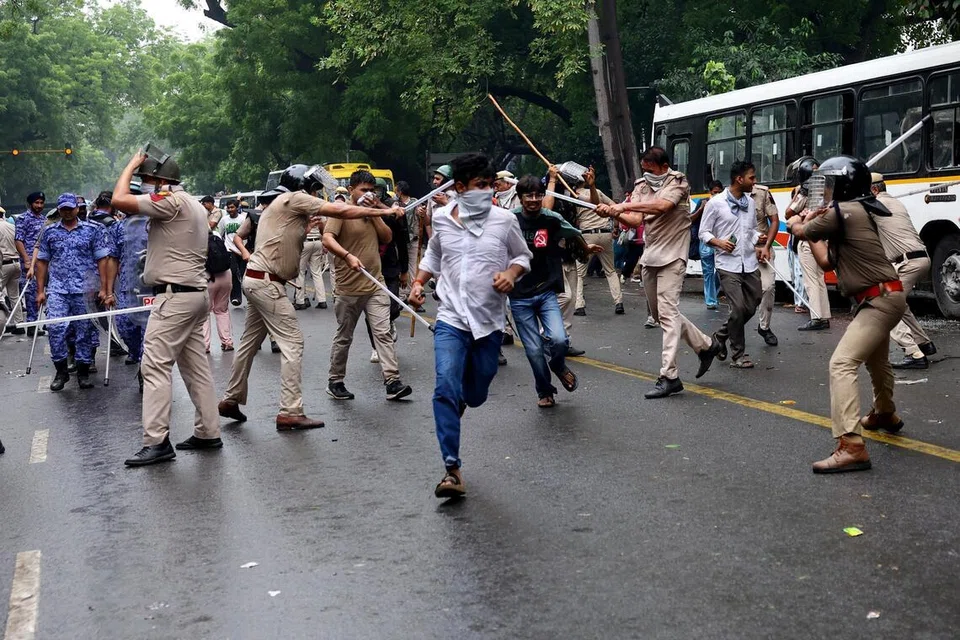
Tens of thousands of protesters marched through New Delhi on July 20, clashing with police who used tear gas and batons to disperse crowds. Police said about 60 protesters and 118 security personnel were injured, although movement leaders claimed the number of injured demonstrators was significantly higher.
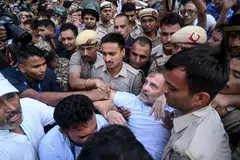
The protests have since gathered political momentum. Congress leader Rahul Gandhi and his sister Priyanka staged a sit-in outside the gates leading to Mr Modi’s residence on July 21, demanding accountability for the police crackdown and a parliamentary debate on the crisis. They were detained by police before being released later that night.
Mr Gandhi questioned why examination papers continued to leak, why education had become increasingly expensive and why many families were pushed into severe financial hardship to educate their children. He also called on the Prime Minister to apologise for the police action and begin reforms without delay.
Separately, Health Minister J.P. Nadda held the government’s first formal discussions with CJP leaders and later visited injured protesters in hospital, signalling an effort by the administration to engage directly with demonstrators, reported AFP. Protest leaders said they would suspend further marches towards Parliament to avoid additional violence but vowed to continue their campaign until their demands were addressed.
The movement has gained additional visibility through the support of activist Sonam Wangchuk, whose hunger strike over the issue drew nationwide attention before he was hospitalised following police intervention.
Analysts say the unrest reflects broader frustrations among India’s youth over recurring examination leaks, limited employment opportunities and declining confidence in public institutions.
AFP reported that opposition parties now see the movement as a rare opportunity to reconnect with younger voters, although observers have cautioned that political involvement could risk overshadowing the students’ original demands for transparent examinations and lasting education reforms.