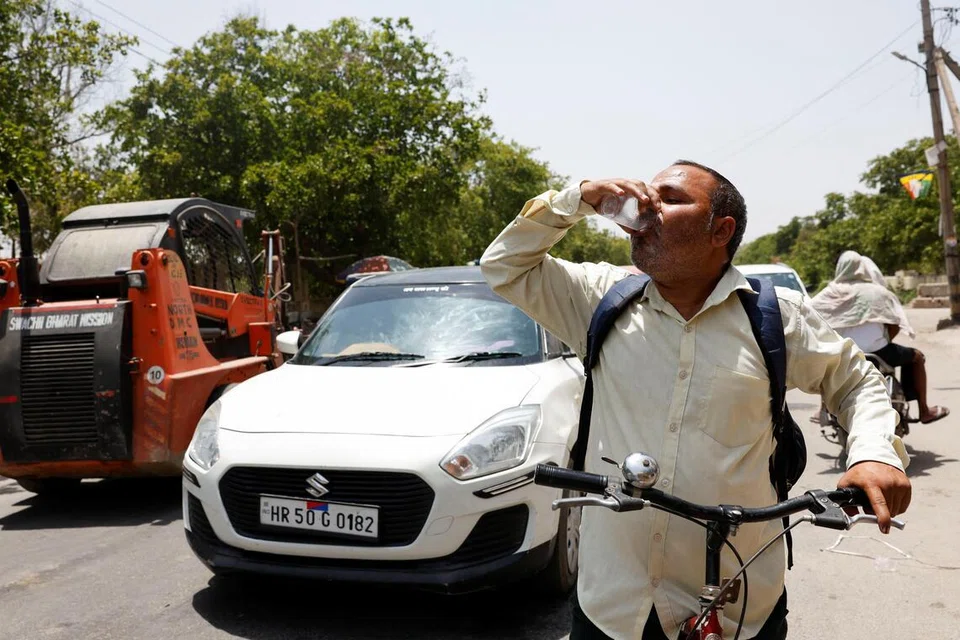

A temperature reading collected in Delhi on Wednesday may have broken the national record as India grapples with a blistering heat wave.
The reading – 52.9 deg C – was preliminary and needed verification, officials said. But, if confirmed, it would be the highest temperature ever registered anywhere in India, beating the 51 deg C recorded at Phalodi in Rajasthan in May 2016.
The reading came from a substation in Mungeshpur, a Delhi neighborhood, reported Reuters. The Indian Meteorological Department (IMD) said the reading could be due to a sensor issue or some other error, and that it would examine the data and the sensor.
Amid the heat wave, where temperatures have crossed 49 deg C, people in Delhi as well as the northern states of Punjab, Haryana, Rajasthan, Madhya Pradesh and Uttar Pradesh were advised to avoid heat exposure. A “red” weather alert was issued by the IMD on Tuesday and Wednesday.
The red alert, designating “heat wave to severe heat wave” conditions, urged people to keep cool and stay hydrated, as at least three deaths were reported, according to the BBC.
Temperatures soared outside Delhi too. On Tuesday, it was 50.5 deg C in an area around a substation in Rajasthan, a desert state that in the past has recorded some of India’s highest temperatures. Another substation in the city of Sirsa, which is further north, came up with a similar reading on Tuesday – 50.3 deg C.
Heat waves are most common in India during this time of the year – March until June with a peak in May. But heat waves in the region have been especially treacherous recently.
In April, hundreds of people across Asia died as a result of extremely high temperatures, especially in India, Bangladesh and Thailand. The weather damaged crops and forced school closures.
The World Weather Attribution said this month that climate change amplified the strong heat wave to make it especially severe.
Mr Raghu Murtugudde, a climate scientist at the Indian Institute of Technology Mumbai, told CBS News that El Nino (a climate pattern that describes the unusual warming of surface waters) may have played a role as well.
“I think it’s a mix of El Nino, global warming and the seasonality,” he said. “El Nino is transitioning to La Nina. This is the time when the maximum warming happens towards the Indian Ocean. So, all these things are basically adding steroids to the weather.”