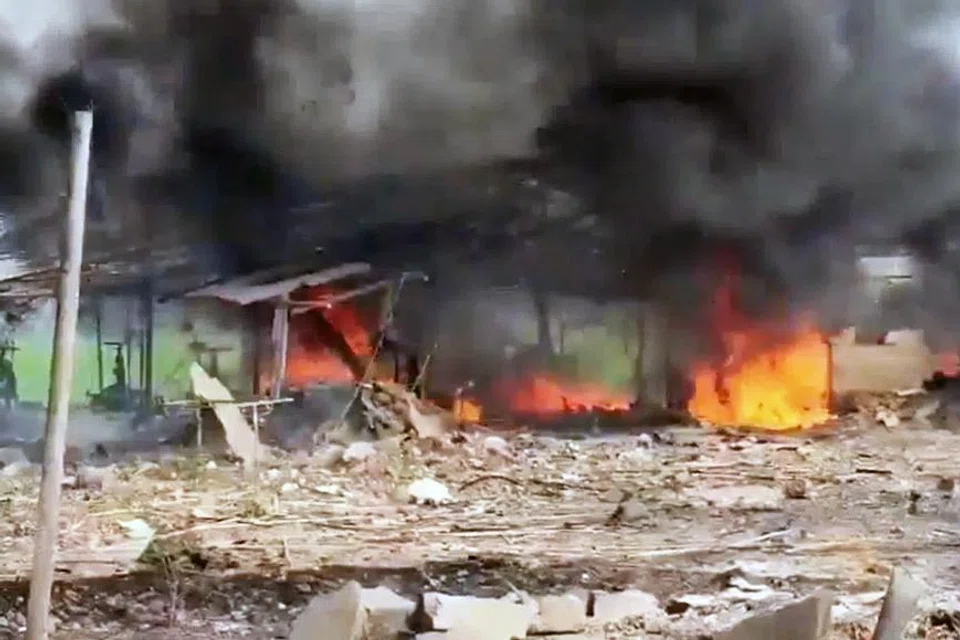

At least 38 people have been killed and dozens injured in two major firecracker factory explosions in southern India within three days, once again raising concerns over safety standards in the country’s fireworks industry.
The first incident occurred on April 19 in the Virudhunagar district of Tamil Nadu, a hub of India’s firecracker production.
An explosion at a factory killed at least 25 workers, many of them women, even though the unit was officially closed that day, reported The Indian Express.
Authorities said around 50 people were present inside when the blast occurred, followed by a secondary explosion that injured rescue personnel.
Investigations are under way, with the factory owner and foreman reportedly absconding.
Just two days later, on April 21, a second explosion struck a fireworks assembly unit in Thrissur district of Kerala, killing at least 13 people and injuring several others, including five critically.
Workers were preparing fireworks for the annual Thrissur Pooram when multiple blasts ripped through temporary sheds. The explosions were so powerful that nearby residents mistook them for an earthquake.
Rescue efforts in both incidents were hampered by continuing explosions and poor access to the sites. In Kerala, narrow roads and the presence of highly volatile materials slowed emergency response, while in Tamil Nadu, firecrackers stored inside the factory kept igniting during rescue operations.
Such accidents are not uncommon in India, particularly in and around Sivakasi in Tamil Nadu, which produces a significant portion of the country’s fireworks, reported the BBC.
Experts point to a combination of systemic issues behind the recurring tragedies.
Firecracker manufacturing involves highly combustible chemicals that are often handled in cramped, low-cost setups where even a minor spark can trigger catastrophic blasts.
Despite regulations under the Explosives Rules, safety norms are frequently flouted – including storing large quantities of explosives together, inadequate separation of work areas, and lack of protective infrastructure.
The largely informal nature of the industry further complicates enforcement. During peak demand periods linked to festivals, weddings and celebrations, production intensifies, often leading to corners being cut on safety.
Investigations into past disasters, including the 2016 Puttingal temple tragedy in Kerala that killed over 100 people, have repeatedly highlighted weak compliance and oversight.
Officials have ordered inquiries into both recent incidents. Prime Minister Narendra Modi announced compensation for victims, while state governments in Tamil Nadu and Kerala have pledged assistance and stricter monitoring.