Tamil Nadu heads to the polls on April 23 to elect all 234 members of the state Assembly, with counting scheduled for May 4.
The contest is still centred on the familiar rivalry between the ruling Dravida Munnetra Kazhagam (DMK)-led alliance and the All India Anna Dravida Munnetra Kazhagam (AIADMK)-led front, but this election is more complicated than usual because of actor Vijay’s Tamilaga Vettri Kazhagam (TVK) and the possibility of vote-splitting across regions and age groups.
Chief Minister M.K. Stalin’s DMK is seeking a rare second consecutive term by leaning on welfare delivery, alliance management and the “Dravidian model” narrative, while also sharpening its attacks on the Bharatiya Janata Party (BJP) over issues such as Hindi imposition and delimitation.
Mr Stalin has publicly projected confidence, with the DMK allies also claiming the front can cross 200 seats.
On the other side, AIADMK chief Edappadi K. Palaniswami is trying to turn anti-incumbency into votes by focusing on governance failures, rural distress, and the cost of living.
At the same time, the AIADMK has repeatedly stressed that its alliance with the BJP is “electoral, not ideological”, an effort to shake off the charge that it has become the BJP’s junior partner in the state.
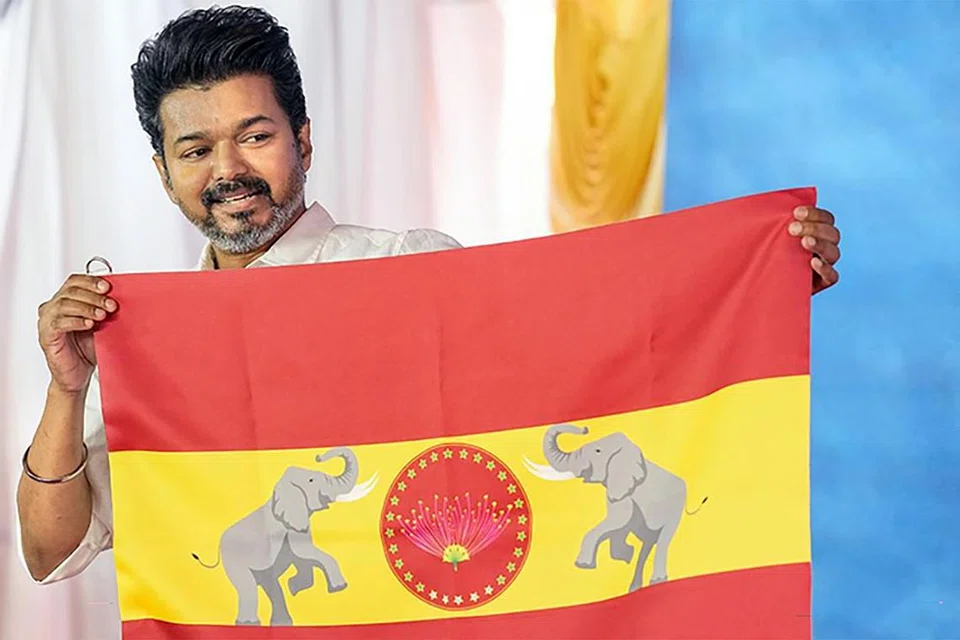
The biggest uncertainty is Vijay. His party is contesting its first election, and while TVK’s organisational weakness on the ground is visible compared with the DMK and AIADMK machines, his personal appeal – especially among younger voters – has made him the election’s clearest X-factor.
Analysts and party leaders across the spectrum now openly discuss the likelihood that TVK will cut into votes that would otherwise have gone to one of the two big alliances.
The opinion polls underline that uncertainty. A Lok Poll survey published by The Economic Times projected a comfortable DMK-led win, giving the alliance 181-189 seats with a 40.1 per cent vote share, while the AIADMK-led bloc was projected at 38-42 seats and TVK at 8-10 seats.
But CNN-News18’s Vote Tracker, based on VoteVibe data, suggested a much tighter race, with AIADMK at 41 per cent vote share against the DMK’s 39 per cent, indicating that the election may be closer than earlier projections suggested.
So what should one expect? The safest reading is that this is still fundamentally a DMK-versus-AIADMK election, but not a simple two-cornered one. If Vijay mainly splits anti-DMK votes, the ruling alliance benefits. If he cuts into urban youth and minority support that has recently favoured the DMK, the contest tightens.
In that sense, Tamil Nadu’s 2026 election may be decided less by sweeping statewide sentiment than by who loses fewer votes to Vijay.