
The world’s two largest democracies, long described as strategic partners, are now locked in one of their fiercest trade battles.
On Aug 27, United States President Donald Trump’s new 50 per cent tariff regime on Indian goods came into effect, doubling existing duties and shaking the foundations of a fast-growing economic relationship.
Mr Trump’s move stems from his ire over India’s purchases of Russian oil, a policy Washington argues undercuts efforts to isolate Moscow in its war against Ukraine.
To punish New Delhi, the White House added a new 25 per cent “penalty tariff” to an existing 25 per cent duty on a wide swathe of Indian products.
The outcome is staggering: garments, gems and jewellery, footwear, sporting goods, chemicals, and furniture now face tariffs on par with those imposed on China and Brazil. Pharmaceuticals and computer chips remain exempt for now, though US officials warn these sectors could face separate scrutiny.
Trump celebrated the escalation with characteristic bravado, posting on Truth Social a photo of himself with an oil barrel captioned “America First” and “America is Back”.
Until recently, India and the US were negotiating an ambitious trade agreement aimed at boosting annual bilateral trade to US$500 billion by 2030. Instead, after five rounds of inconclusive talks, relations have soured.
Indian officials had lobbied for a tariff cap of 15 per cent, in line with concessions granted to other partners like Japan and South Korea. Instead, they now face some of the steepest duties in the world.
The tariffs hit India where it hurts most: labour-intensive exports that sustain millions of jobs. The gems and jewellery sector, which sends a third of its US$28.5 billion shipments to the US, faces deep disruption. Shrimp exporters, who rely on the US for over half their market, are worried of cancellations and price crashes.
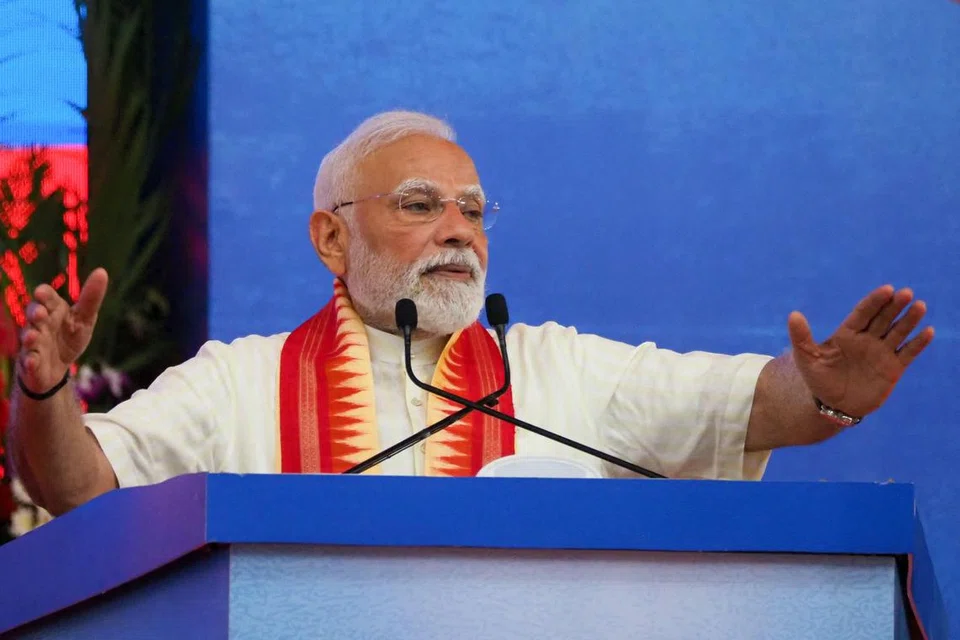
Prime Minister Narendra Modi has sought to rally confidence, vowing he would “never compromise” the interests of India’s farmers and small businesses.
His government estimates the tariffs will affect US$48.2 billion worth of exports, with potential job losses across Gujarat’s diamond hub, Tamil Nadu’s textile clusters, and seafood producers along the eastern coast.
Officials say exporters will be offered financial assistance and encouraged to pivot towards alternate markets.
Former foreign secretary Harsh Vardhan Shringla stressed that India’s free trade agreements with Australia, the United Arab Emirates, and soon the European Union could absorb some of the blow.
“The strength of our relationship with the United States lies in shared values and will survive ups and downs,” he told NDTV.
Still, the mood in New Delhi is one of caution. A Commerce Ministry official, speaking anonymously, admitted: “For many small exporters, shipments to the US will simply become commercially unviable.”
The impact on India’s broader economy could be substantial. According to an SBI Research report, the tariffs could shave 0.4 to 0.5 per cent off GDP and trigger higher input-cost inflation. In the worst-case scenario, India’s trade surplus with the US could swing into deficit.
Competitors stand to gain. Tariffs on Indian goods now exceed those on rivals like China (30 per cent), Vietnam (20 per cent), and Indonesia (19 per cent), undermining New Delhi’s bid to become an alternative manufacturing hub.
According to Reuters, economists are divided on the extent of the fallout.
Kotak Mahindra Bank’s Upasna Bhardwaj warned that labour-intensive sectors could face “major disruption” and forecast a 0.2 to 0.3 per cent downside to GDP growth.
Nirmal Bank’s Teresa John estimated a 0.9 per cent of GDP hit, adding pressure on India to strike a deal.
Anand Rathi Group’s Sujan Hajra, however, struck a more optimistic tone: “Up to 2 million jobs are at risk in the near term, but India’s domestic demand is robust enough to cushion the blow.”
To offset the blow, Mr Modi has leaned into fiscal stimulus and self-reliance rhetoric. He announced sweeping reforms to India’s Goods and Services Tax (GST), aiming to simplify the system and put more disposable income in consumers’ hands.
Analysts estimate the overhaul could cost US$20 billion annually but spark a much-needed boost in consumption, which makes up 60 per cent of GDP.
“We should become self-reliant – not out of desperation, but out of pride,” Mr Modi declared at Independence Day celebrations on Aug 15, urging businesses to display “Made in India” boards. His government hopes a mix of tax handouts, lower interest rates, and rising rural demand can maintain growth momentum despite external shocks.
Markets have responded positively: Indian stocks rallied on hopes of tax cuts, and rating agency S&P Global upgraded India’s sovereign credit rating for the first time in 18 years, lowering borrowing costs, and potentially attracting new investment. But, for India, the challenge now is to walk a tightrope: resisting pressure over its ties with Moscow while keeping doors open for reconciliation with the US.
The tariff war comes at a sensitive moment. India’s growth has slowed from 8 per cent highs, unemployment is rising, and its export-driven sectors face stiff competition. Yet, as economists like Radhika Rao of DBS Bank note, the government still has room to maneuver through new trade deals, diversification of markets, and domestic demand stimulus.
Ultimately, India’s resilience will depend on how quickly it adapts to shifting global currents. The tariff storm may bruise its economy in the short term, but it has also reinforced a lesson Mr Modi is keen to repeat: no matter the external headwinds, India must chart its own path.