The Assembly elections in Tamil Nadu and West Bengal later this month are shaping up as two of India’s most closely watched political battles, with both States presenting sharply different but equally high-stakes contests.
In Tamil Nadu, the main question is whether the ruling Dravida Munnetra Kazhagam (DMK) can retain power under Chief Minister M.K. Stalin, or whether the opposition can turn anti-incumbency into a winning force in an increasingly fragmented arena.
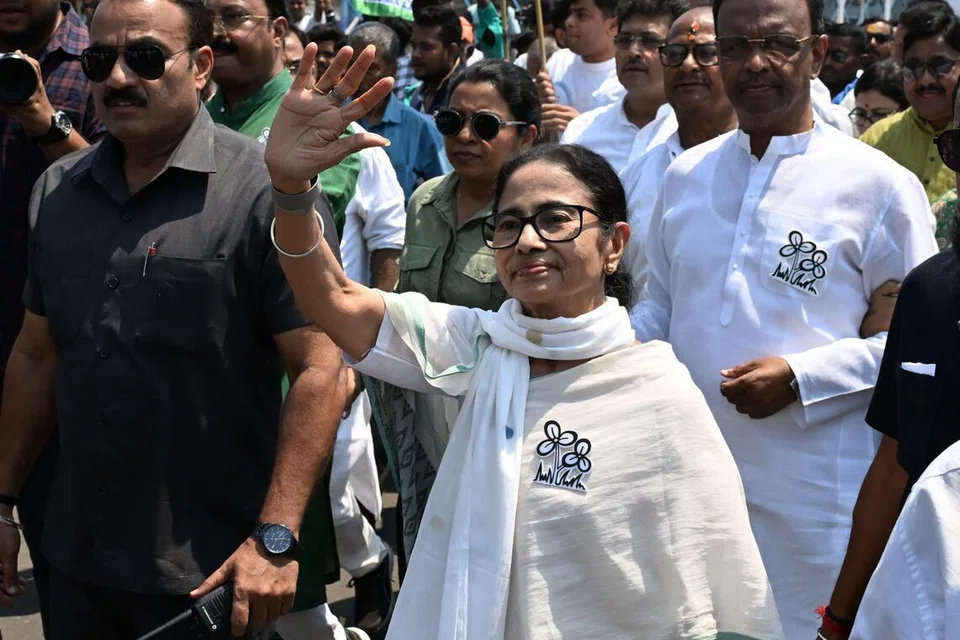
In West Bengal, Chief Minister Mamata Banerjee faces what many in her party privately describe as her toughest electoral battle yet, as the Trinamool Congress (TMC) confronts not just the Bharatiya Janata Party (BJP), but also controversy over voter roll revision and fatigue after 15 years in office.
Tamil Nadu goes to the polls on April 23, with about 5.67 crore eligible voters set to decide whether the State’s Dravidian political order can hold.
For decades, Tamil Nadu has remained one of the few major States where the BJP has failed to become a dominant force, despite making inroads elsewhere in India. That resistance has largely been built on the political language of social justice, welfare and Tamil identity, which has kept competition centred on the DMK and AIADMK.
Mr Stalin is asking voters to back his government’s “Dravidian Model”, highlighting Tamil Nadu’s strong economic performance, industrial growth and welfare measures, especially the cash transfer scheme for poor women.
The DMK is also counting on the strength of its alliance with the Congress, the Left, the Viduthalai Chiruthaigal Katchi and other smaller parties, a bloc that has remained intact through multiple elections.
But the ruling party is not without vulnerabilities. Allegations of corruption, unrest among government employees and criticism over unfulfilled promises have provided the Opposition with ample attack lines.
Former Chief Minister Edappadi K. Palaniswami, now firmly in control of the AIADMK, is leading the challenge through an alliance that includes the BJP, PMK and other regional players.
The strategy is to combine vote pockets across regions and caste bases, though the alliance has its own contradictions and must carefully manage the BJP’s ambition to expand its footprint without eating into the AIADMK’s core support.
Complicating matters further is the emergence of actor Vijay’s Tamilaga Vettri Kazhagam (TVK), which has injected new energy and uncertainty into the race.
Mr Vijay is widely seen as the X factor, with pre-poll surveys placing his party’s vote share between 15 and 20 per cent. His appeal among young voters, minorities and women has unsettled both the DMK and AIADMK camps.
If TVK pulls anti-incumbency votes away from the AIADMK-led front, it could help the DMK. But if it cuts into minority and youth support that has traditionally gone to the ruling alliance, it could hurt Stalin.
Also in the fray is Seeman’s Naam Tamilar Katchi, which has built a following among first-time voters and those disillusioned with the Dravidian majors. Vijay’s rise, however, could challenge that support base as well.
In West Bengal, polling will be held in two phases on April 23 and 29 for the 294-member Assembly, with results due on May 4. Mamata Banerjee is seeking a fourth consecutive term after leading the TMC to big victories in 2016 and 2021, including the latter under intense BJP pressure.
Yet this election appears more uncertain. Beneath the TMC’s confident public messaging, some party leaders have acknowledged pressure, particularly because of the Election Commission’s Special Intensive Revision of voter rolls.
The process has become a major flashpoint, with the TMC accusing the poll panel of targeting its voter base, especially in minority-heavy districts. Mamata and senior TMC leaders have framed the election as a battle not just against the BJP but also against what they describe as an overreaching Election Commission.
The arithmetic has added to the anxiety. In 2021, the TMC won many seats by relatively narrow margins. In the 2024 Lok Sabha polls, the number of Assembly segments where the party’s lead fell below 15,000 rose further. Any adverse swing, especially in closely fought urban and semi-urban seats, could cut significantly into the TMC’s tally.
The BJP, meanwhile, remains the only credible challenger in the state. After rising sharply since 2014, it has cemented itself as the main opposition, replacing both the Left and Congress.
Its campaign has focused on anti-incumbency, law and order, illegal immigration and allegations of institutional control by the TMC. However, Ms Mamata continues to enjoy a formidable personal advantage, aided by welfare schemes such as Lakshmir Bhandar and the party’s strong grassroots machinery.
The TMC is also hoping to retain its edge through minority consolidation, women voters and organisational depth, even as urban anger over issues such as the RG Kar hospital case and unemployment has created pockets of visible discontent.
Taken together, the Tamil Nadu and West Bengal elections offer two distinct political tests.
In Tamil Nadu, the contest will show whether a new force like Vijay’s TVK can disrupt a long-standing Dravidian duopoly. In Bengal, it will reveal whether Ms Mamata can once again overcome pressure and extend her remarkable run, or whether the BJP can finally breach one of its last major eastern frontiers.