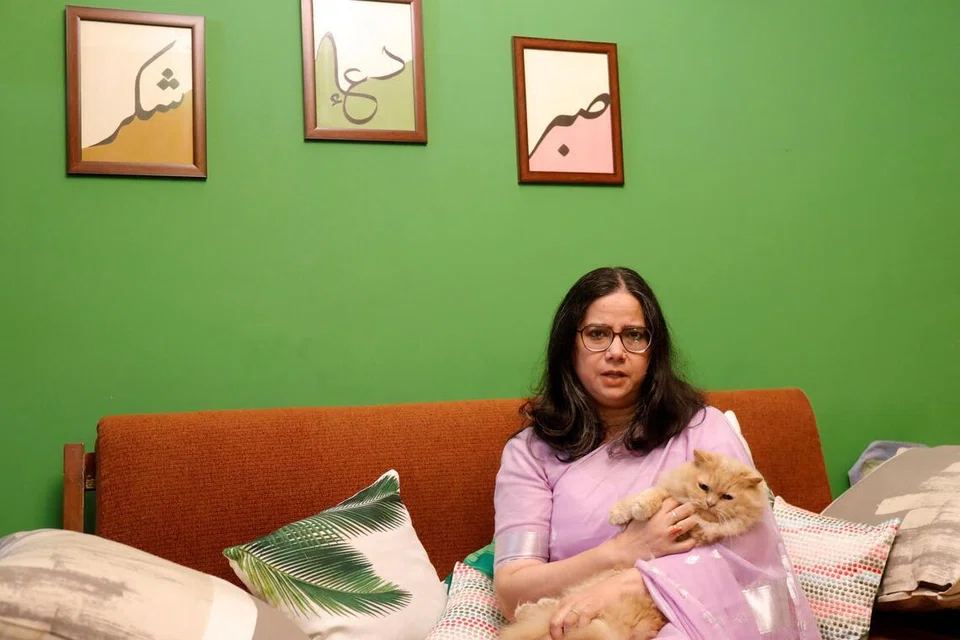

Ms Shayara Bano heaved a sigh of relief on Feb 7 at the enactment of a law banning polygamy in her state Uttarakhand, the culmination of a years-long effort, including her own case before the nation’s Supreme Court.
“I can now say that my battle against age-old Islamic rules on marriage and divorce has been won,” said Ms Bano, a Muslim woman whose husband chose to have two wives and divorced her by uttering “talaq” three times.
“Islam’s allowance for men to have two or more wives at the same time had to end.”
But Ms Sadaf Jafar did not cheer the new law, which abolishes polygamy and instant divorce, even though she has been waging her own court fight against her husband for marrying another woman without her consent.
“Polygamy is permissible in Islam under strict rules and regulations, but it is misused,” said Ms Jafar, who is seeking alimony to support their two children. She says she did not consult Islamic scholars as she hoped Indian courts would provide justice.
The adoption of the Uniform Civil Code in Uttarakhand has opened a chasm between women in India’s largest religious minority.
Some, like activist Bano, 49, celebrate the new provisions as the overdue assertion of secular law over parallel syariah rulings on marriage, divorce, inheritance, adoption and succession.
For others like Ms Jafar, Muslim politicians and Islamic scholars, it is an unwelcome stunt by Prime Minister Narendra Modi’s Bharatiya Janata Party.
Adoption of the code in Uttarakhand is expected to pave the way for other states ruled by the BJP to follow suit, over angry opposition from some leaders of the 200 million Muslims who make India the world’s third-biggest Muslim country.
BJP leaders said the new code is a major reform, rooted in India’s 1950 Constitution, that aims to modernise the country’s Muslim personal laws and guarantee complete equality for women.
A 2013 survey found that 91.7 per cent of Muslim women nationwide say a Muslim man should not be allowed to have another wife while married to the first.
Still, many Muslims accuse the BJP of pursuing a Hindu agenda that discriminates against them and imposes laws interfering with Islam. Syariah law permits Muslim men to have up to four wives, and it has no stringent rules to prohibit the marriage of minors.
Ms Jafar, who has run for office with the main opposition Congress party, calls the passage of the code a tactic of Mr Modi’s government to divert attention from pressing issues like improving the livelihood of Muslims.
In addition to the polygamy ban, the new code sets a minimum marriageable age for both genders and guarantees equal shares in ancestral property to adopted children, those born out of wedlock, and those conceived through surrogate births.
Ms Jafar, who lives with her two children in Uttar Pradesh, said: “Islam has enough provisions to provide a life of dignity. We don’t need (the code) but what we need is swift justice for women fighting for their dignity.”
Reuters