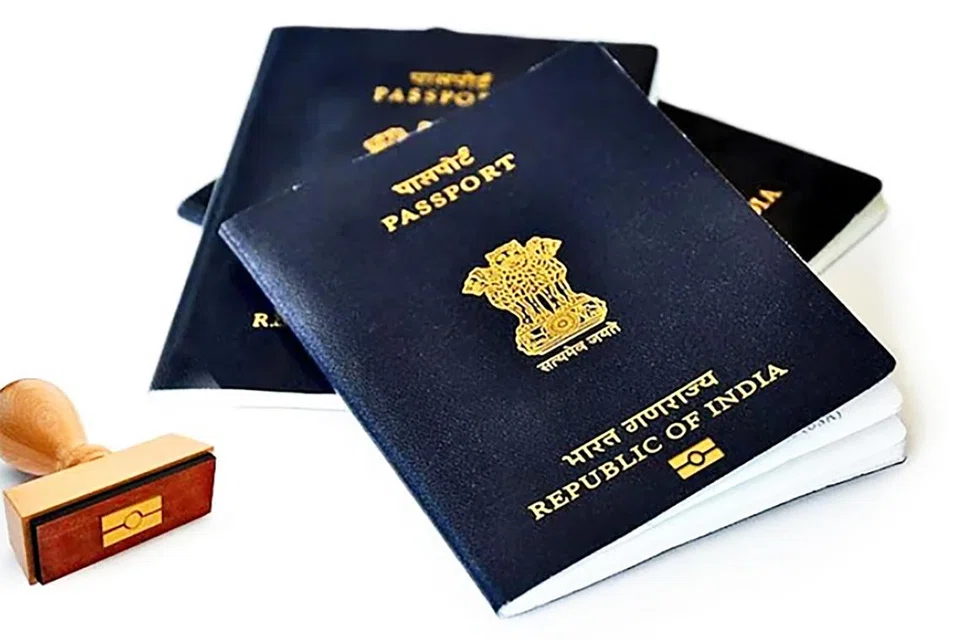
A fresh controversy over the legal status of the Indian passport has reignited a nationwide debate about how citizenship is established in India, exposing long-standing gaps in the country’s documentation system and raising concerns about potential wrongful exclusion from electoral rolls and government processes.
According to DW.com, the debate intensified after a senior official from the Ministry of External Affairs (MEA) clarified that an Indian passport is primarily a travel document and should not be regarded as conclusive proof of citizenship. Although the legal distinction is not new, the remarks have generated confusion because they coincided with the Election Commission of India’s ongoing Special Intensive Revision (SIR) of electoral rolls in states including Bihar and West Bengal.
The Election Commission says the exercise aims to remove ineligible voters, but critics argue it could disproportionately affect marginalised and minority communities. DW.com noted that members of the ruling Bharatiya Janata Party (BJP) have long alleged that undocumented migrants from Bangladesh have found their way onto India’s electoral rolls.
Legal experts interviewed by DW.com stressed that India has no single universally accepted document that conclusively establishes citizenship. Former diplomat Veena Sikri said citizenship is determined by the Ministry of Home Affairs, not the MEA, while senior lawyer Rebecca Mammen John pointed out that although passports are issued only to Indian citizens under the Passports Act, the government does not issue a separate citizenship certificate to citizens by birth.
Vice-Chancellor Faizan Mustafa of Chanakya National Law University told DW.com that the growing reliance on documentation exercises creates uncertainty for ordinary Indians. He argued that documents such as passports or voter identity cards, once issued after official verification, should ordinarily be treated as sufficient proof unless fraud is established.
NDTV reported that the controversy began during the observance of Passport Seva Divas on June 24, when an MEA official reiterated that passports facilitate international travel and establish nationality abroad, but are not intended to function as standalone citizenship certificates. The ministry maintained that this has always been the legal position under the Passports Act, 1967.
The clarification sparked widespread criticism from opposition leaders and public figures. Congress MP Shashi Tharoor reportedly described the situation as an “absurd legal paradox”, while lyricist Javed Akhtar questioned why the government would issue passports if it was not convinced applicants were Indian citizens. Shiv Sena (UBT) leader Aaditya Thackeray and other opposition politicians also questioned what document citizens could now rely upon as proof of citizenship.
NDTV reported that legal experts and former foreign secretary Nirupama Rao defended the government’s legal interpretation, noting that citizenship is governed by the Citizenship Act, 1955, while passports are regulated under the Passports Act. Ms Nirupama said that, although passports remain the world’s most authoritative practical proof of nationality, the two laws govern different legal purposes.
Meanwhile, The Times of India reported that government officials emphasised the passport has “never” been considered legal proof of citizenship and cited both the Passports Act, 1967, and a 2013 Bombay High Court judgment supporting that position. Former law secretary P.K. Malhotra told the newspaper that India should introduce a dedicated citizenship document to eliminate public confusion and reduce the risk of harassment by authorities.
The renewed debate has also revived questions surrounding earlier exercises such as the National Register of Citizens and the Citizenship Amendment Act. As DW.com noted, while millions of Indians possess passports, Aadhaar cards and voter identity cards, the country still lacks a single universally accepted document that conclusively establishes citizenship, leaving many uncertain about how they can definitively prove they belong.