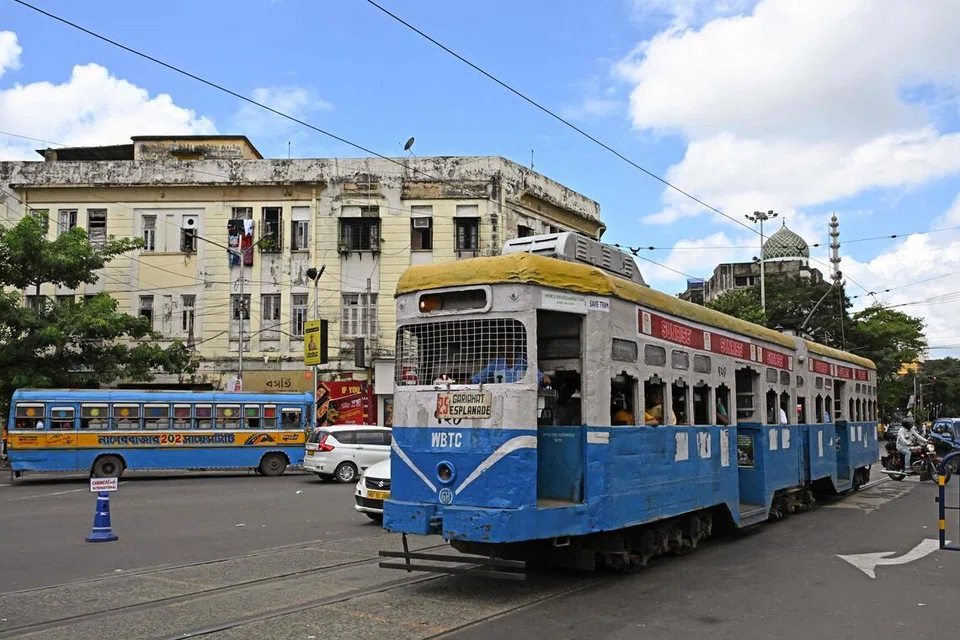
Days after reports about the West Bengal government’s announcement to discontinue Kolkata’s historic trams faced widespread criticism, a senior transport officer on Tuesday clarified that the immediate suspension of tram services is not planned, despite what has been reported by some media outlets.
Protests erupted in Kolkata after Transport Minister Snehasis Chakraborty said last week that the government was considering ending the 151-year-old tram services on most city roads, except for a 2km stretch from Maidan to Esplanade, due to traffic jams.
However, he emphasised that the matter is still under review by the Calcutta High Court, and the government will present its reasons for discontinuing the services during the hearing.
The transport official told Republic World that the minister’s comments at a press conference were informal, and no final policy decision has been made.
“Tram services are continuing along three routes in Kolkata, and we have no plans for immediate withdrawal. However, only 27 trams are operating on 12km of track, down from 100 trams on 61km in 2011,” he said.
The official explained that the reduction in tram numbers is due to a lack of spare parts for repairs. “Trams have become a white elephant, but we are not looking to withdraw them completely. We are considering rationalising services based on the current situation,” he added.
In 2011, around 70,000 people used trams daily, but today that number has dropped to about 7,000. Due to this, the state stopped investing in trams in 2018, except for heritage vehicles used for tourism.
“We have no intention to remove the trams meant for heritage purposes,” the official said.
Trams were first introduced in Kolkata in 1873 as horse-drawn carriages. Over time, they were modernised with steam engines and later electric power in 1900. For decades, trams were a crucial part of the city’s transportation and a symbol of its heritage. They have appeared in Indian cinema since the 1950s and were once so central to life in Kolkata that a small fare hike in 1953 sparked protests.
The recent announcement has sparked similar responses from tram supporters in Kolkata, who view the government’s plan to reduce tram services as an attempt to erase a key part of the city’s history.
The Calcutta Tram Users Association (CTUA) held protests at Shyambazar and is planning more demonstrations at other tram depots.
“We will not allow this to happen. Trams are here to stay,” said CTUA member Shounak Chatterjee.