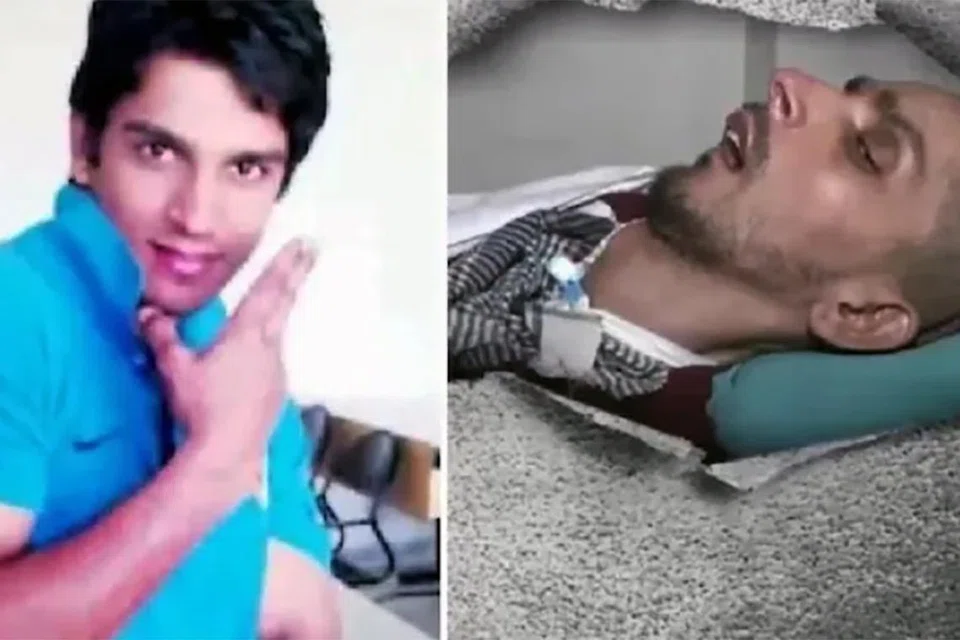
In a landmark decision, India’s Supreme Court has permitted the withdrawal of life support for a 31-year-old man who has remained in a vegetative state for more than a decade, marking the first time a court in the country has approved passive euthanasia in an individual case.
The ruling allows doctors to remove life-sustaining treatment for Mr Harish Rana, who suffered severe head injuries in 2013 after falling from a fourth-floor balcony while he was an engineering student at Punjab University in Chandigarh, reported NDTV.
Mr Rana has remained in a coma since the accident, unable to speak, see, hear or recognise anyone. For over 12 years, he has been sustained through a tracheostomy tube for breathing and a gastrostomy tube for feeding.
A bench of Justices J.B. Pardiwala and K.V. Viswanathan ruled that medical boards could now exercise their clinical judgement to withdraw treatment, noting that Mr Rana showed “no meaningful interaction” and was entirely dependent on others for all aspects of self-care.
“He experiences sleep-wake cycles but exhibits no meaningful interaction and has been dependent on others for all activities of self-care,” the judges said.
India legally recognised passive euthanasia in 2018, allowing the withdrawal or withholding of life-sustaining treatment under strict safeguards. However, this is the first time the Supreme Court has granted approval for its use in a specific case, reported the BBC.
Active euthanasia – where a person is deliberately administered substances to end life – remains illegal in India.
Mr Rana’s parents had spent years petitioning courts to allow life support to be withdrawn, saying their son had no realistic chance of recovery and had been kept alive artificially for years.
His father, Ashok Rana, said the family welcomed the Supreme Court’s decision.
“This is a difficult decision for our family, but we are doing what is best for Harish,” he said in a statement, describing the judgment as “humanitarian”.
The parents had earlier told local media they had exhausted much of their savings caring for their son and feared what would happen to him after they died.
Their first petition for passive euthanasia was rejected by the Delhi High Court in 2024, which noted that Mr Rana was not dependent on a conventional life-support machine and was therefore technically able to sustain himself without external ventilators.
The family then approached the Supreme Court, which initially declined the request. In 2025, they filed a fresh plea arguing that their son’s condition had deteriorated and that he was effectively being kept alive through artificial medical support.
The Supreme Court agreed to review the case after two separate medical boards examined Mr Rana’s condition.
Both boards concluded that he had suffered permanent brain damage and had virtually no chance of recovering or living a normal life. They also noted that he required constant assistance for feeding, bladder and bowel functions and had developed severe bed sores.
Under India’s legal framework governing passive euthanasia, the withdrawal of life support requires certification from two medical boards confirming that the patient meets the criteria.
The court’s order now allows those medical boards to decide when and how treatment should be withdrawn.
The case has reignited debate in India over the ethical and legal dimensions of euthanasia.
Many legal experts have pointed out that passive euthanasia is usually guided by a living will — a legal document in which individuals state in advance what kind of medical treatment they wish to receive if they develop a terminal condition with no hope of recovery.
A living will can specify whether a person wants to be placed on life-support systems or whether treatment should be withdrawn in such circumstances.
However, Mr Rana had not prepared a living will before his accident, leaving the decision to be determined through a lengthy court process initiated by his family.
The issue of euthanasia has been a sensitive and controversial topic in India for years.
Public debate intensified after the case of Ms Aruna Shanbaug, a nurse who remained in a vegetative state for 42 years after a brutal sexual assault in 1973. The Supreme Court rejected a plea to end her life in 2011, though it acknowledged the concept of passive euthanasia under strict conditions. Ms Shanbaug eventually died in 2015.
Supporters of euthanasia argue that individuals suffering from irreversible conditions should have the right to die with dignity, while critics say such measures could undermine the sanctity of life and raise concerns about misuse.
The March 11 ruling is likely to shape future legal and ethical discussions on end-of-life care in India, particularly around the importance of living wills and the rights of patients and families facing prolonged medical suffering.