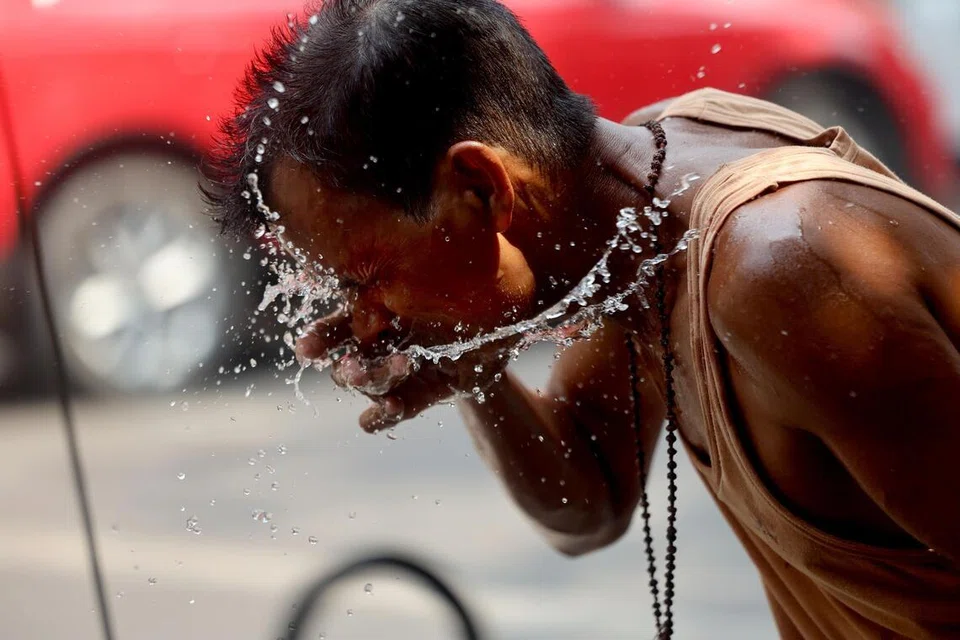
India’s relentless summer heat is no longer just a seasonal inconvenience. Scientists and health experts are increasingly warning that the country’s extreme temperatures are turning into a major public health emergency – one that may already be claiming far more lives than official records suggest.
This summer, temperatures have crossed 45 deg C across large parts of northern, central, and western India, while some places have edged close to 50 deg C. According to reports highlighted by India Today, Balangir in Odisha touched a staggering 48 deg C, while Rajasthan and parts of Uttar Pradesh and Delhi-NCR have continued to reel under severe heatwave conditions.
In one extraordinary stretch earlier this year, India reportedly accounted for nearly all of the world’s hottest cities. By May, 97 of the top 100 hottest cities globally were located in India.
The scenes emerging from across the country have been alarming. Census workers reportedly died while on duty. Voters collapsed at polling stations during the West Bengal elections. Outdoor labourers, street vendors, and transport workers continue to work under punishing temperatures because they simply cannot afford not to.
Yet, experts believe the true scale of heat-related deaths remains largely hidden.
A study by researchers Piyush Narang and Ashok Gadgil from the University of California, Berkeley, cited by India Today, estimates that a severe five-day heatwave in Uttar Pradesh alone could potentially lead to more than 8,000 excess deaths.
The study analysed heat mortality data from 10 Indian cities and applied it nationwide to district-level populations. Researchers described their findings as “lower-bound estimates,” meaning the actual numbers could be even higher, particularly in poorer rural regions with limited access to cooling, healthcare, and electricity.
One major challenge is that many heat-related deaths are never officially classified as such.
Instead, victims may be recorded as dying from heart attacks, kidney failure, breathing problems or dehydration-related complications triggered by extreme heat.
Official heatstroke deaths in India often number only a few hundred annually, but scientists say those figures significantly understate reality.
A detailed report by The BMJ noted that deaths from heat stress are “widely believed to be underreported,” even as hospitals across India are seeing increasing cases of dehydration, heat exhaustion and kidney-related illnesses.
The report also highlighted how climate scientists now regard extreme heat in India as “the new normal”.
Former India Meteorological Department director general Kanduri Jayaram Ramesh told The BMJ that rising daytime and night-time temperatures are directly linked to global warming and climate change.
“The frequency and duration of heatwaves have risen sharply,” he said, warning that the trends should now be treated as permanent realities rather than isolated events.
Another growing concern is the rise of dangerously warm nights.
Across India, nighttime temperatures are climbing steadily, reducing the body’s opportunity to recover from daytime heat. Urban areas are especially vulnerable because concrete structures trap heat long after sunset.
The Indian Meteorological Department says nighttime temperatures across most Indian states are increasing by roughly 0.21 deg C per decade.
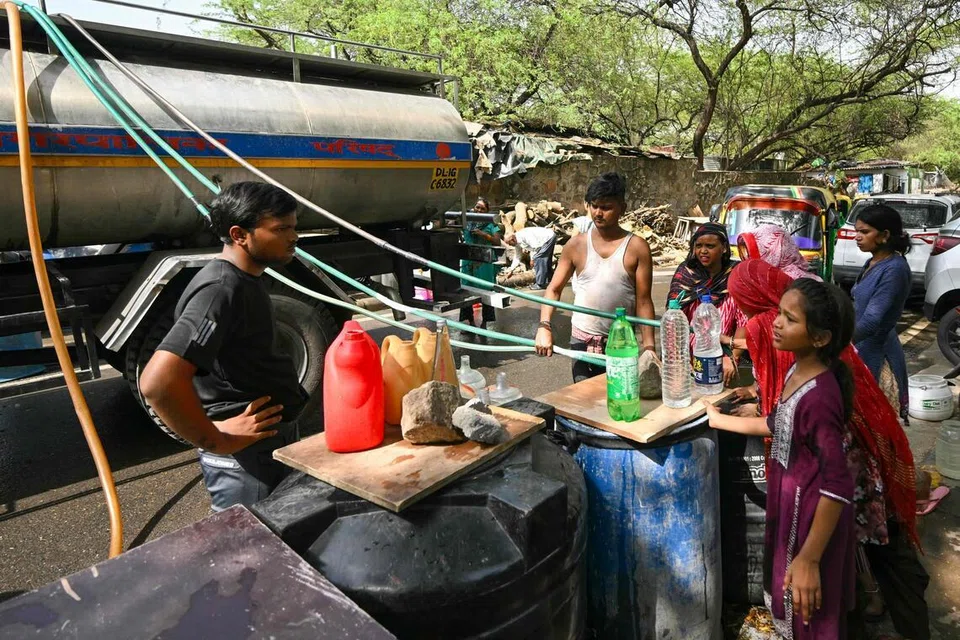
A vivid picture of how ordinary people are adapting to the crisis emerged in a recent ground report by BBC News from Banda district in Uttar Pradesh, where temperatures hovered between 47 and 48 deg C for more than a week.
Markets now begin before sunrise and empty by mid-morning. Construction workers split shifts to avoid afternoon exposure. Women walk kilometres under scorching skies to fetch water.
“It feels as if mornings and nights no longer exist,” meteorologist Dinesh Sah told the BBC.
One road worker summed up the harsh reality facing millions of India’s poor: “Poor people don’t have the luxury of worrying about the heat.”
The crisis has also exposed deeper environmental vulnerabilities.
Experts cited by The BMJ and BBC pointed to shrinking tree cover, rapid urbanisation, sand mining and groundwater depletion as factors intensifying local heat conditions. Researchers say India lost significant forest cover in recent years even as cities continue cutting mature trees for urban expansion.
Meanwhile, air-conditioning remains beyond the reach of millions even as electricity demand surges to record highs.
Prime Minister Narendra Modi recently urged citizens to take precautions and “take care of each other” during the heatwave. However, critics quoted by The BMJ questioned whether India’s climate policies are moving quickly enough to match the growing threat.
Scientists warn that as global temperatures continue rising, extreme heat events in India are likely to become more frequent, longer and deadlier.
What was once considered an exceptional heatwave may now simply be India’s new summer reality.