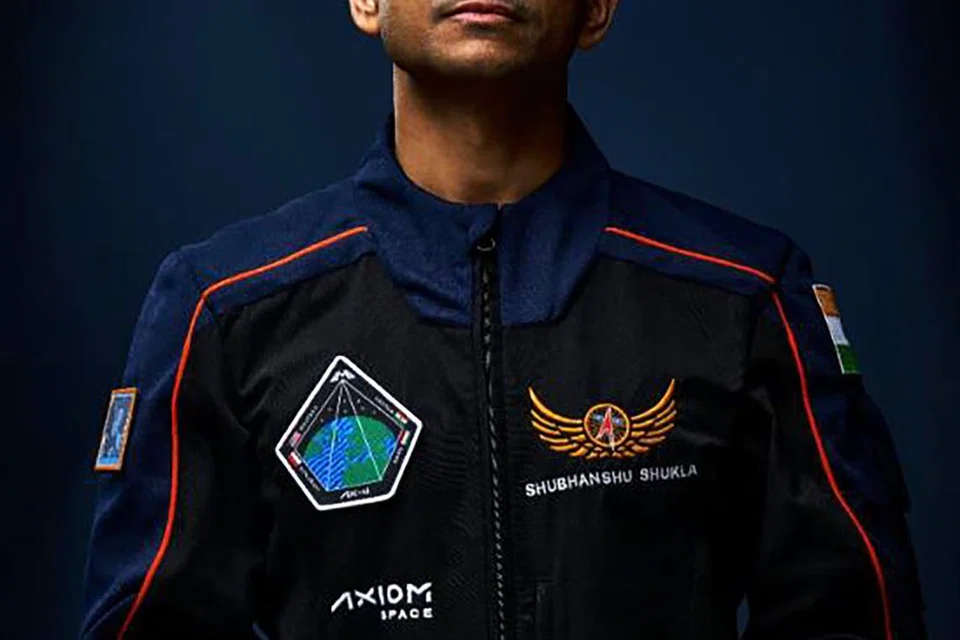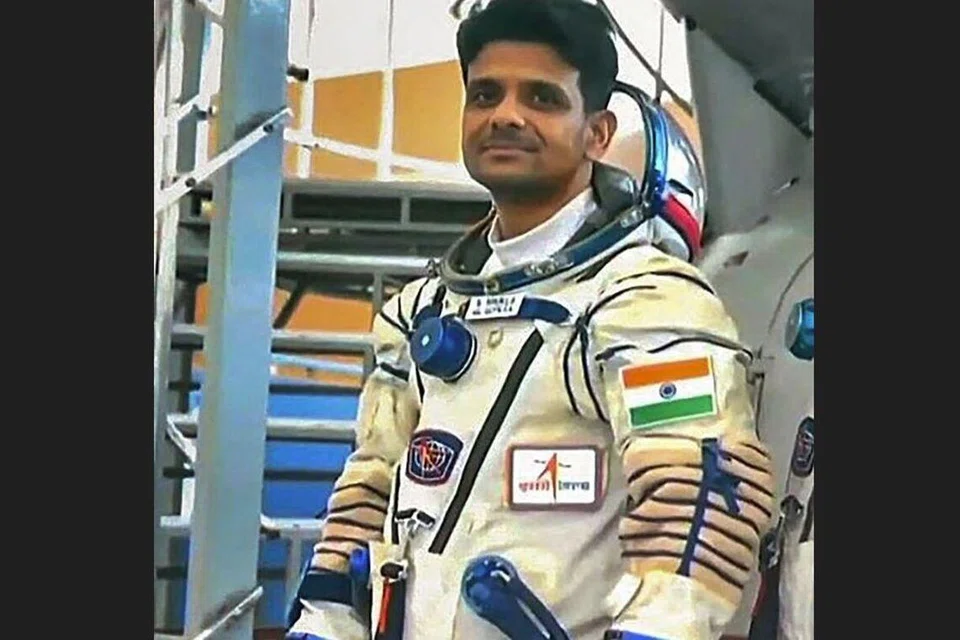
When Group Captain Shubhanshu Shukla (right) lifts off from NASA’s Kennedy Space Center aboard the Axiom Mission 4 on June 10, he won’t just be carrying the hopes of 1.4 billion Indians into space. He’ll also carry a small yet powerful piece of home – the flavours of India.
In a remarkable fusion of science, symbolism and culinary comfort, the Indian Space Research Organisation (ISRO), in collaboration with the Defence Research and Development Organisation (DRDO), has curated a special menu for the Indian Air Force officer, making him the first Indian to carry traditional Indian food to the International Space Station (ISS).
Among the highlights of his menu: moong dal halwa, mango nectar and Indian rice.
This carefully chosen selection is more than a morale booster; it’s a cultural milestone.
Each dish has been specially engineered to meet the safety and nutritional standards required for space travel while also capturing the essence of Indian cuisine.
As Group Captain Shukla becomes the second Indian to travel to space after Wing Commander (retd) Rakesh Sharma’s legendary 1984 mission, he will do so not just with scientific instruments, but with a taste of India.
ISRO’s Human Space Flight Centre in Bengaluru has led the charge in adapting Indian dishes for space.
Director D.K. Singh confirmed: “Shukla ji will get ghar ka khana (home food) along with international cuisine options approved by NASA.”
The packaging of mango nectar allows it to be sipped in microgravity, while the moong dal halwa – an energy-dense dessert – has been modified for safe consumption in orbit.
Indian rice, however, presented a challenge. Unlike sticky rice commonly used in East Asia, Indian rice is fluffy and can float away in microgravity, making it harder to manage during meals.
Special packaging and serving techniques have been developed to address this issue, ensuring Gp Capt Shukla can enjoy his meal without chasing stray grains across the ISS.
The inclusion of Indian food isn’t just about comfort – it’s about identity. In a mission filled with scientific ambitions, the presence of Indian delicacies sends a powerful message: India is ready to join the global space community on its own cultural and technological terms.
“This is modern-day diplomacy through cuisine,” said a senior ISRO official. “It’s a way of saying: we are here, and we’re bringing our whole self – science, skill, and soul.”
Gp Capt Shukla himself echoed the sentiment in a statement: “This mission is a milestone for India. Even stars are attainable. Jai Hind.”
The Axiom Mission 4 is operated by US-based Axiom Space in partnership with NASA and international collaborators. Gp Capt Shukla will serve as the mission pilot alongside American astronaut and commander Peggy Whitson, Poland’s Slawosz Uznanski-Wisniewski and Hungary’s Tibor Kapu.
The mission, now rescheduled to launch on June 10, was originally slated for May 29 and will last approximately 14 days. Once docked at the ISS, the crew will carry out over 60 scientific studies and commercial outreach activities, representing 31 countries.
India’s contribution to these scientific efforts is significant. Gp Capt Shukla will conduct seven experiments related to food, agriculture and human biology – including groundbreaking research on whether green gram (moong) and fenugreek (methi) can sprout in microgravity.
These tests could lay the foundation for future space farming and sustainable food sources for long-duration missions.
Gp Capt Shukla’s journey isn’t just about this one flight. He’s among the top candidates for ISRO’s upcoming Gaganyaan mission – India’s first indigenous crewed orbital flight.
His experience aboard Axiom-4 will serve as a critical trial run, allowing ISRO to observe how an Indian astronaut adapts to life in space, carries out complex tasks and interfaces with international teams.
“The hands-on exposure will be invaluable for Gaganyaan,” said ISRO chairman V. Narayanan, who reaffirmed his confidence in Shukla’s capability to complete the mission successfully.
The mission’s cost is estimated at Rs550 crore ($82.5 million), a price that reflects not just the high-tech nature of the endeavour, but the high hopes India is investing in its spacefaring future.
But for Gp Capt Shukla, the mission is also deeply personal. “I hope to ignite curiosity and excitement in young minds,” he said. “Space is not a distant dream, but a future they can shape.”
During his time aboard the ISS, Shukla will engage with educators, students, and members of the global space industry, sharing insights and experiences aimed at sparking interest in STEM fields.
In a symbolic gesture, he will carry a swan as his zero-gravity indicator – the vehicle of Saraswati, the Hindu goddess of wisdom. “It represents learning, purity and the ability to discern – values that define this mission,” he explained.