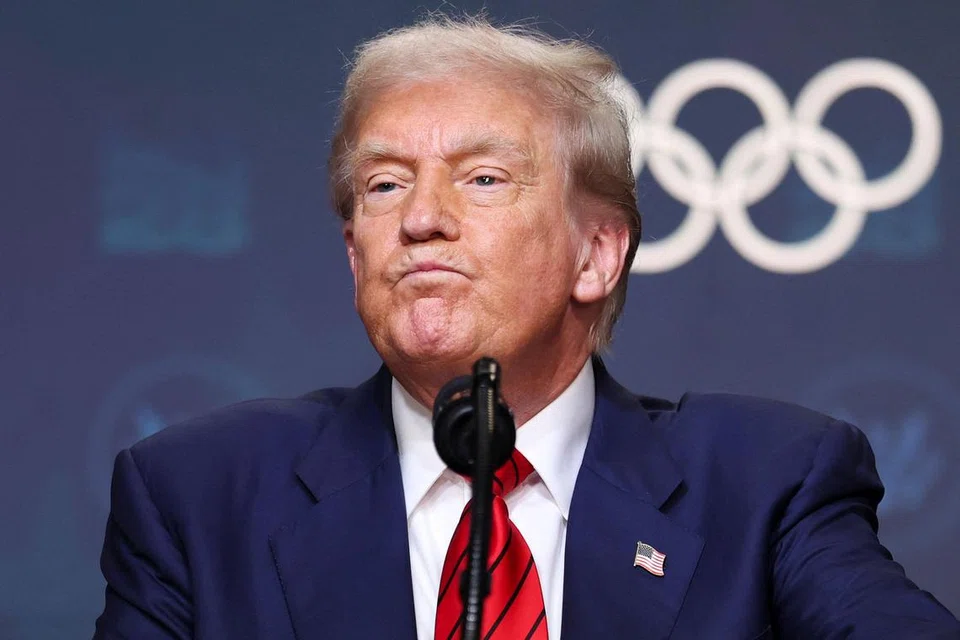

In a dramatic escalation that threatens to derail one of the world’s most vital bilateral partnerships, United States President Donald Trump has imposed a sweeping 25 per cent tariff on Indian goods in retaliation for New Delhi’s continued purchases of Russian oil.
The move, announced on Aug 6 via executive order, marks the most severe downturn in India-US relations since Mr Trump’s return to office and could impact nearly 55 per cent of Indian exports to the US.
The additional duty, set to take effect in three weeks, comes atop a separate 25 per cent tariff that took force on Aug 7, reported Reuters.
Mr Trump’s order also warns of further penalties on countries “directly or indirectly importing Russian Federation oil”, singling out India as a major violator.
While certain categories like pharmaceuticals and steel remain exempt under existing sector-specific arrangements, Indian officials fear that further restrictions may follow.
India’s Ministry of External Affairs (MEA) responded swiftly, calling the US decision “extremely unfortunate”.
In a statement, the ministry said: “Our imports are based on market factors and the need to ensure the energy security of 1.4 billion Indians. It is unjustified and unreasonable for the US to penalise India for what many other countries are also doing.”
The timing of Mr Trump’s tariffs coincides with the breakdown of trade negotiations between the two countries. Despite five rounds of talks and signs of convergence on several issues, including energy purchases and defence imports, no deal was reached.
Indian officials, who once hoped for a favourable announcement before the Aug 1 deadline, now find themselves navigating the fallout of a failed pact, reported Reuters.
Mr Trump’s latest move is widely seen as a geopolitical tactic aimed at isolating Russia. But analysts warn that the collateral damage to US-India relations could be lasting.
India imported nearly US$52 billion worth of Russian oil last year, becoming Moscow’s second-largest buyer behind China. New Delhi has repeatedly defended these purchases, citing discounted rates and the necessity of price stability.
According to Susan Stone, chair of economics at the University of South Australia, sectors like pharmaceuticals, textiles, gems, and footwear will be hardest hit.
“India has significantly ramped up manufacturing of not just generic medicines, but ancillary medical products like gauze and bandages. These could face serious disruptions,” she said.
The economic blowback could be significant. India exported nearly US$87 billion worth of goods to the US in 2024. Analysts warn that the tariffs could drive Indian export duties as high as 50 per cent, rendering them uncompetitive against regional rivals like Vietnam, Japan, and Bangladesh.
Mr S.C. Ralhan, president of the Federation of Indian Export Organisations, called the development “a severe setback”, noting that over half of India’s shipments to the US are now under threat. “Our exporters face a 30 to 35 per cent disadvantage,” he said.
Despite the tensions, New Delhi has refrained from retaliatory tariffs, focusing instead on providing relief to domestic exporters through loan guarantees and interest subsidies.
Indian officials also remain hopeful that negotiations can be salvaged in the 21-day window before the tariffs take full effect. Phased cuts in Russian oil imports are being considered as part of a potential compromise.
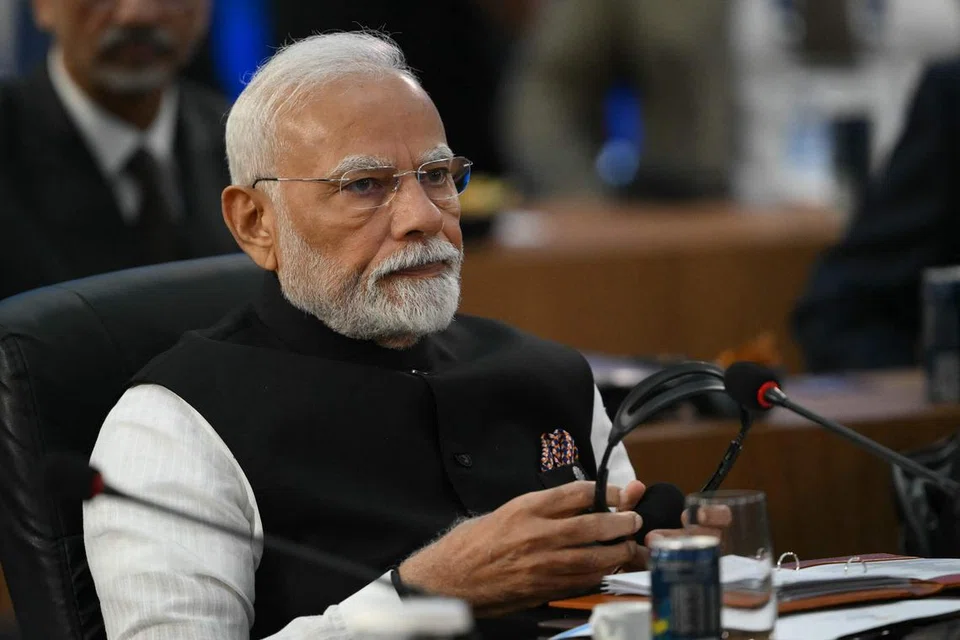
Meanwhile, India’s diplomatic posture is shifting. Prime Minister Narendra Modi is preparing for his first visit to China in over seven years, to attend the Shanghai Cooperation Organisation summit in Tianjin on Aug 31.
The trip signals a potential strategic pivot as ties with Washington cool.
India’s National Security Adviser Ajit Doval is currently in Moscow discussing defence cooperation and energy issues, including pending S-400 missile deliveries. Foreign Minister S. Jaishankar is expected to follow. Russian President Vladimir Putin is also slated to visit India later this year.
Back in Washington, Trump has ramped up the rhetoric. In a Truth Social post, he accused India of “funding the Russian war machine” and warned of further tariff hikes unless New Delhi halts its Russian oil imports.
He also hinted at penalties for BRICS nations – India included – for “aligning with anti-American policies”.
Despite Mr Trump’s tough talk, Indian officials maintain that their strategic autonomy remains non-negotiable. “We are not about to jettison our Russia ties or cave to US pressure,” a senior diplomat said.
Trade negotiations had initially shown promise. India had offered concessions on industrial goods and even gradual tariff reductions on American cars and alcohol. But talks reportedly collapsed over agriculture and dairy, two politically sensitive sectors in India.
Interviews with negotiators revealed that Indian officials were overly confident that Mr Trump would accept a deal capping tariffs at 15 per cent, reported Reuters. However, Washington wanted headline-grabbing announcements and more sweeping market access – something New Delhi was unwilling to offer.
Further souring the atmosphere are Mr Trump’s remarks about mediating in Kashmir and hosting Pakistan’s army chief at the White House, which have stirred unease in Indian political circles.
Mr Trump’s crackdown on H1-B visas and remarks urging US tech companies to reduce hiring from India have added fuel to the fire.
Still, there is belief that a breakthrough remains possible. A White House delegation is expected in New Delhi later this month, and Indian officials are exploring new concessions, particularly on dairy.
On Russian oil, a partial pivot to US supplies could also be negotiated – provided prices remain competitive.
“The missing piece is direct communication,” said trade expert Mark Linscott. “It may take a phone call between Modi and Trump to break the impasse.”
Until then, uncertainty prevails.