India on April 1 launched what the government has described as the world’s largest population count, a vast and politically significant exercise that will cover more than 1.4 billion people and, for the first time since independence, include caste data.
The long-delayed census, originally due in 2021 but pushed back by the Covid-19 pandemic and later administrative scheduling, will be carried out in two phases over the next year, reported Reuters.
More than three million officials are expected to take part in the exercise, which the government says is crucial for policy planning, welfare delivery and future political representation.
The first phase, known as the House Listing and Housing Census, runs from April to September 2026. It focuses on households, housing conditions and access to basic amenities.
Officials will ask 33 questions during this phase, covering issues such as the type of roof a family lives under, access to fuel, electricity, internet, transport and water, and the number of married couples in a household.
For the first time, the census is being conducted digitally. Enumerators will use mobile applications to collect and upload data, while residents will also have the option of self-enumeration through an online portal available in 16 languages.
That marks a significant shift for a process that has traditionally relied almost entirely on door-to-door fieldwork.
The second phase, scheduled for February 2027, will focus on population enumeration and gather individual-level data on demographics, socio-economic status, education, migration, fertility and caste.
The reference date for most of the country will be March 1, 2027, while some snow-bound Himalayan areas will be surveyed earlier, before winter cuts off access.
The scale of the operation is formidable even by Indian standards. It will span 28 states and eight union territories, more than 7,000 sub-districts, over 9,700 towns and nearly 640,000 villages.
The government has allocated around US$1.24 billion (S$1.6 billion) for the exercise, which it has called a gigantic undertaking of national importance.
India’s last census in 2011 recorded the population at 1.21 billion. Since then, the country has undergone sweeping demographic, economic and social changes.
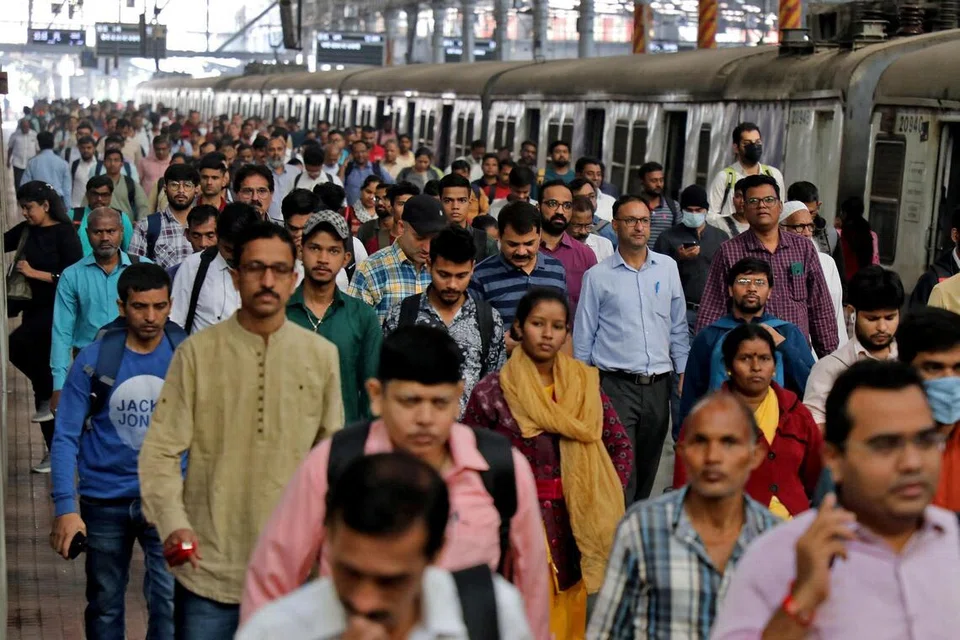
According to United Nations estimates, India overtook China in 2023 to become the world’s most populous nation, with more than 1.4 billion people.
That growth has sharpened pressure on infrastructure, housing, energy and welfare systems, noted AFP. Many Indian cities are grappling with overcrowding, pollution, water shortages and the expansion of informal settlements.
Officials say the updated census will provide the most authoritative snapshot of the country’s population and living conditions, allowing the government to better target welfare schemes, plan urban growth and assess changing patterns of employment, migration and household consumption.
One of the most closely watched aspects of the new census is the inclusion of caste. While India has continued to record data on Scheduled Castes and Scheduled Tribes, this will be the first full-scale caste enumeration since 1931, during British colonial rule.
Successive governments after independence had resisted reviving a broader caste count, arguing that it was administratively difficult and risked intensifying social divisions.
But the issue has become increasingly central to politics and public policy. Supporters of caste enumeration argue that without updated data, governments are effectively working in the dark when it comes to measuring disadvantage, designing reservation policies and assessing whether resources are reaching those who need them most.
Caste remains a powerful force in Indian life, shaping social status, access to education, economic opportunity and political mobilisation.
The census also carries significant political implications beyond welfare planning. Fresh population data will feed into the future redrawing of parliamentary constituencies, a process that could alter the balance of power between India’s faster-growing northern states and the more industrialised south.
That has already sparked concern in some southern states that they may lose influence if representation is adjusted purely on population size.
Experts say the delay in holding the census has already had serious consequences. In the absence of a fresh population baseline, India has been forced to rely on sample surveys and estimates to guide decisions on jobs, migration, poverty and urbanisation.
Much of the country’s classification of areas as rural, urban or peri-urban still rests on 2011 data, despite substantial changes over the past 15 years.
The census, therefore, is not just a counting exercise. It is the backbone of how the Indian state understands itself.
The government says the digital-first model will speed up data consolidation and make the final figures available more quickly than in the past.
Yet the sheer size of the exercise, the sensitivity of caste data and the broader debate about how official data may be used ensure that this census will be watched as much for its political impact as for its statistical results.
For India, the biggest population count in the world is now underway – and with it, one of the most consequential exercises in defining the country’s present and planning its future.