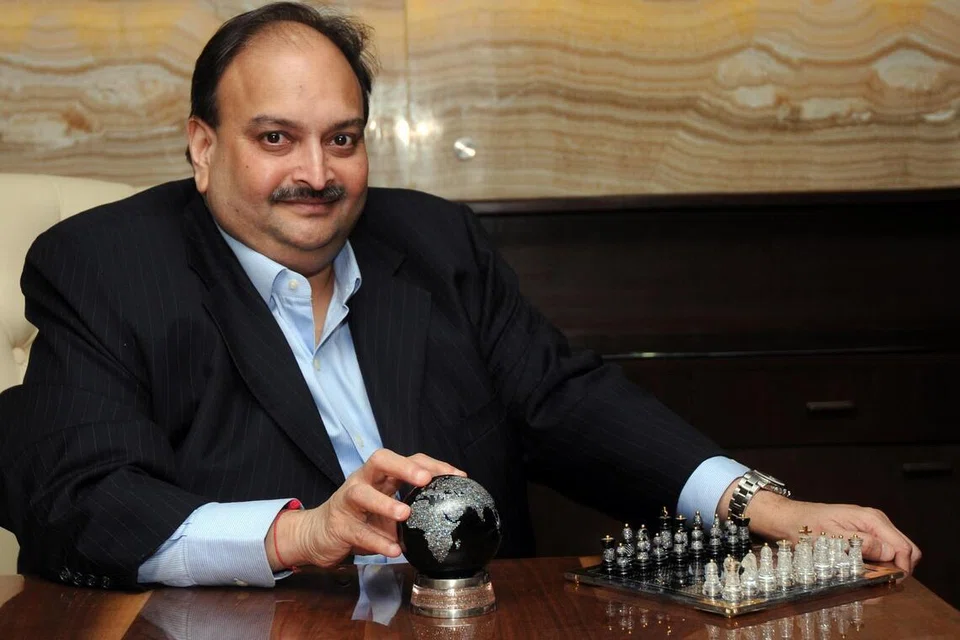

Fugitive jewellery tychoon Mehul Choksi, wanted in connection with the Rs13,500 crore ($207 million) Punjab National Bank (PNB) scam, was arrested on April 12 in the Belgian city of Antwerp.
The arrest has reignited hope in India for his long-awaited extradition, but legal and diplomatic hurdles remain formidable.
Choksi, 65, is a central figure in the massive financial fraud alongside his nephew Nirav Modi. Both are accused of defrauding PNB by fraudulently obtaining Letters of Understanding (LoUs) from bank officials since 2011.
These LoUs, issued without proper collateral, enabled them to secure overseas loans that were allegedly used to pay off earlier debts rather than import pearls and diamonds as claimed – resulting in a cascading financial scam.
Choksi’s arrest in Belgium came after Indian authorities issued multiple non-bailable warrants. He had been living in Antigua and Barbuda since 2018, where he secured citizenship just before the scam came to light.
In 2021, Choksi was briefly detained in Dominica under murky circumstances but was allowed to return to Antigua for medical treatment after a court ruling.
According to sources, Choksi had quietly travelled to Belgium in 2023 for cancer treatment and had been living there since.
His lawyer Vijay Aggarwal confirmed the arrest and stated that Choksi would oppose the extradition request on humanitarian and political grounds, citing serious health issues and concerns over the fairness of a trial in India.
Despite the arrest being seen as a diplomatic win for India, the path to extraditing Choksi is fraught with challenges.
While India and Belgium share a Mutual Legal Assistance Treaty (MLAT) and an extradition agreement that dates back to 1901 (later amended), the actual legal process could take months or even years due to European legal standards and human rights considerations.
One of the biggest legal obstacles is the “dual-criminality” clause, which requires that the offence Choksi is charged with in India must also be considered a crime under Belgian law.
Indian authorities will need to demonstrate that Choksi’s alleged financial crimes meet this criterion.
Moreover, Belgium, like most European nations, is bound by the European Convention on Human Rights. Choksi’s legal team is expected to argue that his human rights would be at risk if extradited, particularly due to his poor health and the allegedly politicised nature of his prosecution in India.
The PNB scam rocked India’s financial and political landscape in 2018, leading to a wave of investigations by the Central Bureau of Investigation (CBI) and the Enforcement Directorate (ED).
Choksi, then owner of the high-profile Gitanjali Gems – with over 4,000 outlets and brands like Nakshatra and Gili – allegedly owes over Rs6,000 crore to 34 Indian banks.
The ED has so far seized assets worth over Rs2,500 crore belonging to Choksi and his firms, including real estate, jewellery and luxury vehicles.
In February 2021, an additional Rs14.45 crore worth of assets were attached, but efforts to liquidate these assets and repay affected banks have moved slowly.
Choksi’s arrest is the latest in a string of attempts by India to bring back economic offenders who have fled abroad, including Vijay Mallya and Nirav Modi – both currently fighting extradition from the UK.