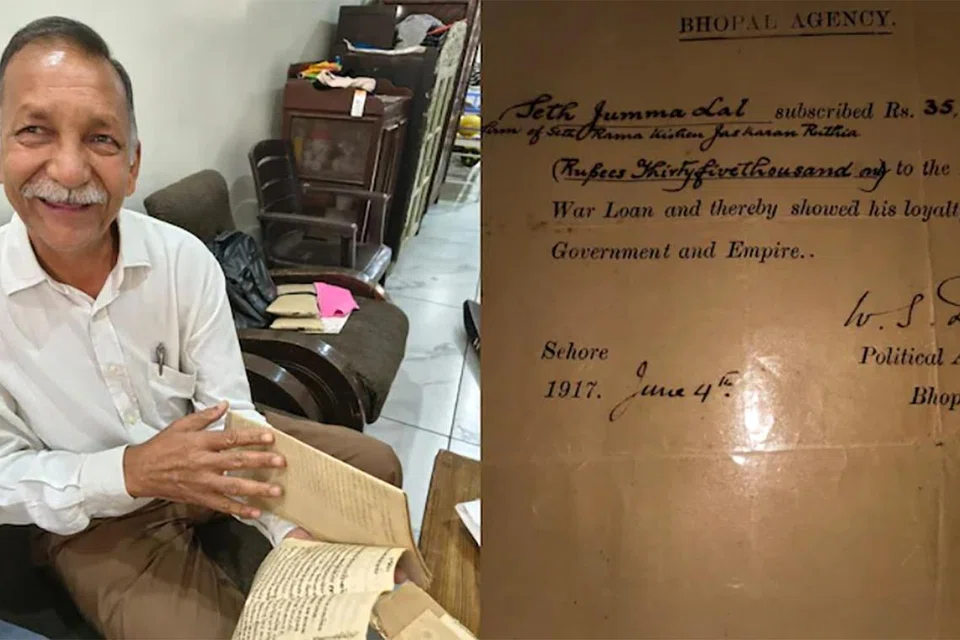
A family in Madhya Pradesh’s Sehore district is preparing to send a legal notice to the British government, seeking repayment of Rs35,000 (S$486) allegedly loaned to the colonial administration by their ancestor more than a century ago.
According to the Ruthia family, the loan was extended in 1917 by Mr Seth Jummalal Ruthia, a prominent businessman in the Bhopal princely state, at a time when the British Empire was grappling with the financial strains of World War I. The amount, considered substantial by the standards of the time, was reportedly issued as a war loan to support administrative functions under colonial rule.
The family claims the debt was never repaid.
Mr Vivek Ruthia, grandson of Mr Seth Jummalal, told NDTV that the family recently discovered documentary evidence, including certificates and correspondence, among old records following his father’s death. “In 1917, my grandfather loaned Rs35,000 to the British government. That amount has not been repaid to this day,” he said.
Mr Seth Jummalal passed away in 1937, and the matter is believed to have gradually faded from attention over the decades. However, the family now argues that the original amount, when adjusted to present-day value – particularly in terms of gold prices – could run into several crores.
The Ruthias are reportedly considering invoking principles of international law, contending that sovereign nations may be obligated to honour historical debts incurred before independence. Legal experts note that such claims are rare and complex, but documented financial transactions between colonial authorities and private individuals could potentially raise unusual legal questions.
Before Independence, the Ruthia family was among the most affluent in Sehore and the surrounding regions, with significant landholdings and business interests. The family continues to own property in Sehore, Indore and Bhopal, and remains engaged in agriculture, hospitality and real estate.