



How does the world’s biggest pizza brand respond to high inflation in the world’s most populous nation?
With the world’s cheapest Domino’s pizza.
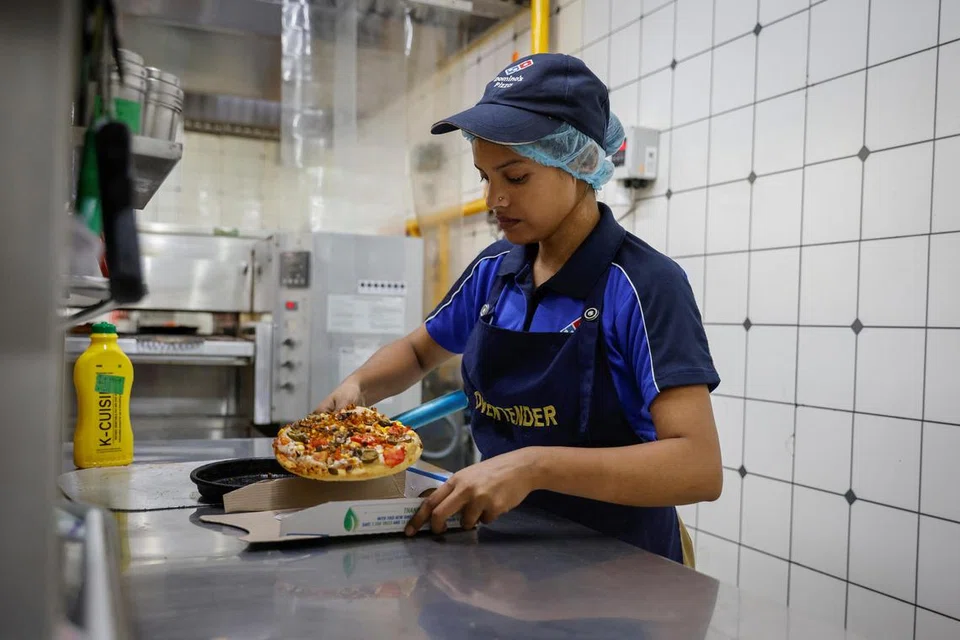
The Rs49 (80 cents) pizza in India, Domino’s No.1 market outside the United States, is the tip of the spear in its fight against rampant inflation that’s squeezing profits and pricing out many customers, according to the CEO of its franchisee in the country.
The company wants to “own that price point”, said Mr Sameer Khetarpal, confirming that the stripped down, 18cm cheese pizza with a “sprinkle” of basil and parsley is Domino’s cheapest anywhere.
“You are coming to the store or open the app because there is a 49-rupee callout,” he said, adding that Domino’s global team supported the plans.
“Customers are going to eat out less because prices are higher everywhere and our existing consumers should not go out to some competition.”
Iterviews with six executives and 12 store managers revealed how Domino’s and other global fast-food giants like Pizza Hut and Burger King are being forced to change tactics to weather rampant inflation in the market of 1.4 billion people.
The companies are striving to hold on to market share gained over three decades of rapid growth in a nation critical to their futures – and one where it is tough to compete with a street-food culture and a sizzling samosa for as little as Rs10.
Mr Khetarpal, whose Jubilant FoodWorks runs 1,816 Domino’s outlets in the country, says he holds a staff meeting first thing every Monday to brainstorm new ways to manage costs and fight the “historic-high inflation” that contributed to its profits sliding 70 per cent in the first-three months of 2023.
He gave new details of Domino’s India pivot and its financial gains – his company has removed lids from all boxes of pizzas sold at stores starting December, saving 0.6 cents each time. He said that amounts to a significant saving in packaging costs because 37 per cent of Domino’s Indian business is dine-in.
Jubilant – whose Domino’s business accounted for most of its US$635 million ($840 million) in revenues last year – also aims to secure rent rebates from some store landlords by offering upfront payments, Mr Khetarpal said, declining to give further details about cost benefits.
Domino’s is not alone in zeroing in on prices in India, a highly price-sensitive market that is currently facing higher inflation than many other markets. Pizza Hut is aggressively promoting pizzas starting at Rs79 that it launched last year and its India franchisee, Sapphire Foods, said it was the brand’s lowest-priced globally.
Mr Merrill Pereyra, managing director of Pizza Hut in the Indian subcontinent, said the chain was developing products that “make the brand relevant and easy to access” for price-conscious consumers in India, adding its budget pizzas were a hit with young people.
McDonald’s launched half-price meals in June. They’ll be the focus of promotion efforts in coming weeks, according to Mr Akshay Jatia, executive director at Westlife Foodworld, which runs 357 outlets in western and southern India. He said the meals would bring in more customers and boost sales and margins.
Domino’s flagship inflation-buster is the Rs49 pizza, which was launched in February. Mr Khetarpal said it was“re-engineered” by cutting price – and tomatoes – from its earlier cheapest offering of Rs59.
Franchisee Jubilant said in May it witnessed a cheese price surge of 40 per cent during 2022-23, and a 30 per cent rise in chicken and paper boxes. There have been more shocks in recent weeks, with tomato prices rising over 400 per cent to record highs and households toiling under rising rates of everything from milk to cereals and spices, according to official data.
The industry players described a tale of two consumers in a country with yawning gaps between rich and poor.
Many low and middle-income earners who saw dining at foreign chains as a lifestyle upgrade when the economy boomed are tightening belts as inflation bites, while the wealthier continue to spend on products like pricier smartphones, and SUV cars whose sales are touching new highs.
When Mr Khetarpal visited Domino’s stores in Chennai and other cities, he said he saw customers emptying out their pockets and only being able to scrape together Rs49. By contrast, he added, Domino’s new gourmet pizzas priced as high as US$14 had seen a sales jump in some affluent areas.
It’s been a bleak year for Domino’s, the Indian fast-food restaurant leader with a market share of about 12.5 per cent, as well as for other companies.
Pre-tax profit at Pizza Hut’s Sapphire Foods more than halved in the March-quarter. Burger King’s India franchisee, Restaurant Brands Asia, saw its net loss widen by 9 per cent.
Reuters
