New Delhi plans for the first time to make rain to improve air quality in the city, which is the world’s most-polluted capital and has been gripped by smog for a week.
The city has already shut all schools, stopped construction activities, and said it would impose restrictions on vehicle use.
Depending on legal approval and weather conditions, the local environment minister said the authorities would try to induce rain from Nov 20.
Air quality deteriorates every year ahead of winter, when cold air traps pollutants from sources including vehicles, industries, construction dust and agricultural waste burning.
“There is a possibility that, if current weather conditions persist, the pollution situation will remain the same,” said Delhi’s Environment Minister Gopal Rai, adding that a proposal drafted by experts on making rain will be presented to the Supreme Court tomorrow.
“I believe that given the conditions we have and if we get support from everyone, we can at least do the first pilot.”
Delhi’s environmental department said it planned to seed clouds, a technique that uses substances such as silver iodide to induce precipitation.
The air quality index for the city on Wednesday was over 320 – a level categorised as “hazardous” by Swiss group IQAir – before falling to 294 later.
The local government issued a notice earlier in the day to close all government and private schools from Thursday until Nov 18 on a winter break, which was originally scheduled for January.
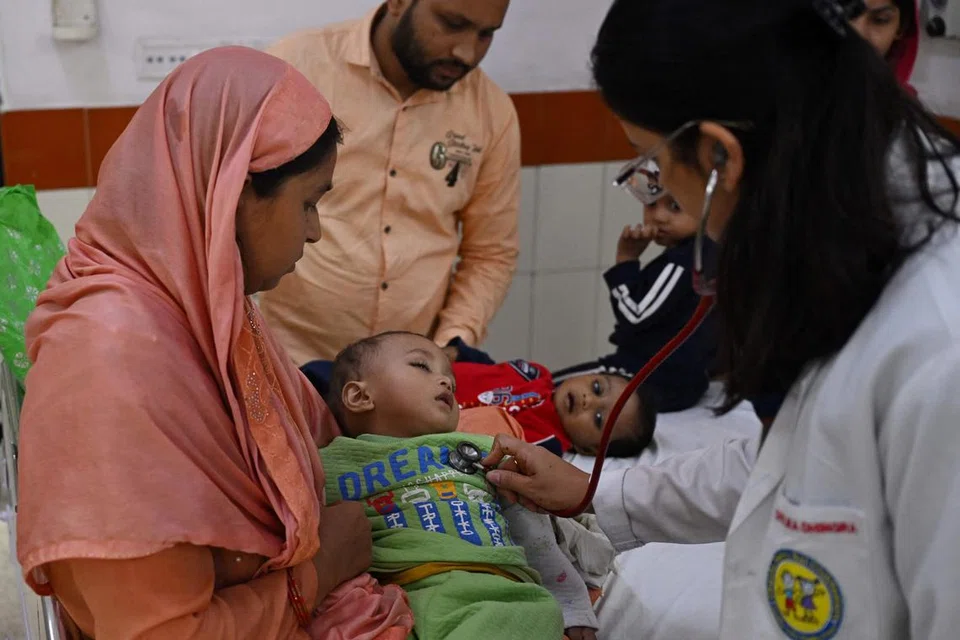
Primary schools in the city had already been shut, as part of measures to protect children against smog and growing air pollution.
The world’s most polluted city, with a population of more than 20 million, has stopped construction activities, imposed restrictions on the use of vehicles from next week, and wants neighbouring states to control crop residue burning.
Farmers in Punjab and Haryana usually burn crop stubble left behind after rice is harvested in late-October or early-November to quickly clear their fields before planting wheat crops.
The practice has been followed for years and the resultant smoke has typically accounted for up to 40 per cent of Delhi’s October-November pollution, according to federal government’s air-quality monitoring agency Safar.
After air quality worsened last week, the Supreme Court on Tuesday ordered states surrounding New Delhi to stop farmers burning crop residue.