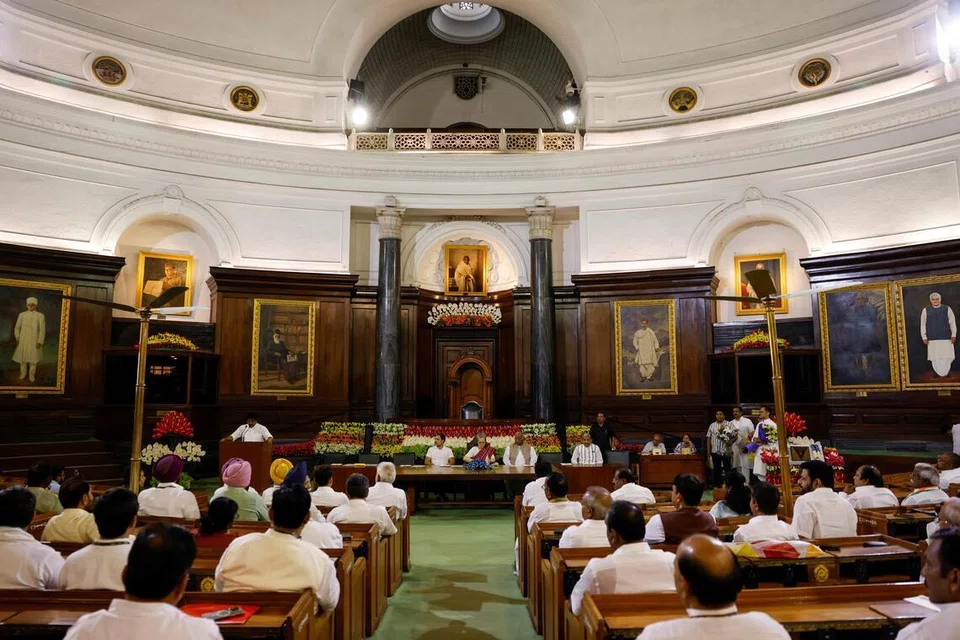
India replaced colonial-era criminal laws with new legislation on Monday, which Prime Minister Narendra Modi’s government said would make the country more just, but the opposition said risked throwing the criminal justice system into disarray.
The Bharatiya Nyaya Sanhita, 2023 has replaced the Indian Penal Code, 1860; the Bharatiya Sakshya Adhiniyam, 2023 replaces the Indian Evidence Act, 1872; and the Bharatiya Nagarik Suraksha Sanhita, 2023 has been implemented in place of the Code of Criminal Procedure, 1882.
The new laws were approved by parliament in December in Mr Modi’s previous term with the government saying they aim to “give justice, not punishment”. It says they were needed as colonial laws had been at the core of the criminal justice system for more than a century.
Among the key changes is replacement of the sedition law frequently used as a tool of suppression, after its enactment under British colonial rule to jail Indian freedom fighters.
Under the new laws, sedition is replaced with a section on acts seen as “endangering the sovereignty, unity, and integrity of India”.
Laws dealing with sexual assault have been strengthened, while a previous law criminalising sodomy has been removed. Other key changes include the amount of time police can hold a suspect rising from 15 days to 60, and, in some special cases, up to 90.
“About 77 years after independence, our criminal justice system is becoming completely indigenous and will run on Indian ethos,” India’s Home Minister Amit Shah said. “Instead of punishment, there will now be justice.”
Criminal cases registered under the repealed laws before Monday will continue to follow them, Mr Shah said, adding that the first case logged under the new law was that of a motorcycle theft in the central city of Gwalior, registered 10 minutes after midnight.
“The laws were debated for three months. It is not fair to give political colour to this big improvement happening after centuries. I ask the opposition parties to support this legislation,” Mr Shah said.
India’s top judge DY Chandrachud praised the new laws as a “watershed moment for our society”.
But the opposition said they were rolled out without a discussion in the parliament, while other critics said it could worsen an already glacially slow pace of justice.
Opposition Congress party leader P. Chidambaram said the previous parliament session did not hold any “worthwhile debate” before passing the laws.
He said that there was only marginal improvement in the new laws, which could have been introduced as amendments to existing laws.
“The initial impact will be to throw the administration of criminal justice into disarray,” he posted on X.
The Indian Express newspaper said in an editorial that criminal justice reform should not be “a one-time solution or one that just takes place in the books”, and called for police reform and addressing gaps in judicial infrastructure.
Reuters