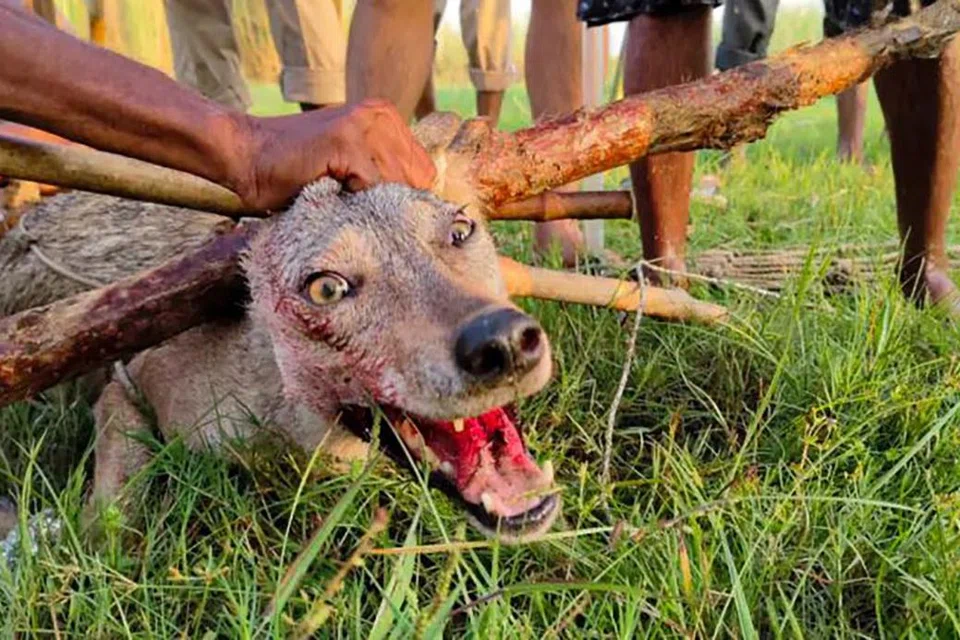
An invasion of wolves is keeping the forest authorities on their toes in Bahraich, where the animals are suspected to have killed at least nine children and an adult and wounded 34 people – all within a few months.
The Uttar Pradesh forest department has trapped five wolves, but the attacks have continued despite multiple teams casting a dragnet across a 75 sq km area in the district near the Nepal border.
On Aug 17, four-year-old Sandhya was sleeping outside her mud hut when a power cut plunged the village into darkness.
“The wolves attacked within two minutes of the lights going out. By the time we realised what was happening, they had taken her away,” her mother Sunita told the BBC.
Sandhya’s body was found lying in the sugarcane farms the next day, some 500m from her home.
Earlier in the month, in a neighbouring village, eight-year-old Utkarsh was sleeping under a mosquito net when his mother spotted a wolf creeping into their hut.
“The animal lunged from the shadows. I screamed, ‘Leave my son alone!’ My neighbours rushed in, and the wolf fled,” she recounts.
In the latest attack on Wednesday night, a 50-year-old woman was severely injured.
Ms Pushpa Devi was attacked while asleep at her hut in Raipur Korean Tepra village, reported NDTV.
“The incident took place at 10pm when she was sleeping. One of the children might have opened the door and the wolf was hiding somewhere. It came and grabbed her by the throat,” her relative was quoted as saying by news agency ANI.
“The family members heard her cry and ran towards her. The people in the neighbourhood also gathered and then the wolf ran away.”
Earlier on Wednesday, an 11-year-old girl was injured after a wolf attacked her. According to local media reports, she has been admitted to the government hospital in Mahasi for treatment.
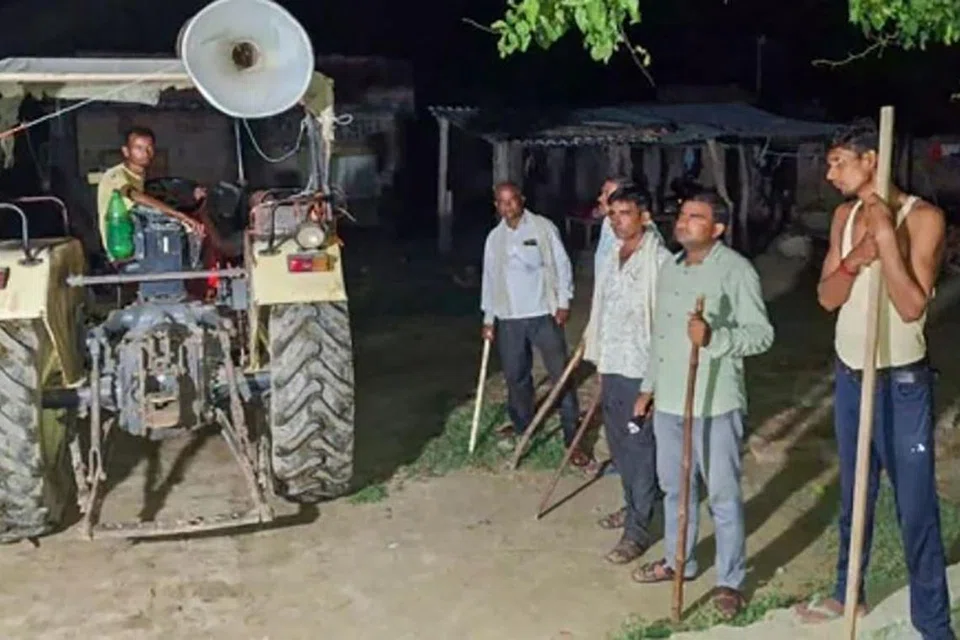
Fear and hysteria have gripped the affected villages. With many homes lacking locks, children are being kept indoors and men are patrolling the darkly lit streets at night. Authorities have deployed drones and cameras, set traps and used firecrackers to scare away the wolves.
There is only speculation about what has suddenly made wolves so aggressive to the point that they have begun invading human settlements, terrorising some 15,000 people across 50 villages of Mahsi Tehsil in Bahraich since mid-April.
“This aggressive behaviour of wolves is not normal. Rabies infection increases the aggression of wolves and thus the possibility of them being infected is there,” a forest officer told the Press Trust of India.
“Medical tests must be conducted on the wolves that have been caught, so that it can be ascertained whether they are infected,” he said.
Dr A.M. Pawde, principal scientist at the Wildlife Centre of the Indian Veterinary Research Institute in Bareilly, said there is a possibility that wolves alone may not be behind all the attacks.
Honey badgers, known as “kabra bijju” in local parlance, too might have been behind some of the attacks, he said.
“The nature of the attack on at least one of the eight victims suggested a pattern different from what is left behind by wolves, who usually attack their prey from the toe or target a vein at the back of the leg,” Dr Pawde said.
“But one of the Bahraich victims, a girl, had some part of her nose eaten away.”
Dr Pawde gave a possible reason why wolves may have suddenly begun attacking humans.
“Wolves have a tendency to extract revenge. The Bahraich cases seem to be both revenge and growing human encroachment in wildlife forest space,” he said.
“Wolves are extremely sensitive. The teams working on the field are now looking at the possibility of one of the wolves being lame, a possible consequence of it being assaulted by humans in the past.”
According to sources in the forest department, Operation Bhedia, launched on July 17, has led to the capture of five out of the six wolves possibly behind the attacks.
Bahraich Divisional Forest Officer Ajit Pratap Singh said several teams, comprising 165 members in all, are engaged in wolf-hunting. The state government has also deployed nine shooters.
Rumour-mongering is not helping the forest department either.
“Every evening, the forest department receives information about the presence of wolves at different places and all these tip-offs prove to be fake.
“These days anyone getting injured is saying that injury was inflicted by a wild animal,” he said.
District Magistrate of Bahraich Monica Rani said the local administration is also installing doors in the houses of people who live in the affected areas.