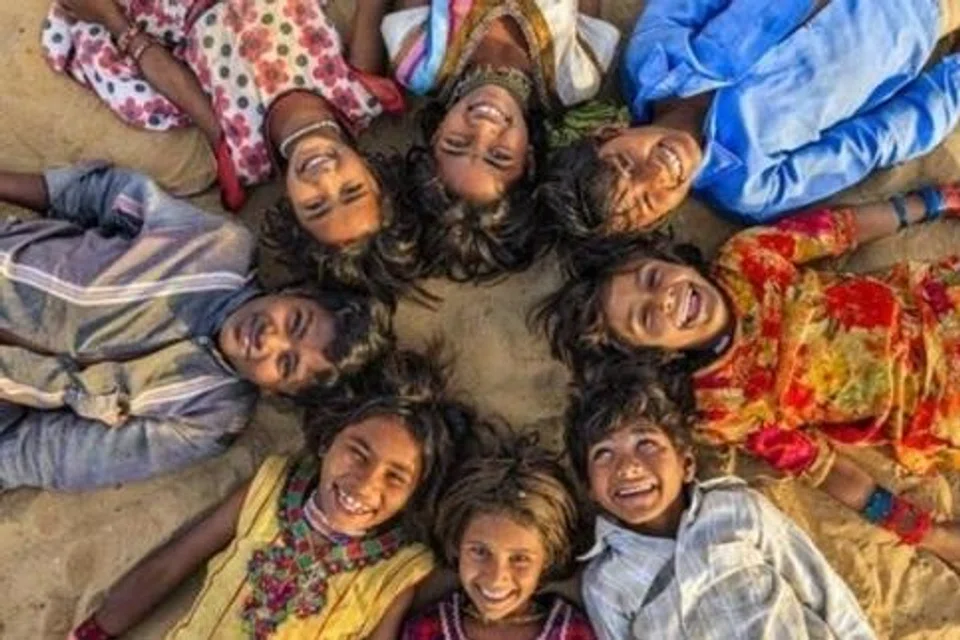
The southern Indian state of Andhra Pradesh has introduced a policy to encourage families to have more children in response to a falling birth rate and an ageing population, becoming the first state in India to do so.
The region’s total fertility rate has dropped to about 1.5 children per woman, well below the 2.1 rate considered necessary to maintain a stable population.
From April 1, the government will give families approximately S$340 for each third child they have. This support is part of the Poshan‑Shiksha‑Suraksha package, which also includes approximately S$16 per month for five years and free schooling for the third child up to age 18.
The package is paired with extended maternity and paternity leave, and subsidised fertility treatments.
Andhra Pradesh’s Chief Minister, N. Chandrababu Naidu, said, “We are no longer a high-fertility state. The situation requires an entirely new policy playbook.”
In addition, the government plans to build childcare centres and hostels for working women, and already provides S$ 204 per child to ease costs for families.
Although India’s overall population remains large, fertility rates have declined in several southern states, prompting concern over future demographic shifts and the number of young workers relative to older people.
Experts say while financial incentives may help, broader structural support, such as better childcare and shared caregiving, will also be needed to influence family planning choices.
India has more than 1.45 billion people today and is projected to peak at 1.72 billion by 2062, according to the UN. Despite its large population, India’s fertility rate has dropped below the replacement level of 2.1, indicating an upcoming demographic shift towards an ageing population.
The shift is being led by at least 10 of India’s most developed states that show declining fertility rates.
Sikkim in the north-east records the lowest TFR, around 1.1 to 1.2, Delhi’s is 1.2, West Bengal and Tamil Nadu’s stand at 1.3, and Kerala, Karnataka and Telangana’s at 1.5.
Social progress, better healthcare
Studies attribute the lower fertility rate in these states to social progress, better healthcare, delayed marriage and higher female education and work participation, which lead people to prioritise smaller families for a better quality of life. This mirrors the lower childbirth rates in most East Asian countries and Europe.
In some cases, low fertility “also reflects constraints like delayed childbearing, rising infertility, economic pressures, lack of childcare and limited support for working parents, especially mothers”, said Ms Poonam Muttreja, executive director of the Population Foundation of India.
Meanwhile, higher fertility rates, like 2.4 in Uttar Pradesh and Bihar, are attributed to poverty, less education among women, economic insecurity, cultural or religious conservatism, lack of access to healthcare and lack of awareness about family planning.
A low fertility rate poses several problems for governments and society, especially when it falls sharply, analysts said.
“Once the TFR starts declining, it won’t stop,” said Dr Ali Mehdi, a consultant at India Primary Healthcare Support Initiative, a consortium of schools of public health and government agencies.
“If your working-age population shrinks and the aged population rises, the government’s social security and healthcare expenses go up, and the younger population also becomes less productive as it must take care of the elderly.”
Around 10 per cent of India’s population – about 149 million – are aged 60 and above.
The UN defines a country as “ageing” when the share of people aged 65 and above exceeds 7 per cent.
According to the Longitudinal Ageing Study of India 2021, all southern states, along with Himachal Pradesh and Punjab in the north, have higher elderly populations than the national average.
The elderly make up more than 18 per cent of Kerala’s population, the highest proportion in the country today.
In Andhra Pradesh, the figure is 12 per cent, and Mr Naidu said this could rise to 23 per cent by 2047.
“The fall in fertility rate poses a threat to economic growth with a fall in the number of young working people, and the state will face ageing problems, like in Japan, South Korea and Italy,” he added.
Ill-health in the elderly
The decline in fertility rates in some parts of India, along with increasing life expectancy of approximately 69 to 72 years, has created new healthcare challenges, according to NITI Aayog, the government’s policy think-tank.
“India’s ageing population is sicker than in other countries – (the elderly are) predisposed to chronic, non-communicable diseases due to health and nutritional disadvantages at a younger age,” Dr Mehdi said.
Three-quarters of India’s elderly suffer from chronic conditions such as cardiovascular disease, hypertension, cancer, bone and joint disease, diabetes and chronic lung disease. Only 18 per cent have health insurance.
“As most Indians don’t have much savings or pension, the government will have to take care of most of the elderly for years – a huge expense,” Dr Mehdi added.
Shrinking political influence
Another reason for policies like Andhra Pradesh’s is that slowing population growth might also mean shrinking political influence in Parliament.
If India’s parliamentary seats are reallocated based on the 2027 census, less populous states might end up having fewer representatives than northern states such as Uttar Pradesh and Bihar.
Leaders in South India have, in the past few years, demanded that they not be punished for the successful implementation of population control policies and improved education opportunities for women.
Tamil Nadu Chief Minister M.K. Stalin, in March 2025, urged young couples in the state to “give birth to a child immediately” to secure greater representation in Parliament, but the state has not rolled out any incentives.
It is not clear, however, if Andhra Pradesh’s new incentives can reverse its declining fertility rate.
“International experience shows that financial incentives alone have very little impact on fertility decisions,” said Ms Muttreja, noting that to change behaviour in a sustained way, governments, employers and society must also address the structural realities through childcare systems, parental leave and greater participation of men in caregiving.
Low fertility reflects the reality that “women are carrying a disproportionate burden of unpaid care work”, and that for them, having children “can come at the expense of their careers, financial independence and personal ambitions”, she added.
“We need to move away from trying to ‘push’ fertility up or down. Instead, the focus should be on enabling reproductive choice, supporting those who want children and those who do not. When people are able to realise their aspirations freely, fertility tends to reflect their desired family size.”
The Straits Times