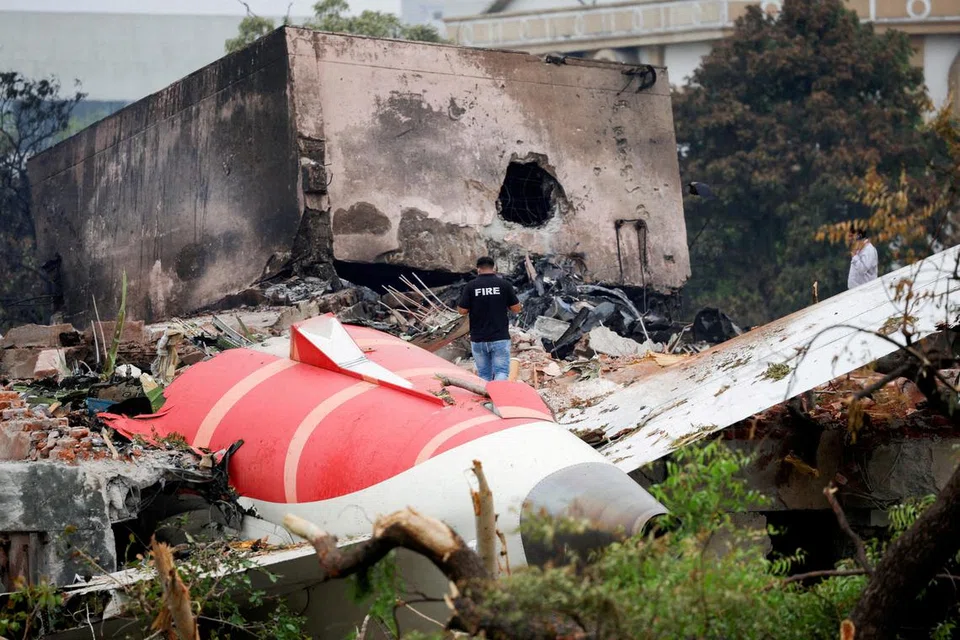
Investigators probing the June 12 Air India crash in Ahmedabad that killed 260 people are examining whether improper handling of engine fuel control switches may have led to the tragedy.
Preliminary findings suggest a possible mismanagement of the Boeing 787 Dreamliner’s fuel system shortly after take-off from Ahmedabad, according to aviation industry outlet The Air Current.
Flight and cockpit voice recorders recovered from AI-171 reveal that movement of fuel control switches – used to start and shut down engines – may have occurred during the critical moments before the aircraft crashed into the BJ Medical College hostel building. The crash claimed the lives of 241 passengers and crew on board and 19 people on the ground.
These fuel control switches, located beneath the throttle levers, are surrounded by protective brackets and feature metal stop locks to prevent accidental operation. Shifting one of them from RUN to CUTOFF mid-flight would immediately halt fuel supply to the engine, resulting in a loss of thrust and disabling electrical generators linked to that engine.
If an engine catches fire, the fuel control switch for the affected engine would turn red to alert the crew.
However, according to reports, the advanced fly-by-wire flight control system of Boeing-787 automatically compensates for any difference in thrust coming from one of the engines.
Its flaperons, ailerons and rudder would automatically adjust to keep the aircraft flying straight. The pilots also receive a tactile cue.
Sources told Air Current that the black box data does not confirm whether the switches were moved by mistake, on purpose or due to some other issue before or after the apparent loss of thrust.
“There’s no way to accidentally bump and move these switches,” aviation safety expert John Cox told The Air Current, emphasising that deliberate force is needed to alter their position.
The Aircraft Accident Investigation Bureau (AAIB) has submitted its preliminary report to the Ministry of Civil Aviation. To date, no mechanical faults have been flagged, and no safety bulletins have been issued for the Dreamliner fleet.