
Hundreds of people have been evacuated and rescuers continue searching for people feared missing in floods and landslides that have killed at least 71 in Himachal Pradesh, including 11 who died in the collapse of a temple.
Another 13 have died in neighbouring Uttarakhand state.
“More than 800 people were evacuated from the low-lying areas of Kangra near the Pong Dam as their villages became inaccessible due to the elevated water level in the dam reservoir,” Himachal Pradesh Chief Minister Sukhvinder Singh Sukhu said on Wednesday.
“Evacuation operation is still on as more people are being evacuated.”
Days of torrential downpours have washed away vehicles, demolished buildings and destroyed bridges in the northern Himalayan state.
“At least 71 people have died in the past three days and 13 are still missing. A total of 57 bodies have been recovered since Sunday night,” Principal Secretary (Revenue) Onkar Chand Sharma told news agency PTI.
Flooding and landslides are common and cause widespread devastation during India’s monsoon season, and experts say climate change is increasing their frequency and severity.
Thousands of people have been stranded after disruptions in road traffic, power transmission and communication networks.
“The suffering of those affected cannot be relieved with money, but the government will provide all possible help to them in this hour of distress,” Mr Sukhu said.
At least 11 people died when a landslide triggered the collapse of a popular Shiva temple in the state’s capital, Shimla.
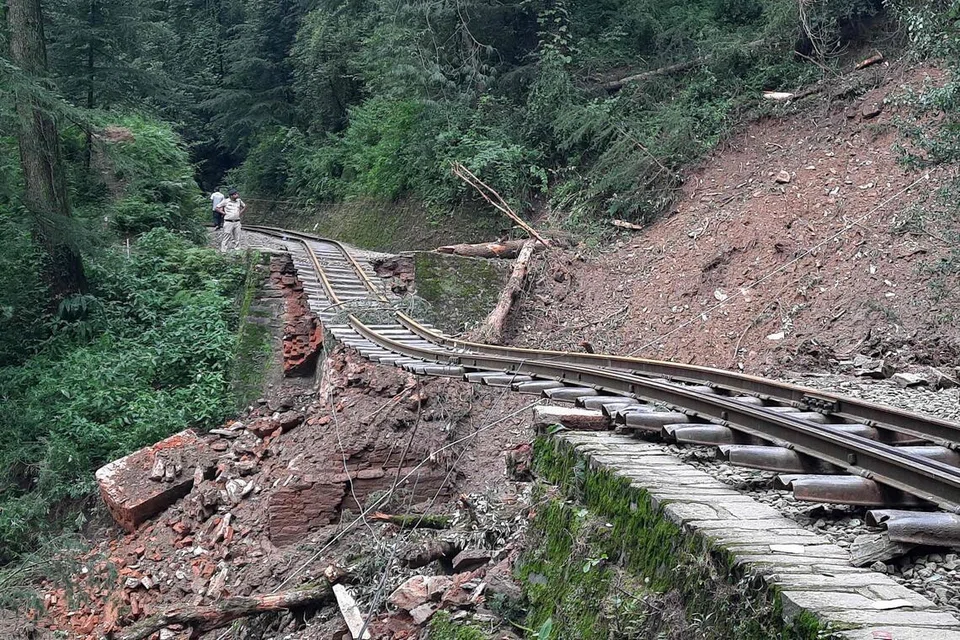
Railway lines were seen dangling after the ground beneath them was washed away.
According to the state emergency operation centre, a total of 214 people have died in rain-related incidents in the state since the onset of monsoon on June 24, and another 38 are missing.
Himachal Pradesh received 742mm of rainfall in 54 days of monsoon this year, against the season’s average of 730mm between June 1 and Sept 30 last year, a weather official said.
The rainfall recorded in the state this July broke all records for the month in the last 50 years, Shimla Meteorological Centre Director Surinder Paul told PTI.
Mr Sukhu said the disaster was the worst to hit Himachal in 50 years.
Tuesday’s annual celebrations of Independence Day were scaled down to concentrate on rescue efforts.
Prime Minister Narendra Modi, delivering his Independence Day address from the Red Fort in New Delhi, said that recent natural disasters had caused “unimaginable troubles” for families across the country.
“I express my sympathies towards all of them and I assure them that state and central governments will work together,” he told the crowd.
At least 13 people have been killed since Friday in Uttarakhand, officials said on Tuesday. Rescue teams there raced to remove debris after people were feared buried when heavy rainfall triggered landslides.
Five people were buried when a landslide hit a resort near the popular yoga retreat of Rishikesh on the banks of the river Ganges.
Nearly 350 roads around Uttarakhand had been closed to traffic, according to state disaster bulletins.
Several riverside towns and villages in both states were at risk of flash floods from the heavy rain.
The monsoon brings South Asia about 80 per cent of its annual rainfall and is vital for both agriculture and the livelihoods of millions. But it also brings destruction every year in the form of landslides and floods.
Days of relentless monsoon rain killed at least 90 people last month, while the capital New Delhi saw the Yamuna river, which snakes past the megacity, record its highest levels since 1978.
Forecasters expect heavy rains to continue across northern India until Sunday.
Indo-Asian News Service