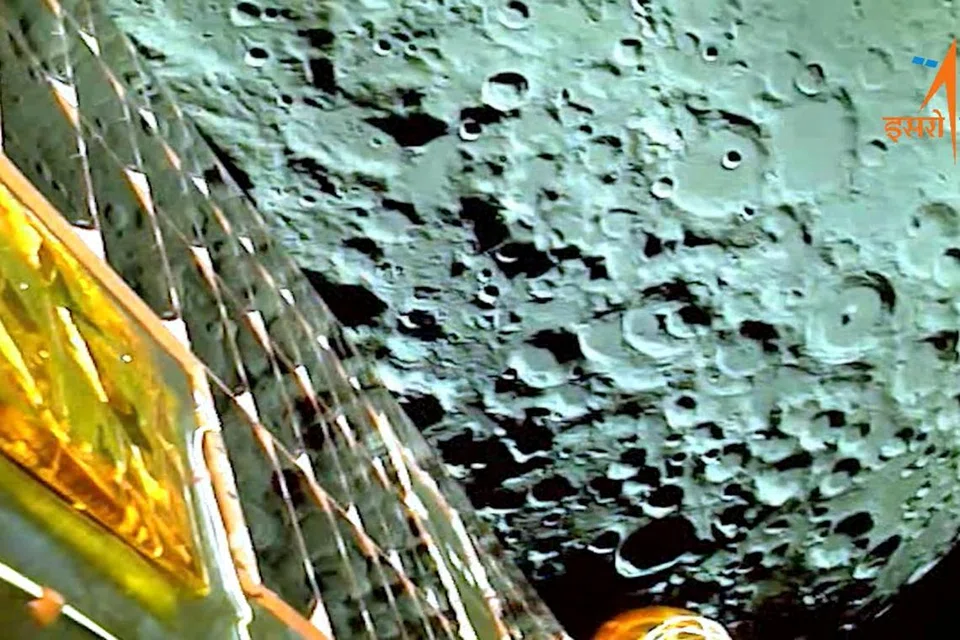

Two spacecraft, one built by India and the other by Russia, are on their way to the moon, taking different routes.
These spacecraft are on a mission to search for water or ice and valuable minerals in the lunar dust at the South Pole, a region yet unexplored by any lander.
Coincidentally, both vehicles are expected to reach their destinations around the same time, creating a mini space race.
The Indian lander, Chandrayaan-3, blasted off from Earth on July 14, packed with a payload of scientific equipment as well as a small, six-wheeled rover for exploration of the lunar surface.
It is due to touch down on the moon on Aug 23 after sling-shotting around the Earth a few times and spending several weeks orbiting the moon in preparation for the landing.
The Russian lander, Luna-25, took off from the Russian far east on Aug 11. It is taking a much faster, more direct route to the moon and could reach the surface in as little as 10 days, on Aug 21.
Officials at the Russian space agency Roscosmos have made no secret about their desire to be first to make a soft landing on the moon’s South Pole.
However, Luna-25’s journey might take slightly longer, meaning Chandrayaan-3 could arrive on the moon first, reported the BBC.
The Indian Space Research Organisation (ISRO) seemed concerned about the timing of Luna-25, and its potential impact on orbital space around the moon.
ISRO warned that, with the arrival of Luna-25 and nine more spacecraft over the next two years, there would be an increased risk of collisions.
Decades after the original space race between the United States and the Soviet Union, interest in the moon for space exploration has been renewed.
Recent discoveries of ice on the moon have excited scientists, as it could be a potential resource for rocket fuel and even drinking water.
This new era of lunar exploration involves various countries and private companies, all aiming to explore and potentially establish a human presence on the moon.
The outcome of this race could shape the future of space exploration, as individual missions contribute to our understanding of the solar system.
National pride and the desire to prove capabilities in space also play a role in pushing ahead.
Indo-Asian News Service