Learning everything about his Peranakan heritage consumed most of Mr Alvin Yapp’s time while growing up.
Later, the curiosity extended to other cultures, especially Indian, which was triggered by his father taking him to Komala Vilas for a bite when he was in school.
“Thosai, batura, puri... I began to relish Indian food,” he told tabla!. “I wanted to see India and find out more about its customs and traditions.”
With his Catholic church group, the Singaporean visited Chennai and Bengaluru, which were “eye-opening” experiences. After he joined Singapore Airlines, he toured Kochi, Tiruchirappalli, Pune and other Indian cities.
“But there is more to India,” the 54-year-old said. “I wanted to find the true essence. I decided to go to the most mystical and sacred places of them all – Varanasi.”
The city in Uttar Pradesh is considered the ultimate pilgrimage spot for Hindus, who believe that one who is graced to die there would attain salvation and freedom from the cycle of birth and re-birth.
“I had two purposes,” said Mr Yapp. “Spend New Year’s eve and January 4, my birthday, in the holy place. I wanted to contemplate life and understand the reason for being on earth.”
With a friend, he took a Scoot flight to Lucknow on Dec 27, 2018, and then the night train to Varanasi. He had booked a room in a guest house for $10 a night.
Varanasi, also known as Kashi, is one of the oldest cities in India. It is situated on the banks of the Ganges, which is sacred to the Hindus.
The city’s main draw is its death rituals. After a person dies, the body is wrapped – usually in white – and adorned with marigolds. It is then taken to the “ghats”, wide stone landings separated by steps that lead down to the Ganges, and burnt in wood-stacked pyres. The ashes are scattered in the river.
“I spent Dec 31 at two ghats,” said Mr Yapp. “Not many people would like it as the atmosphere is eerie. But you cannot not feel spiritual, whatever faith you follow. I got a clear perspective on life and death and the human connections. You find that everything is real in Varanasi.”
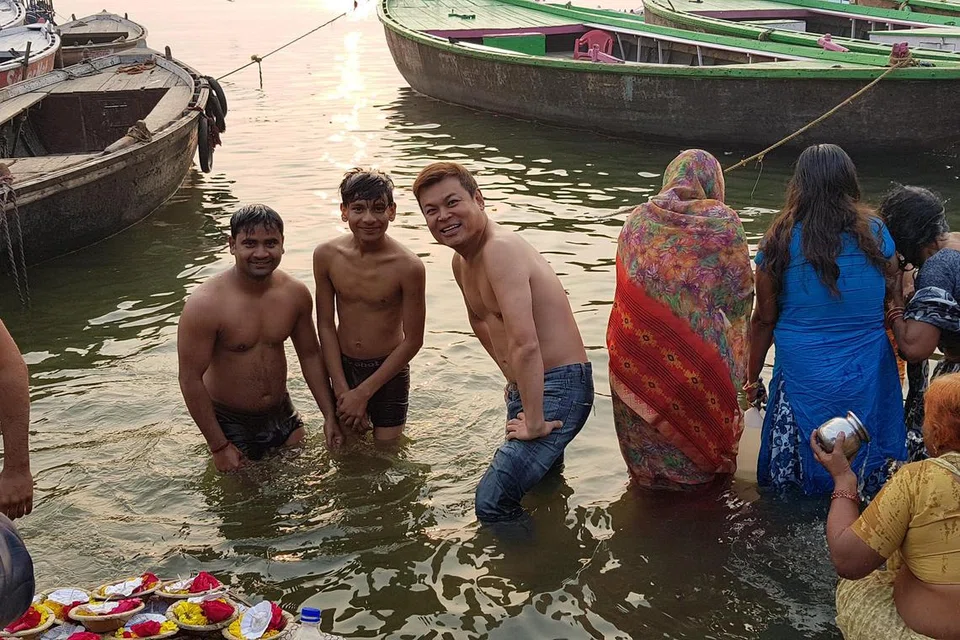
Mr Yapp also attended the early morning arathi (prayers and puja) on Jan 4 and took a dip in the Ganges.
“It was ice-cold,” he said. “But it was a special way of celebrating my birthday with tourists, families, the elderly and children cheering me on as they watched me. I felt privileged that I was in such a setting.”
Later that morning, Mr Yapp had another birthday celebration, with Varanasi’s street kids. “I cut the fruit cake, my favourite, at a local church with the slum community around me,” he said. “It was a fantastic experience to be with people who did not have much.”
He also went to an Indian barber on the banks of the Ganges and got an oil-body and face massage done.
“I paid just $2, it was a massage to die for. People say Varanasi is dirty. But I lay on the floor and got the massage done.”
During his eight days in Varanasi, Mr Yapp “walked all the 88 ghats” and got to relish the “simple Indian food” it offered – different types of chaat, masala chai, mango lassi and Chinese-Indian cuisine.
“Chinese-Indian combines spicy flavours with ingredients like soy sauce, szechuan (spicy red sauce), manchurian (sweet and salty brown sauce) and vinegar and are supremely tasty,” he said. “I got to taste chicken lollipop, chicken, shrimp and vegetable noodles popularly referred to as chow mein, chop suey and sweet and sour dishes.
“Most of the food in Varansai caters to the needs of travellers and pilgrims. I also found a shop near the river which made the most amazing vegetable pizza. I had it for supper.”
Varanasi, Prime Minister Narendra Modi’s parliamentary constituency, is also the spiritual home of India’s sadhus, or holy men who have renounced the worldly life. They are revered by Hindus as representatives of the Gods and sometimes worshiped as Gods themselves.
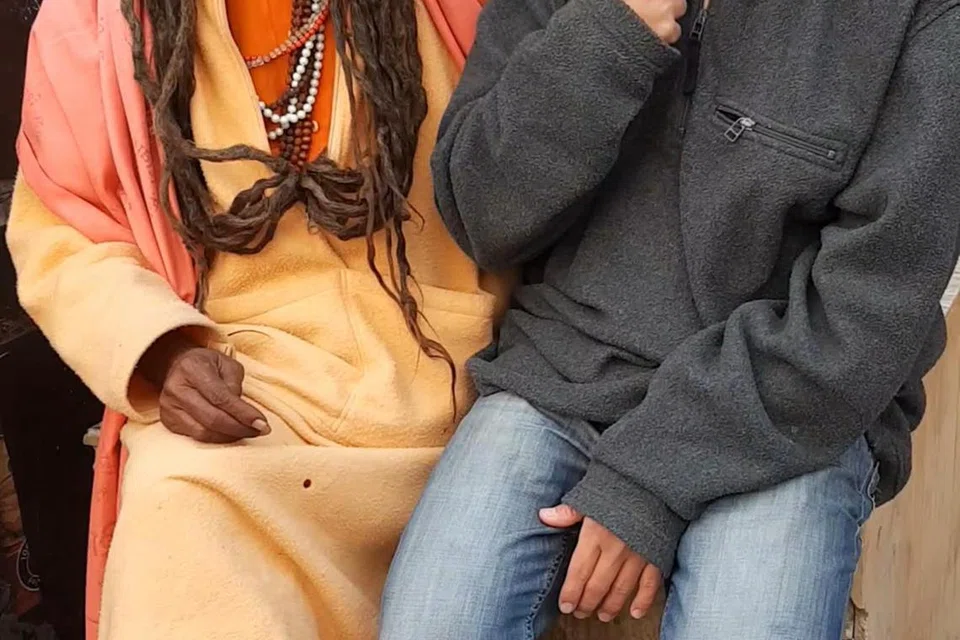
“I met a sadhu, who was smeared in ashes and had unkempt hair,” said Mr Yapp. “He said he was from Kolkata. I spoke to him in Bengali, and he was surprised. I told him that I learnt the language while being posted as Singapore Airlines’ station manager in Dhaka. He hugged me and blessed me.
“Sadhus are friendly. They give hope to many people.”
Mr Yapp also found that the Mother Teresa Charity Home gives hope to many poor people in Varanasi.
“I bathed the poor and gave them food. I also became friends with a deformed boy and took care of him for two days. I found it very meaningful to spend time with them.”
Mr Yapp, who was also Singapore Airlines’ station manager in San Francisco and now runs the Intan Peranakan museum at Joo Chiat Terrace post-retirement, pointed out that “ for many Singaporeans, India is not a popular holiday spot.
“But for me it was wonderful. There is so much spirituality, homeliness and freshness about the country,” he said. “India has many things to offer. But Varanasi remains my favourite.”
“My fascination for India has come full circle. A lot of Indians now visit my museum, and they have included TV and theatre personality Cyrus Broacha and a chef who opened a Peranakan restaurant in Mumbai. I am truly blessed.’