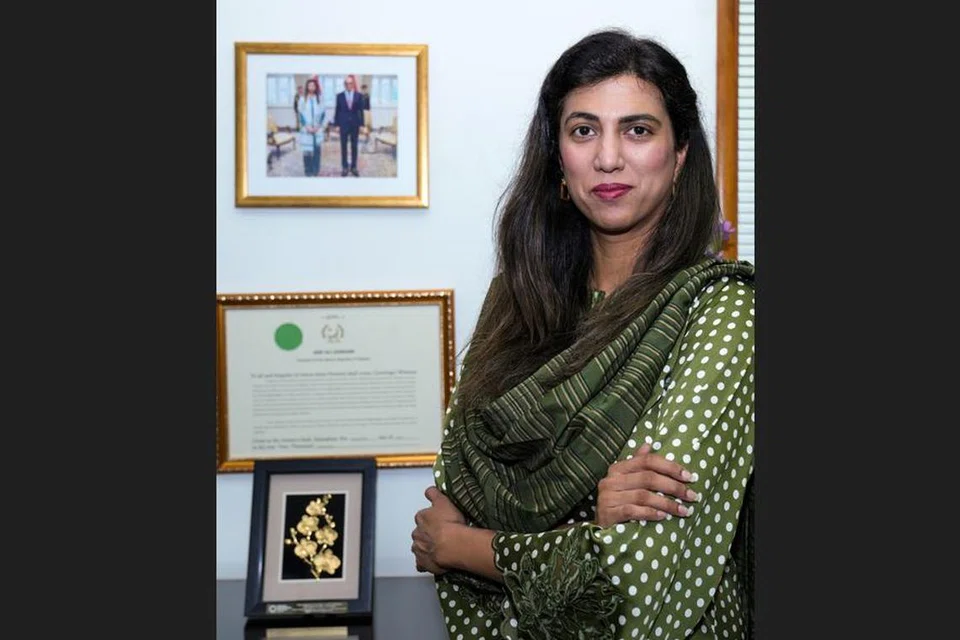

Two recent plays by Singaporean theatre companies addressed the Partition of India and Pakistan. One of them, Train to Pakistan, was attended by Pakistan High Commissioner to Singapore Rabia Shafiq.
Reflecting on it, she said the play was “nicely made” and offered audiences a powerful portrayal of history. “Many people in Singapore aren’t familiar with the Partition, so such stories help them understand what really happened and the human stories behind it,” she said.
However, Madam Rabia emphasised that, while conflicts like Gaza and Ukraine differ politically from the Partition, there are broader lessons to learn.
“The key takeaway is that once the turmoil settles, the focus must be on development and improving lives,” she said, drawing a parallel to Singapore’s own history and growth after separation from Malaysia.
Highlighting Pakistan’s journey since its independence over 75 years ago, Madam Rabia noted the nation’s roots in agriculture, with major development in infrastructure, including dams and electricity generation.
She said efforts are ongoing to develop the manufacturing and services sectors, and with more than 60 per cent of Pakistan’s 240 million population under 30, human capital is a key focus. “Equipping youth for the economy and improving health and education are central goals,” she said.
While referring to negative perceptions of Pakistan, Madam Rabia admitted to economic and security challenges, partly due to the country’s geographic location.
“But many countries face challenges,” she said, pointing out Pakistan’s functioning democracy, independent judiciary, vibrant media and resilient people. “Despite inflation or difficulties, Pakistanis remain passionate about life, from cricket to food. That resilience is our strength.”
Addressing concerns about travel to Pakistan, Madam Rabia encouraged Singaporeans to speak to those who have visited.
“Pakistan offers diverse terrain, from the northern mountains to ancient civilisations like Gandhara and Mehrgarh,” she said.
Religious and adventure tourism are growing, with visitors from Europe and Japan frequently visiting Buddhist and Sikh sites. “Security systems are in place, and like in any country, basic precautions ensure a good trip,” she added.
Her personal favourite is Gilgit-Baltistan. “I was awestruck – it’s magical. Photos don’t do it justice,” she said. The High Commissioner also recommended major cities like Karachi, Lahore and Islamabad, each offering unique cultural and culinary experiences.
Madam Rabia grew up in Islamabad, completing her schooling, college and university there. She joined the Foreign Service in 2001, after earning degrees in business and public administration.
After a brief internship in banking, she realised it wasn’t for her. “I come from a family of doctors, lawyers and engineers. No one in my family was in government, so becoming a diplomat wasn’t planned. Life led me there.”
She finds her diplomatic work rewarding, despite the challenges of being away from family. “It gives you a sense of purpose – you represent your country and strive to bring benefits back.”
About 30 per cent of Pakistan’s foreign service officers are women, with about a dozen serving as ambassadors globally. “That’s a strong presence and a positive sign.”
Madam Rabia arrived in Singapore in June 2024, marking her first ambassadorial posting. With Pakistan and Singapore completing 60 years of diplomatic ties in 2026, she sees great potential to deepen mutually beneficial cooperation.
“One priority is leadership level political engagement,” she said, noting a lack of high-level visits between the two countries in recent years. “I’m working to revive that.”
Economically, she’s focused on increasing food and halal meat exports, expanding agricultural trade, and positioning Pakistan as an outsourcing destination in IT, finance and accounting. “Singapore needs skilled professionals, and Pakistan has the talent.”
Madam Rabia also sees opportunities for collaboration in climate change adaptation, where Singapore’s expertise in waste management and sustainability could benefit Pakistan, a country highly vulnerable to climate-related disasters.
Human capital development is another area where she believes Pakistan can learn from Singapore’s efficiency and innovation.
On life in Singapore, she said: “It’s an easy place to be. You don’t feel like an outsider. The diversity and safety are very appealing.”
She enjoys walking, badminton, and is currently learning to swim. She also appreciates the variety of food and products available. Her favourite local dish? “Singaporean noodles!”
When asked what she’d like to take back to Pakistan, she highlighted Singapore’s greenery – even in urban architecture – and digital services. “The SingPass app is impressive. It simplifies government services. I’d love to see something like that in Pakistan.”
The Pakistani community in Singapore is about 5,000 strong. “They’re very active, and I attend their events whenever possible,” she said, adding that the Singapore Pakistan Association is a valuable bridge between cultures.