
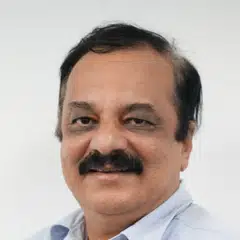
V.K. SANTOSH KUMAR
Singapore’s mandatory death penalty for convicted drug traffickers has many critics, including Amnesty International, human rights organisation Reprieve, and British billionaire Richard Branson.
They believe the harsh policy adversely punishes low-level traffickers and couriers who are typically recruited from marginalised groups – and it has done little to stop major drug traffickers and organised syndicates.
But the law has a supporter in Dr Kiran Bedi, the first woman to become an Indian Police Service Officer and who is famous for initiating reforms at the tough Tihar Jail during her tenure as Delhi’s Inspector-General of Prisons from 1993 to 1995.
“Traffickers ruin millions of lives, and the drugs they distribute affect not just one person, but families and society,” the 74-year-old told tabla! on Tuesday, during a four-day visit to Singapore when she attended a business conclave. “So, I think, they deserve it.
“Of course, the executions have to be decided case by case. But you should remember that the drug trafficker spares nobody. He’s inducing millions of people to become addicted. And it takes a heavy toll on families.
“I did my PhD in drug abuse and domestic violence. And I’ve seen women and children become the prime victims of drug traffickers.”
Dr Bedi said governments have to take strong steps to end this menace.
“Having run a prison and being a police officer, I know that you have to look at every crime per se and not generically,” she said.
“I believe the sufferings of the victims too have to be evaluated. There are many accused who are reformable. But certain crimes require no sympathy or mercy.”
Dr Bedi highlighted that executions must be carried out only after a proper psychology study has been done of the convict. “If he is unrepentant, incorrigible and cannot be changed, then I think execution is the right way.
“While you are looking at the rights of the accused, you should also remember the rights and feelings of the victims. You have to balance the two. I believe all such executions are evidence-based and have gone through the process of law.”
Law and Home Affairs Minister K. Shanmugam has often said that critics of Singapore’s mandatory death penalty for convicted drug traffickers miss the point that it saves lives and protects Singaporeans.
He told the BBC’s HARDtalk programme on June 29, 2022, that capital punishment is imposed here because there is clear evidence that it is a serious deterrent for would-be drug traffickers.
“The trafficker wants to make money. He, you know, is damaging the lives of drug users, their families – damaged, often seriously destroyed,” he said.
A 2021 report by the World Health Organisation showed there were 500,000 deaths linked to drug abuse in just one year.
In the United States, there are more than 100,000 deaths due to drug overdose in a year, and life expectancy declined in 2015, for the first time since World War I, due in large part to the opioid crisis.
“Every culture, every country has the right to decide what is the best message to be given to drug traffickers,” said Dr Bedi. “It has to be a powerful message. Every punishment has prevention, deterrence and reform. So, you have to make a choice between the three.”
Mr Shanmugam has said in the 1990s, Singapore was arresting about 6,000 people a year for drugs, but this has now dropped to about 3,000 people a year.
Compared with 30 years ago, there are more drugs in the region, and Singapore would be completely swamped without tough penalties, he added.
Singapore’s deterrent penalties have “saved thousands of lives”, he said.
In India, “the drugs situation is under control”, Dr Bedi said. “But then again, traffickers will find ways to challenge the rules. That is where punishment is very important.
“In India, if you are caught with drugs beyond a certain quantity, it is 10 years straight in prison and non-bailable. If you repeat the offence, the death penalty is an option. But executions are rarest of the rare.”
Hangings in India in recent years have mostly been carried out for murder, rape and terrorism.
For Dr Bedi, executions actually reduce the suffering of the accused. “Lifelong imprisonment is worse,” she said. “It means that the accused suffers over a long time and dies in prison eventually.
“I believe Singapore is going about it the right way.”