I was in Little Bangladesh, opposite Mustafa Centre, on Sunday afternoon. At one of the provision shops there, I asked the Bangladeshi standing next to me: “What on earth is happening in your country?” He looked askance at me and replied with a smile: “Don’t worry. Everything will be fine in a week.”
Prime Minister Sheikh Hasina of Bangladesh fell from power on Monday.
Looking back on my encounter with the customer, I realise that he was enigmatically correct. When he said “fine”, I thought he meant his government would gain the upper hand over protesters who had paralysed life in Bangladesh and restore order.
What occurred, instead, was the departure of a vilified leader, whisked away to safety in India; the dissolution of Parliament; and the announcement of an interim government tasked with bringing Bangladesh back to normalcy.
So, my enigmatic interlocutor was correct. The point was a return to order, not the political longevity of a leader who had equated herself with normalcy even though her rule had been marked by widespread human rights abuses, including the not-so-mysterious “disappearances” of those who had defied the writ of her Awami League party; and the widespread jailing of her political opponents from the Bangladesh Nationalist Party and other organisations.
Now, normalcy in Bangladesh rests on the efforts of the interim government.
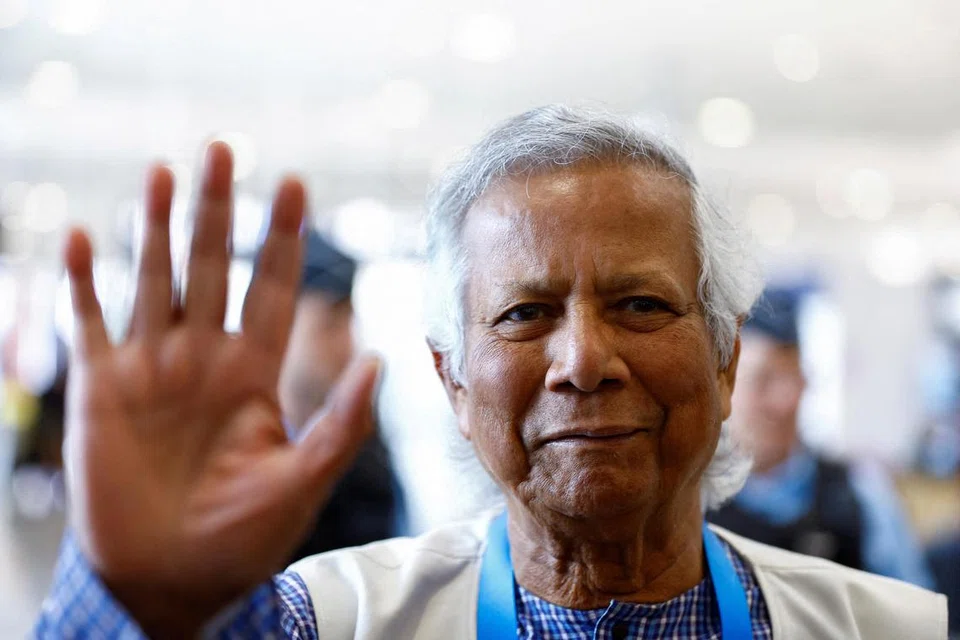
The good news is that the caretaker administration will be headed by Nobel laureate Muhammad Yunus, the banker-economist whose pioneering application of the concepts of microcredit and microfinance transformed the lives of millions of poor Bangladeshis, particularly women – to the point that Ms Hasina took him to be a political threat to her “normalcy”.
The bad news is that retribution has infected Bangladesh’s return to calm, leading to near-anarchy in parts of the country as those who were cast aside violently during Ms Hasina’s rule have returned to the seething streets. They have killed local Awami League politicos and burned their homes and businesses. Minority communities that were a bastion of support for Ms Hasina have come under ethnically-driven attack. Everything is anything but fine as the customer’s promised week approaches an end.
Bangladesh is witnessing the classic aftermath of a revolution. An existing order has been overthrown and a new order waits to be born, but there is no hospital or doctor or midwife in sight. So, screaming and writhing, the mother delivers the baby herself, cuts off the umbilical cord as best as she can and cradles her everything in her arms. The father arrives, exultant (although he played no part in the birth). The baby sleeps on: She is the new name of the normal.
It will be the same in Bangladesh. After the birthing violence of a new order, the quest for justice will continue. Bengalis will go back to eating rice with hilsa fish (when they can afford the delicacy), writing poetry and plotting what to do with their new rulers should they begin to resemble their predecessors. Bangladesh will continue being itself: talented, fretful, contentious and insatiable.
Of course, a nation is more than a metaphorical baby. Ms Hasina’s fall has circumscribed the copious Indian ambit in Bangladeshi affairs to the strategic advantage of Pakistan and China. No matter which political dispensation comes to power after the next election – it is safe to assume it will not be the Awami League – Bangladesh cannot afford to annoy India beyond a point since its economy and security are intertwined with those of its giant neighbour. Bangladesh may well tilt away from India (as it has done in the past), but it cannot tilt so closely towards China that it disturbs the balance of power in South Asia.
As for Pakistan, from which Bangladesh seceded with Indian help in 1971, its relations with even the new normal in Bangladesh cannot transcend the historical reality of separation in which West Pakistan and East Pakistan went their different cultural and national ways in spite of a common religion.
It is tautological, but Bangladesh will remain Bangladesh.
By Asad Latif
The writer is a former Straits Times journalist.