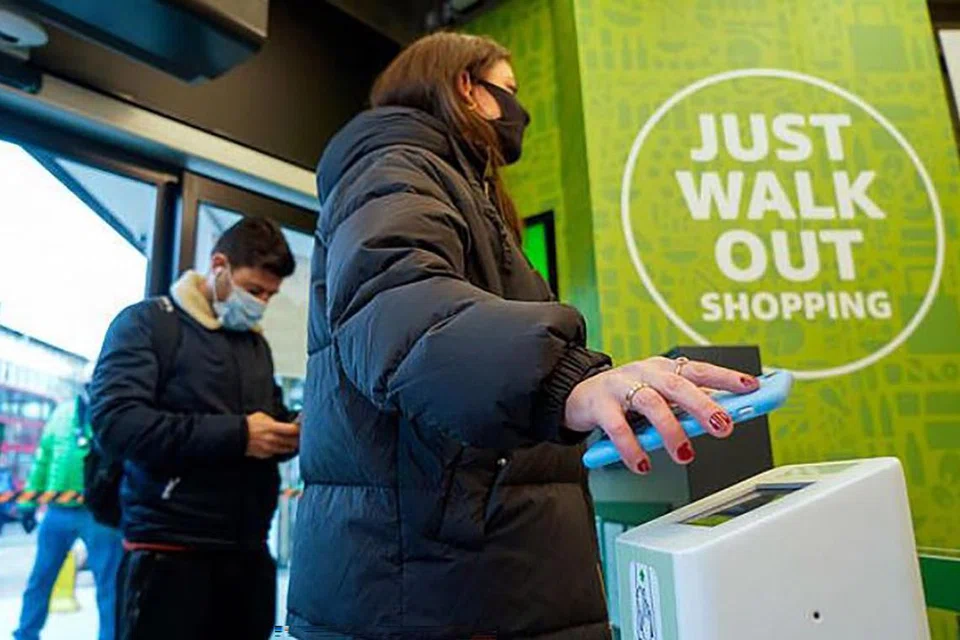

Amazon’s celebrated Just Walk Out technology, which allowed customers to bypass traditional checkouts at its stores, secretly relied on Indian workers manually doing the job, according to a recent report in Business Insider.
About 1,000 workers in India were tasked with reviewing what customers picked up and ultimately walked out with from Amazon’s Just Walk Out-enabled stores, the report said.
While Amazon touted the technology as a groundbreaking achievement driven entirely by computer vision, the reality was that a significant portion of Just Walk Out sales required manual review by the team in India.
The report stated that in 2022, around 700 out of every 1,000 Just Walk Out transactions had to be verified by these workers, citing an unnamed source familiar with the technology.
However, an Amazon spokesperson disputed this claim, asserting that the India-based team primarily assisted in training the model used for Just Walk Out.
“Amazon does have people to annotate video images, which is necessary for continuously improving the underlying machine learning model powering Just Walk Out technology,” the spokesperson said, as quoted by Business Insider.
“Associates may also validate a small minority of shopping visits where our computer vision technology cannot determine with complete confidence an individual’s purchases.”
The revelation comes as Amazon plans to phase out Just Walk Out technology at its Amazon Fresh stores in favour of its Dash Carts, according to media outlet The Information.
These smart shopping carts will allow customers to avoid checkout lines by automatically tracking and charging for their selections, providing an alternative to the Just Walk Out experience.
The Amazon spokesperson explained the motivation behind the transition, stating that customers desired additional features like easily locating nearby products and deals, viewing their receipts while shopping, and knowing their savings – capabilities offered by the Dash Carts.
Just Walk Out technology first debuted in Amazon Go convenience stores. It enabled customers to enter by identifying themselves with their Amazon account, pick up items, return items to shelves, and walk out with their final selections without interacting with a cashier.
Amazon had referred to Just Walk Out as “a combination of sophisticated tools and technologies that added items to the shopper’s virtual cart when they take an item off a shelf, and remove it when they put it back”.
According to its site, by adding the technology, it wasn’t removing employees – only “shifting” the way they spend their time by assisting customers, stocking shelves and answering questions.
When it released the technology, Amazon claimed it was “a combination of computer vision, object recognition, advanced sensors, deep machine learning models and generative AI”.
The Just Walk Out feature is being discontinued in all 27 of the company’s stores that house the technology.
Customers have previously complained about Just Walk Out, saying they were charged incorrectly and it took hours after leaving the store to receive their receipt.
Some shoppers were also concerned that the company was using shopper’s biometric data despite assurances by Mr Jon Jenkins, the vice-president of Just Walk Out, that the technology doesn’t collect or use biometric information.
Amazon had previously been accused of not informing customers that it was using its cameras and sensors to measure the shape and size of each person’s body as they entered the store.
The biometric data was reportedly used for identifying and tracking purposes and led to a New York class action lawsuit by customers who said Amazon violated the state’s Biometric Identifier Information Law.