


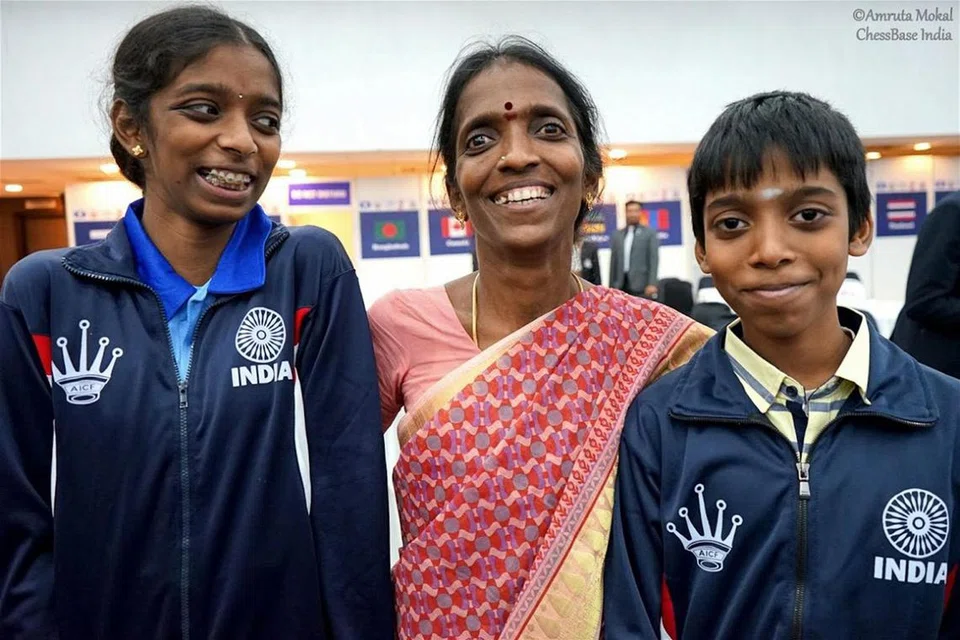
R. Vaishali and R. Praggnanandhaa have etched their names in the annals of chess by becoming the world’s first brother-and-sister Grandmasters.
The 22-year old Chennai-based Vaishali crossed the 2500 rating mark at the IV El Llobregat Open in Spain last Friday. Pragg, 18, became the second-youngest Grandmaster in 2018. He was 10 years old when he became the then-youngest International Master, the second-highest title after Grandmaster.
The first in the family to play chess, Vaishali becomes India’s third female Grandmaster after Koneru Humpy and Harika Dronavalli. Last month, she defeated three former world champions to win the Women’s Grand Swiss tournament and qualify for the Women’s Candidates tournament.
The pair’s achievements at relatively young ages are remarkable. But it was not without a dose of sibling rivalry.
Vaishali told the BBC that there was a bit of edginess at home when her brother attained early success. It took her time to accept that he was an exceptional talent.
“Suddenly at home, the focus was entirely on him,” Vaishali said. “It upset me. I don’t think I managed those emotions well. My parents would chat with me about it and I’d be okay for a while. But every time he had a great result and the attention was on him, I would slip back to feeling a bit miserable.
“It took me some time to overcome those feelings and accept that he is exceptional. Once I completed my Woman Grandmaster (WGM) title, I felt better about myself. Over the last couple of years, I’ve been nothing but proud of his achievements. I see the hard work behind it.”
Vaishali was introduced to chess by her father Rameshbabu, himself a chess player. Rameshbabu handles the logistics while their mother Nagalakshmi accompanies the children to tournaments around the world.
The siblings are different: Praggnananandhaa is an extrovert, fun-loving, and gregarious, while Vaishali is quiet, introverted and prone to overthinking.
Vaishali said the pandemic brought them closer and Praggnanandhaa is now someone she turns to when she is unsure.
“During the pandemic, we talked about all sorts of things that we never did before,” she said. “He has a lot of confidence and clarity. Sometimes when I’m feeling lost or unsure, I turn to him. He often has the right answers.
“Not too many others in chess have someone they can go back to, a family member, or an active player with whom they can analyse games. It’s only now that I think we both really value this privilege.”
When they began training under Grandmaster R.B. Ramesh as kids, Vaishali was the higher-rated player. Over the years, their journey in the game took different paths and it was often accompanied by stabs of envy for the one trying to keep up.
“It’s never easy for the sibling who’s on the other side,” said Ramesh. “For the longest time, the media would turn up at their home after a major result from Praggnanandhaa and ask Vaishali how it felt to be his sister or ask their parents how proud they were of their son.
“I think somewhere in her head it converted into pressure; the pressure to perform and not be ignored.”
The urgency to get to a Grandmaster title and not be cast into oblivion made Vaishali take risks at times. Sometimes they worked, at other times they didn’t.
But now that she’s doing well by sticking to what she knows best, the pressure has eased, and the results are showing.
Vaishali and Pragg have also became the first brother-sister duo to make the Candidates, the qualifying event for the World Championship match. The Candidates will be held in Toronto in April. “We have grown up winning age-group tournaments together,” Vaishali said. “Recently, we won the same medals at the Olympiad and Asian Games. Now we’re headed to the biggest tournament of our lives together,” she said.
Indo-Asian News Service

