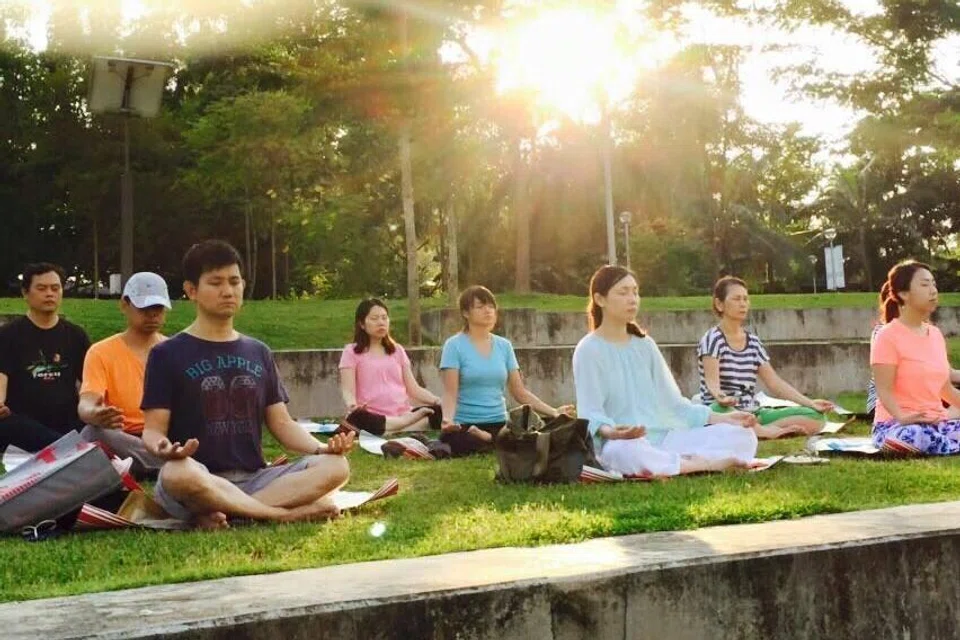
Yoga, a practice that was more privy to the East at one point in time, is now widely known and practised by people from all walks of life, all over the world. Commercial organisations tend to market it as a form of new age “sport” to help reduce stress and improve wellbeing.
But yoga is not limited to only the commonly known asanas (postures). The asanas form only one of the eight paths that make up complete yoga, also known as Samagra Yoga.
Yoga means to join. It is the confluence of body and soul with a focus on increasing soul consciousness.
Generally, yoga asanas have been of interest to make the body beautiful and shapely. But by doing this, priority is given to the body itself and thus increasing body consciousness, which is completely opposite to the essence of yoga.
Complete yoga can be understood through the eight paths of Ashtang Yoga: Yam – renunciation of bad deeds; Niyam – being part of good deeds; Aasana – positions to have control over the body; Pranayam – control over one’s breath; Pratyahar – introspection of values; Dharana – focus in one place (often a guru); Dhyan – experiencing a thoughtless state; and Samadhi – having no bodily feelings or body consciousness.
One considers oneself to be a soul.
“As soon as you start practising Samagra Yoga, then the yoga inside you starts to happen. You start getting the benefits of all these steps automatically,” says spiritual master His Holiness Shree Shivkrupanand Swami, founder of Himalayan Samarpan Meditation.
He has been spreading Himalayan Samarpan Meditation for the past 28 years to bring self-realisation to the masses and elevate soul consciousness.
He says that through Himalayan Samarpan Meditation, an inculcation of values happens by connecting with one’s soul and one automatically reaches the state of samadhi – the last step of complete yoga.
Swamiji adds that Himalayan Samarpan Meditation is a method of yoga that has the power to connect one human being with another; amplifying the concept “Vasudaiva Kutumbakam” – the whole world is a family.
Himalayan Samarpan Meditation is currently practised in 29 countries, including Singapore. It is non-religious, free of cost and there are no pre-requisites to learn it.