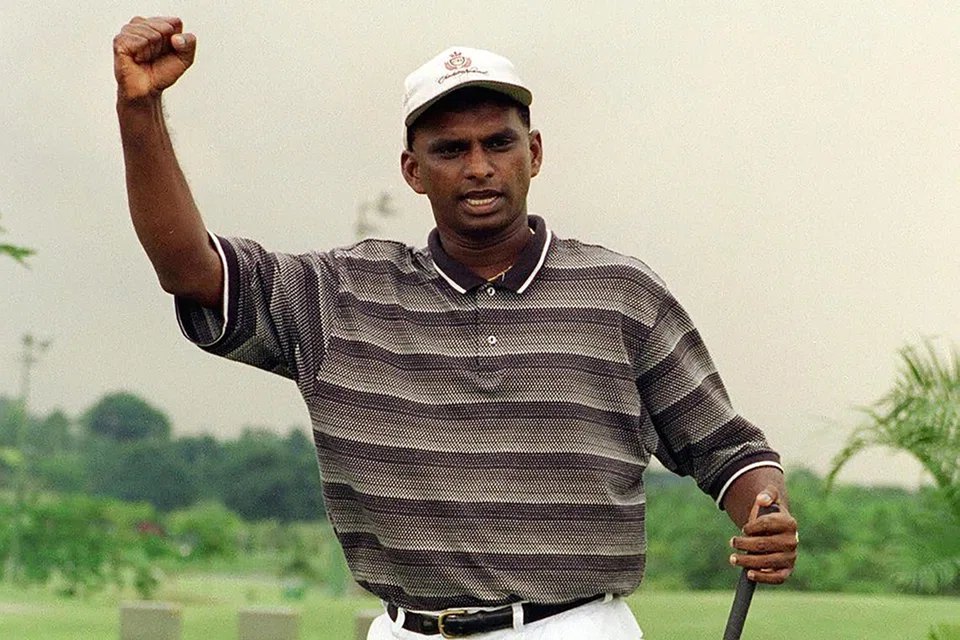


Golf is no stranger to Singapore.
From advancing Singapore’s diplomacy to nurturing national talents, building personal connections and serving as a popular avenue for charity, the sport has extended its influence well beyond the fairways.
At the 1984 opening of Tanah Merah Country Club, former Deputy Prime Minister and avid golfer Dr Goh Keng Swee described golf as “good for the soul” – a sentiment embraced by Singapore for decades.
In 2003, a midnight golf game between then Prime Minister Goh Chok Tong and former United States President Bill Clinton served as a diplomatic lubricant amid tensions leading to the US-Singapore Free Trade Agreement.
In the same vein, former Deputy Prime Minister S. Jayakumar described golf as a “valuable icebreaker” that fosters “a sense of camaraderie” among diplomats and ministers.
Founding Prime Minister Lee Kuan Yew was also known for his passion for golf, regularly seen at courses at the Singapore Island Country Club and Sentosa Golf Club.
Despite such a rich legacy, golf now faces existential issues in Singapore - with course closures and rising exclusivity.

The government’s announcement that course leases at six golf clubs – Warren Golf and Country Club, Orchid Country Club, Keppel Club, Singapore Island Country Club, Tanah Merah Country Club, and Mandai Executive Public Golf Course – will not be renewed has drawn mixed reactions across the golf fraternity. It said the land will be used for housing, public facilities, and other national needs.
With the course closures and a new 18-hole public course planned on a combined site of Keppel (Sime course) and SICC (Bukit) course, the total number of courses available will drop from 16 to 12.
The impact of the closures is being felt across a broad spectrum - young and old, professionals, and social players.
While the situation remains fluid, club membership prices are rising, and both indoor golf and overseas options are gaining popularity.
“Participation has been on the rise. The number of on-course golfers has increased from 80,000 in 2018 and now exceeds 140,000,” said Mr Ivan Chua, vice-president of the Singapore Golf Association.
While long perceived as elitist, the sport has seen genuine efforts to make it more accessible to all.
NTUC Club, with My Golf Kaki and a GreenBox public indoor simulator facility, has been teeing up fresh ways to keep golf within reach of the wider community.
Though media attention has waned, the closure of six courses continues to weigh on the minds of many golfers.
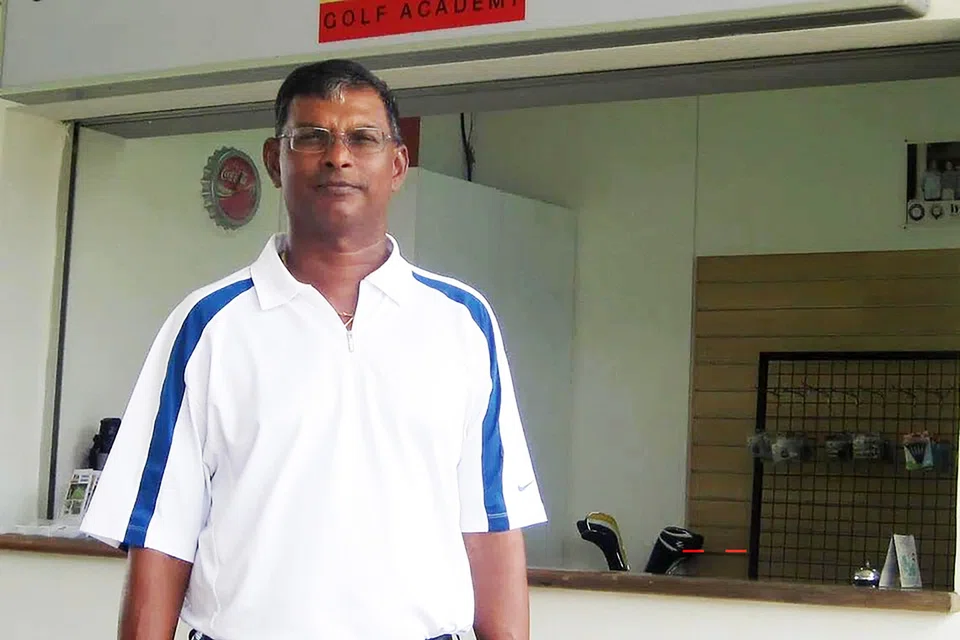
Mr Madasamy Murugiah, 61, president of the Singapore Professional Golfers’ Association and founder of Muru Golf Academy, lamented that the recent closures are “not good for the sport”, and questioned: “Where are we going to go next?”
He added: “The younger generation is in it for business.”
While acknowledging the rise of indoor and virtual golf, Mr Murugiah, who runs the driving range at Warren Golf and Country Club and trains nearly 200 professional golfers, firmly believes nothing compares to playing on a real course.
“It’s not possible to go overseas to teach because of permits and regulations,” he explained. “They could extend the lease by another two years, especially if demolition isn’t starting right away. It only takes six months to carry out the works.”
Retiree Chandarasekaran Gopal, 67, who began to play golf at eight and went on to serve as vice-captain of Raffles Country Club and captain of Warren Golf and Country Club, said that, given the ratio of golfers to the broader population that future developments could serve, the course closures may appear justifiable.
Looking ahead, Mr Chandarasekaran expects golf in Singapore to shrink in scale. While the sport will survive, he believes high costs will continue to deter the younger generation from picking it up.
“I’ll just play in Malaysia,” he said, adding that he has memberships at overseas resorts like Desaru Palm.
However, this sentiment isn’t widely shared across the golfing fraternity, with some noting that going overseas isn’t practical or convenient.
Mr Madasamy Balraj, 63, a teaching pro, fears for the future of the sport. “It’s going to affect upcoming recreational golf talents,” he said, holding out hope for inclusive spaces.
“I think there will be some form of negotiation, maybe part of Orchid Country club will be kept for recreation to complement the residential areas.”
Ms Nasirah Banu Ramirez, 37, one of the few Indian women who play the sport locally, highlighted the need for more public courses – spaces where beginners can learn and grow without feeling intimidated.
According to her, with the impending closure of local courses, many golfers are now heading overseas, particularly to Malaysia – inadvertently boosting its economy.
While this may lead to traffic jams and rising prices, she pointed out that right now the costs remain “well within the Singaporean budget”.