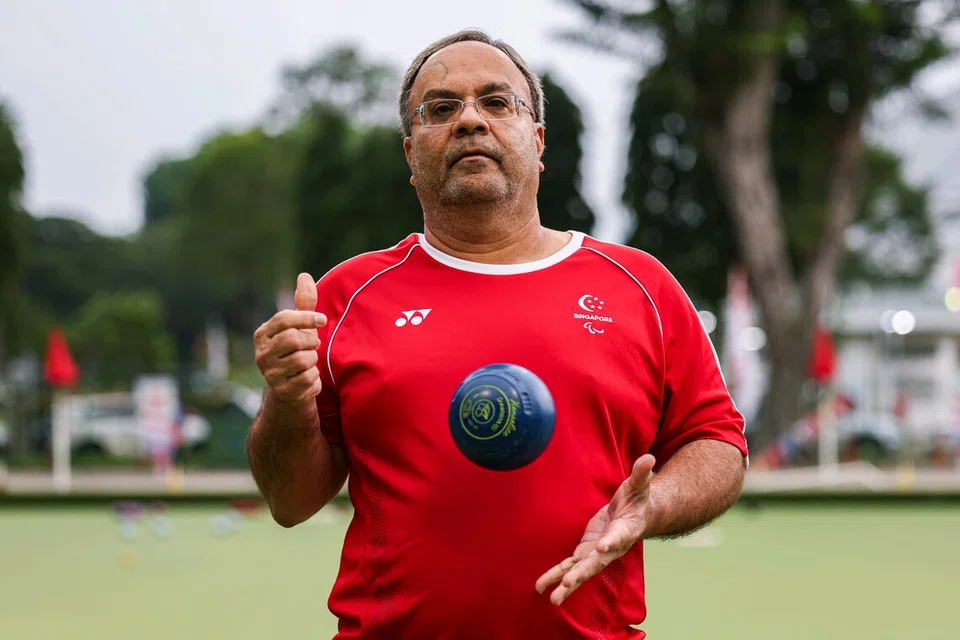

At 62, para-lawn bowler Mawjit Singh is living proof that age is just a number.
He is the oldest member of Team Singapore’s 53-athlete contingent to the 2026 Commonwealth Games.
“It’s incredible to be the oldest,” Mawjit said. “Personally, it sends out the message that age shouldn’t deter you from doing the things you love”.
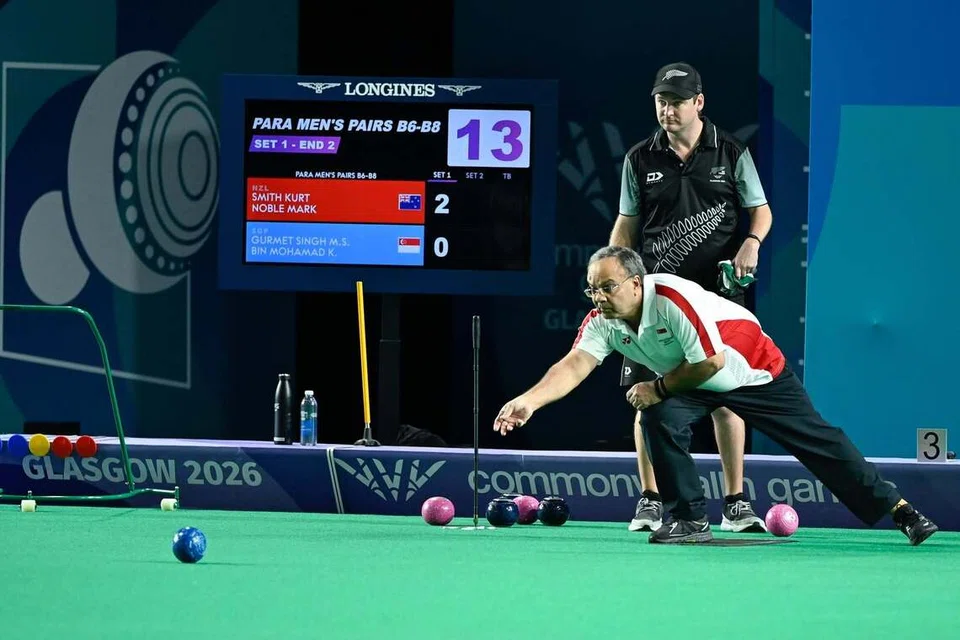
He competed in five sectional matches alongside teammate Khirmern Mohamad, 56, in the Para Men’s Pairs B6-B8 event designated for players with physical disabilities.
“I still feel like I’m in my prime and will continue to persevere as long as my body will allow me to,” he added.
The logistics officer at the Singapore Disability Sports Council (SDSC) stays fit by going to the gym and swimming. “Just doing a lot of cardio basically,” Mawjit quipped.
He and Khirmern have been partners in the national para-lawn bowls team for the last four years and together clinched the bronze medal at the 2023 World Bowls Championships in Gold Coast, Australia.
More recently, the duo beat Australia’s Dalmien Delgado and James Reynolds to secure the gold medal at the Four Nations tournament earlier this year in Glasgow, Scotland, where the 2026 Commonwealth Games also took place from July 23 to Aug 2.
“We knew we would be up against some of the world’s strongest pairs, many of whom have been competing in the sport for 20 to 30 years,” Mawjit noted.
The two men lost their opening matches against England and Scotland before drawing with Australia, New Zealand and South Africa. However, they were defeated in the tie-break on all three occasions and finished sixth in the sectional standings.
“Despite the tough competition, we believe we held our own and proved that we could compete at that level. Many people think this sport is rolling a bowl on the green, but there’s much more to it,” Mawjit said.
“It requires strategy, consistency, patience, and mental focus. In team events especially, communication and trust are just as important as technical skill,” he explained.
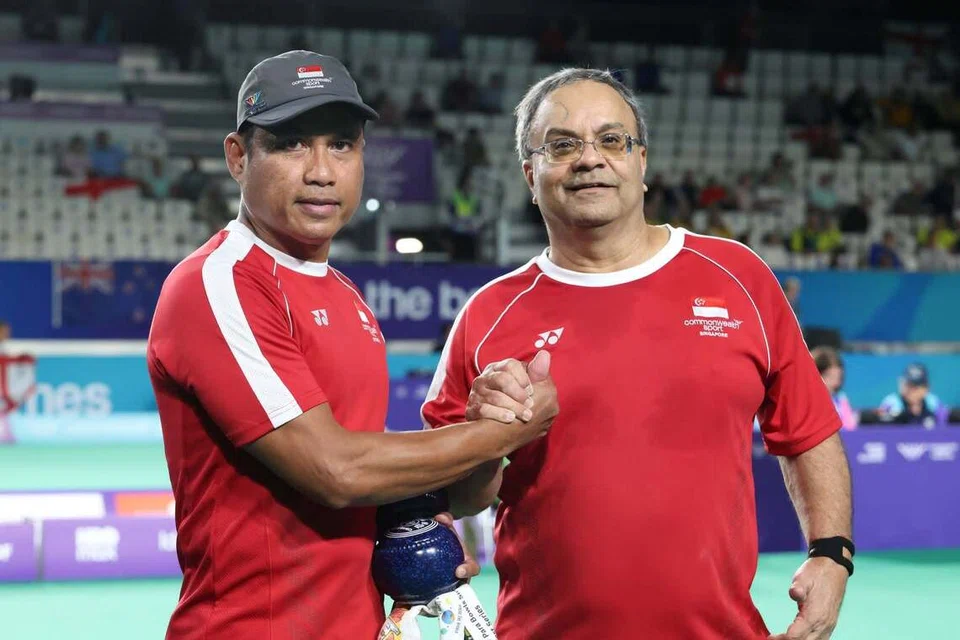
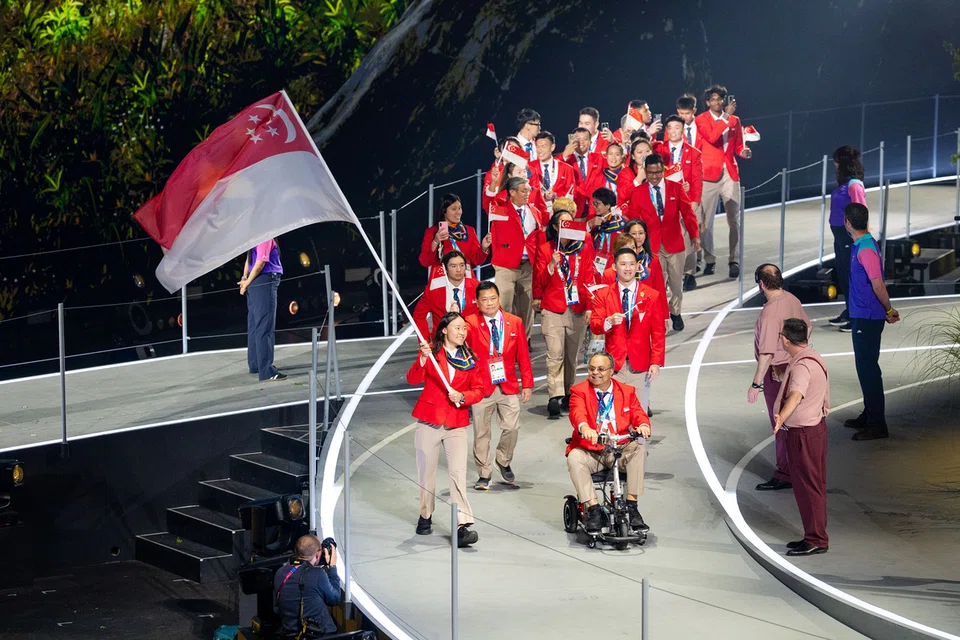
Still, Mawjit is proud of his Commonwealth Games debut. He was one of four para-athletes selected for Team Singapore, and joined swimmer Gan Ching Hwee to lead the national contingent as flag bearers at the Opening Ceremony in Glasgow on July 23.
It all started with a conversation with his very close friend and former SDSC president, the late Frankie Thanapal Sinniah, who believed that Mawjit had the potential to do well and encouraged him to give para sport a chance.
Mawjit was heavily into team sports such as hockey and athletics (track and field) during his school days, but that all changed in 1984.
He was just 20 years old when he was riding his motorcycle on the way home and got into a gnarly road traffic accident on the expressway.
“I was thankful to still be alive. Due to the severity of the accident, I don’t think I had time to fully process what had happened,” Mawjit recalled.
The accident eventually required him to have his leg amputated at the middle of his thigh, making him an above-knee amputee. His main option back then was a prosthetic leg, and that’s what he learnt to adapt to.
With time and technological advances, people with disabilities have many more choices now.
“At the Games, I used a motorised mobility scooter from Mobot for the first time, and it made getting around much easier,” he said.
Born into a close-knit family of second-generation Singaporeans, Mawjit grew up with three brothers and two sisters.
He also has a close group of friends who, along with his family, ensured that he was never alone on this journey because “they were always by my side, cheering me on to get back on my feet (literally)”.
Despite his physical limitation, he went on to win the bronze medal in shot put and discus at the inaugural ASEAN Para Games in Kuala Lumpur in 2001, and represented Singapore at other major international competitions.
He switched to lawn bowls in 2015 to challenge himself further.
“If my journey encourages even one person to take up any kind of sport or believe in themselves despite the challenges life throws at them, then I know I’ve achieved something beyond medals,” Mawjit said.