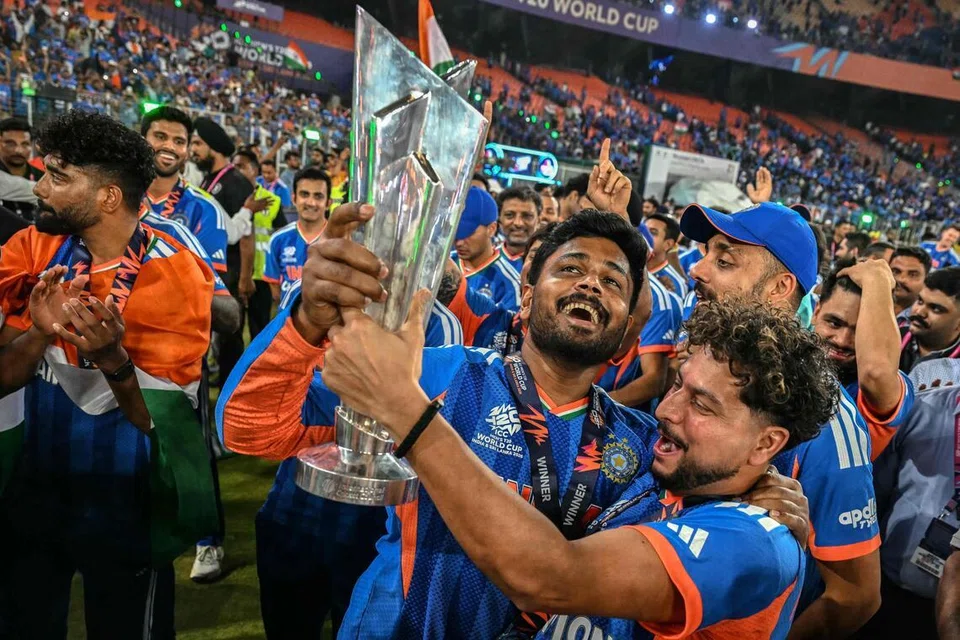

India’s historic triumph in the 2026 T20 World Cup, sealed with a crushing 96-run win over New Zealand in Ahmedabad on March 8, did more than deliver a third title. It confirmed, beyond serious dispute, that India are now the pre-eminent force in world cricket – on the field, in the boardroom and in the marketplace.
That reality does not please everyone.
Some critics mutter that India’s dominance is too overwhelming, too financially powerful, too politically influential for the health of the global game. Former Pakistan fast bowler Shoaib Akhtar even claimed India had “ruined cricket”. Others point to scheduling advantages, revenue imbalances, and the sheer gravitational pull of Indian money.
Yet, such criticism, while not entirely without basis, often misses the central truth. India are not dominating cricket merely because they are rich. India are dominating because they have built, over decades, a deep, disciplined and immensely productive cricketing ecosystem that no other country can presently match.
The wealth matters, of course. It would be naïve to pretend otherwise. The Board of Control for Cricket in India (BCCI) is the game’s financial superpower, taking in vast revenues from broadcasting, sponsorship, and the Indian Premier League. That money has transformed infrastructure, coaching, travel, sports science and talent identification. Better stadiums, better academies, better rehabilitation, better domestic contracts — all of that counts.
But money alone does not explain why India keep producing cricketers of startling quality from almost every corner of the country.
The real secret lies in the depth of the system. India’s talent pool is so vast that players who would walk into most international XIs often find themselves fighting merely to stay in contention. That is what separates India from everyone else. Their bench strength is not just strong; it is relentless.
At every level, from age-group cricket to the first-class Ranji Trophy to the Indian Premier League (IPL), the competition is unforgiving. A youngster does not get picked because he is promising. He gets picked because he has survived a system that keeps demanding more. In that sense, India’s cricketing culture has become self-renewing. Even when big names retire, the conveyor belt does not stop.
Former captain Rahul Dravid was right when he said talent now comes from everywhere in India. That is one of the biggest changes in Indian cricket over the past two decades.
Once, the game’s power centres were largely confined to a handful of cities. Now, cricketers emerge from smaller towns, less celebrated states and backgrounds that were previously invisible to the national conversation. That democratisation of talent has made Indian cricket stronger, hungrier and less dependent on individual stars.
Then there is the IPL, which has changed not just Indian cricket, but global cricket itself. It is fashionable in some quarters to blame the IPL for excess, for glamour, for money-driven priorities. But one cannot ignore what it has done for Indian players. It has given them exposure to pressure, to elite coaching, to international dressing rooms and to the kind of scrutiny that hardens the mind as much as the technique.
The IPL has turned potential into readiness.
That helps explain why this Indian team, led by Suryakumar Yadav and shaped by Gautam Gambhir’s aggressive instincts, has developed a more fearless white-ball identity. This is no longer an India side that waits for the game to settle before taking charge. It now seeks to seize matches early, force the pace, attack in bursts and trust that its depth will absorb the occasional collapse.
That philosophy was central to the 2026 World Cup win. India were not flawless in the tournament. They stumbled, recalibrated and came under pressure. But once the knockouts began, they found another gear.
Against England in the semi-final and New Zealand in the final, they played with the authority of a side that knows it has both firepower and reserves.
Their victory in Ahmedabad was also psychologically significant. India had previously buckled under the weight of expectation in home finals, most memorably in the 2023 50-overs World Cup. This time, they embraced the pressure.
That may be the most ominous sign for the rest of the world. If India can now win global finals at home as well, one of the last obvious vulnerabilities may have disappeared.
So why are some critics so unhappy?
Partly because India’s dominance off the field is impossible to separate from its dominance on it. The country generates the bulk of cricket’s revenue. It has enormous sway in International Cricket Council (ICC) matters. Its preferences shape schedules, tournaments and commercial priorities. That breeds resentment, especially among countries that rely, directly or indirectly, on India’s financial pull.
Some of those complaints are valid. Cricket does need balance, credibility and fairness. No one country should appear bigger than the game itself. But India’s financial power is also the engine that keeps much of the game alive. Many boards depend on tours by India, on ICC revenues driven by Indian viewership and on the overall economic ecosystem India sustains.
In other words, the world may resent India’s dominance, but it also profits from it.
The harder truth for India’s critics is that outrage alone will not bridge the gap. If the rest want to catch India, they must strengthen their own domestic systems, produce more fearless cricketers and create more sustainable pathways. Complaining about India’s wealth is easier than replicating India’s scale, planning and depth.
For now, India stand where all great sporting powers eventually do – admired, envied, criticised and impossible to ignore.
Their supremacy may irritate some. It may even alarm others. But it has not been built by accident, nor sustained by luck.
India are so good because they have made excellence structural.
And until someone else does the same, world cricket will continue to revolve around them.
santosh@sph.com.sg