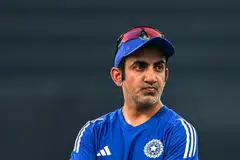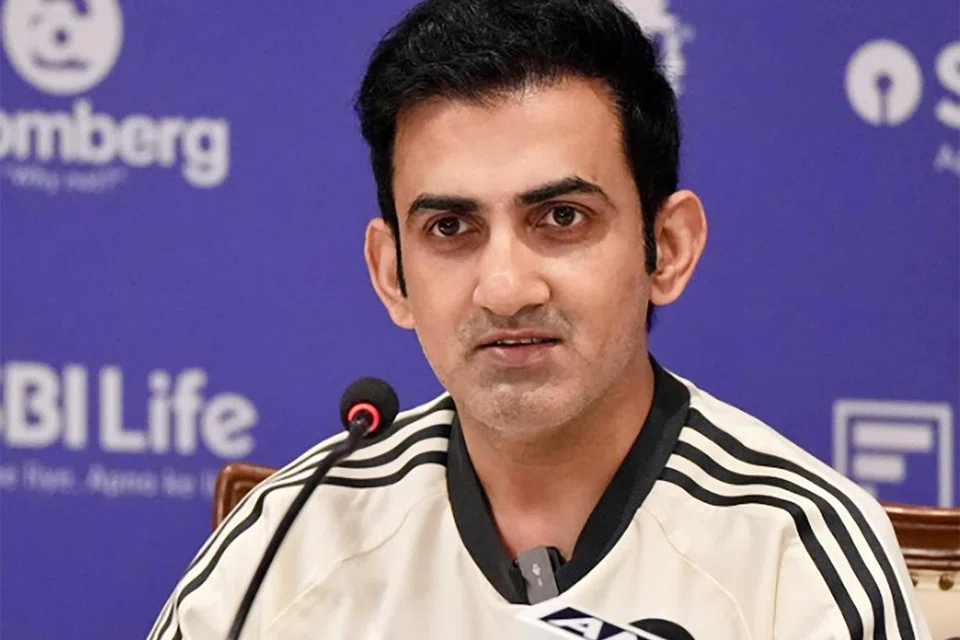

To say that Gautam Gambhir’s future as India’s head coach hangs by a tenuous thread would be an exaggeration. But it would also be dishonest to pretend that the ground beneath him is not uncomfortably warm.
Indian cricket rarely tolerates prolonged turbulence, especially at home. And under Gambhir, India has collected a series of “firsts” that no coach wants on his resume.
A 3-0 home Test whitewash against New Zealand in late 2024. A 0-2 home Test defeat by South Africa in November 2025, capped by India’s heaviest-ever Test loss by runs. And now, in January 2026, India’s first home One-Day International (ODI) series loss to New Zealand since 1988.
These are not isolated blips. They form a pattern, and patterns invite scrutiny.
To be fair, Gambhir’s tenure is not without success. India has won the Champions Trophy and the Asia Cup under him, and his grasp of T20 cricket is evident. In that format, India looks modern, aggressive and largely settled.
But Test cricket – still the format that defines Indian cricketing identity – has unravelled alarmingly.
Seven wins, 10 losses and two draws in Tests is not a record that would raise eyebrows elsewhere. In India, it sets off alarm bells, especially when five of those losses have come at home against SENA (South Africa, England, New Zealand and Australia) opponents. India’s once fortress-like home record has been breached repeatedly and convincingly.
Results alone rarely bring down a coach. It is decisions – and the perception behind them – that do the real damage.
Selection has been Gambhir’s biggest vulnerability. There is a widespread sense of restlessness in team composition: Frequent chopping and changing, an over-reliance on all-rounders, and uncertainty around specialist roles.
Former players have publicly questioned why players are picked, dropped and repositioned with little continuity.
Former India captain Ajinkya Rahane’s observation that players need clarity and security ahead of a World Cup cycle is not idle commentary; it reflects a dressing room reality.
Then there is the uncomfortable subject of senior players. Gambhir’s push for a youth-centric transition may have been well-intentioned, but its execution has raised eyebrows.
The near-simultaneous Test retirements of Virat Kohli, Rohit Sharma and Ravichandran Ashwin in 2025 created the impression – fair or not – of an environment that no longer accommodated heavyweight personalities. The removal of Rohit Sharma as ODI captain only intensified that perception.
Perception matters in Indian cricket. Even when a coach publicly accepts responsibility, it rings hollow if explanations routinely follow – inexperience, schedules, pitch conditions, injuries. Accountability must be more than rhetorical.
Gambhir’s confrontational public persona has not helped. India’s head coach does not need to win press conferences. Former India batter Sanjay Manjrekar’s suggestion that Gambhir do his work quietly behind the scenes is sound advice. Coaches succeed best when they empower players, not when they become the story themselves.
Is the ODI panic justified?
Here, perspective is essential. The ODI series loss to New Zealand is embarrassing, but not existential. Fifty-over cricket is currently the least urgent format. The next ODI World Cup is still 20 months away, and form in bilateral series has historically had little correlation with World Cup outcomes.
Resting Jasprit Bumrah and Hardik Pandya was prudent. Losing Rishabh Pant before a ball was bowled and Washington Sundar mid-series disrupted balance. These are legitimate mitigating factors. Gambhir cannot bat or bowl for his players, and he is not responsible for Kuldeep Yadav losing his bite or Ravindra Jadeja’s economy drifting.
Where questions remain valid is in bowling strategy. Leaving out a left-armer like Arshdeep Singh for two matches, under-bowling Nitish Kumar Reddy while talking about grooming him for the future, and drafting in replacements without clear logic – these are coaching calls, and they invite evaluation.
The six-week window that matters
For Gambhir, the next six weeks are decisive. T20 cricket is his comfort zone, and it is here that he can reassert control.
India beat New Zealand in the opening match of their five-match T20I series on Jan 21, and it presents Gambhir with an opportunity to play the long game and settle lingering questions about his final T20 World Cup XI.
India enters the February World Cup with enviable resources: Bumrah, Pandya, Suryakumar Yadav, Abhishek Sharma, Sanju Samson, Varun Chakravarthy. This is a squad built for modern T20 warfare.
A strong World Cup campaign will quieten most criticism. Indian cricket, for better or worse, forgives quickly when silverware arrives.
A below-par showing, however, will harden opinion and leave the board with difficult questions heading into a long red-ball stretch later in the year.
What should the board do? Sacking Gambhir now would be reactionary. Persisting without course correction would be negligent.
The solution may lie in structural change rather than scapegoating. Split coaching across formats deserves serious consideration. So does the appointment of a Director of Cricket to provide strategic continuity, insulate players from constant churn, and balance strong personalities within the system.
Gambhir is not “clueless”. He is intense, opinionated and deeply invested. But Indian cricket does not need intensity alone; it needs coherence.
Clarity of roles, consistency in selection, and better man-management will determine whether Gambhir’s tenure is remembered as a transitional necessity – or as a cautionary tale.
For now, his future does not hang by a thread. But the knots are tightening.