India’s traditional Ayurvedic treatments are drawing growing numbers of visitors to wellness retreats, where practitioners promise “holistic health”, despite limited scientific evidence supporting their effectiveness.
Ayurveda, meaning “science of life”, combines herbal treatments, poultices, dietary regimes, massage and yoga in an effort to restore what practitioners describe as the body’s natural “balance”.
“People are increasingly aware of the importance of looking after their health, not only when illness strikes, but also as a preventive measure,” said Deepa Padinjappurath, an Ayurveda practitioner.
Ms Deepa, who completed a medical degree before undertaking a five-year course in Ayurveda, works with wellness group Rajah Ayurveda, which opened its first of four “holistic healing” retreats 30 years ago.
“We combine modern diagnostic methods with an Ayurvedic approach,” said Ms Deepa.
“That involves examining the patient as a whole: listening to them, observing them, examining them physically and assessing their mental state.”
The Rajah Ayurveda group is based in India’s southwestern state of Kerala – now a leading centre of the booming wellness tourism industry, which has emerged as a source of revenue and a means of projecting India’s cultural influence abroad.
India’s government, led by Hindu nationalist Prime Minister Narendra Modi, presents the ancient Ayurveda system as a form of traditional healthcare, and it is overseen by a dedicated ministry also in charge of yoga and homeopathy.
With traditional remedies widely used across the globe, the World Health Organization (WHO) has set itself the goal of strengthening the scientific evidence for their effectiveness while ensuring patient safety and the existence of an appropriate regulatory framework.
Preeti Parekh, an Indian woman in her 50s based in Britain, said she felt “wonderfully well” after her 10-day retreat at the Nattika Beach Resort, which included a treatment in which warm oil is dripped onto the forehead.
“Before, I had felt close to burnout, and my body was telling me it was time to slow down,” she said.
- ‘Individualised treatment’ -
Silvana Invernizzi, a Swiss woman, was undergoing a two-week retreat at the resort in Kerala for the eighth time.
She believes massages and a special diet have helped her “avoid serious health problems”.
Practitioners say the treatments rebalance the three “doshas” – the energies that, according to Ayurveda, govern the body’s equilibrium.
“Ayurveda is a system of medicine based on individualised treatment,” said practitioner Geetha Krishnan, head of research at the WHO’s Global Traditional Medicine Centre, which opened in 2022 in India’s western city of Jamnagar.
“It takes into account not only the individual, but also their environment, the seasons, the time of day and their diet,” he added.
K.P. Hema, a medical doctor and Ayurveda practitioner who leads care at the Nattika resort, said visitors sought treatments ranging from detox to “rejuvenation”, as well as help with conditions such as arthritis and psoriasis.
Most clients are women, spanning all age groups, the centre’s general manager Ashok Sukumaran said.
Rajah Ayurveda’s retreats cost around US$1,000–US$3,000 (S$1,292–S$3,875) per week and follow an almost monastic daily routine.
The day starts at dawn with herbal remedies and an hour of meditation before breakfast. Patients then undergo a series of treatments including poultices, then a simple lunch, and an afternoon yoga session.
- Natural ‘pharmacy’ -
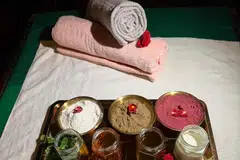
Treatments are largely plant-based, applied in oils used in massages and other therapies.
Ayurveda commonly uses between 800 and 900 herbs and plants, although the number can be almost twice as high depending on regional traditions and practices.
“Your kitchen is your pharmacy,” said Abil Kumar Vaidya, head of the Vaidyaratnam Ayurveda Museum in Thrissur in Kerala. “Food is your medicine.”
Sukumaran, the resort manager, said the Covid-19 pandemic had changed attitudes to health and wellness, fuelling interest in Ayurveda.
And beyond Ayurveda, traditional remedies are common around the world: 90 percent of WHO member states report that a portion of their population – from 40 to 90 per cent – makes use of them.
Where access to basic modern healthcare is limited, they are the first, and sometimes the only, treatment option.
However, urbanisation, population growth and climate change now threaten this extraordinary natural garden.
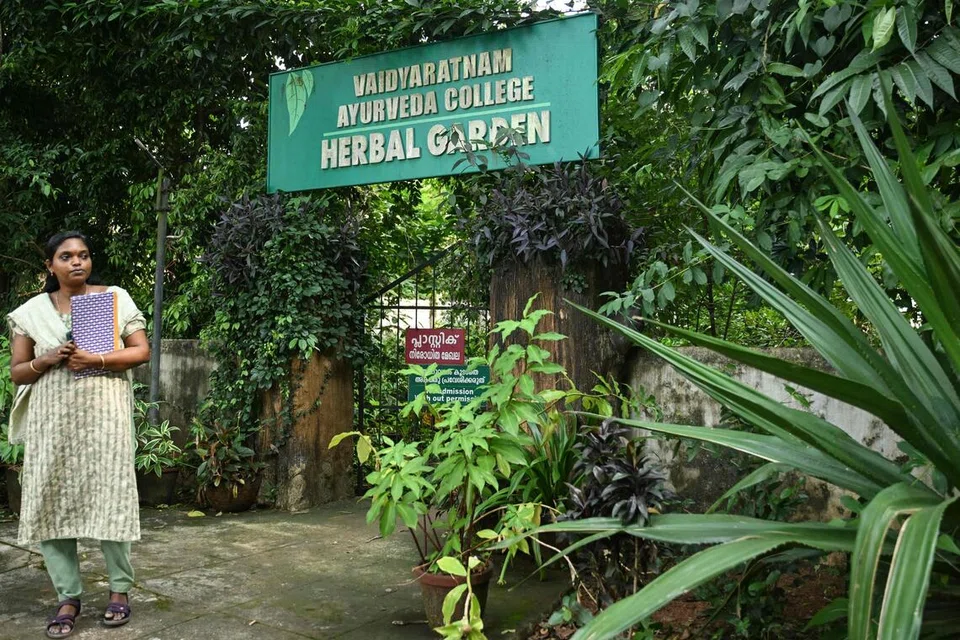
“Some plants have disappeared, while others are at risk of extinction,” said Sreelekshmi, a professor at the Vaidhyaratnam Ayurveda College, who uses one name.
“Ayurveda has never been more popular, both in India and abroad,” added Ms Deepa. “Yet, some of the plants it depends on can no longer be found in the wild.” AFP