


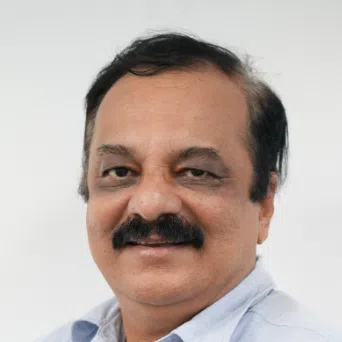
It was a humid morning in Singapore, but the warmth that radiated from Gurunath Sharma’s presence was not from the sun.
On Dec 6, at the Perse International School on Chestnut Drive, I had the rare privilege of sitting down with the father of one of India’s most celebrated cricketers, Rohit Sharma.
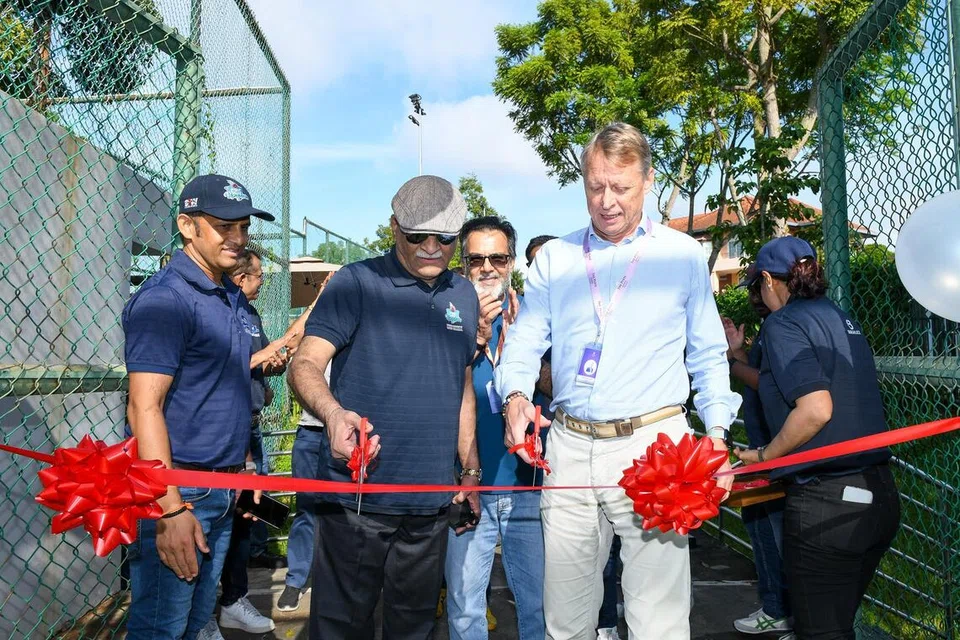
Gurunath, a man of few words but infinite pride, had travelled to Singapore with his younger son, Vishal, for the launch of the Crickingdom cricket academy at Perse, and what unfolded was a deeply personal and poignant conversation about parenting, passion, and the subtle art of shaping a cricketing icon.
Crickingdom, which has 72 academies in six countries, including Singapore, was founded by former Singapore captain Chetan Suryawanshi. Rohit is the brand ambassador, while Vishal runs its India operations.
Dressed simply and speaking with measured humility, Gurunath didn’t carry the air of someone whose son had conquered cricket’s biggest stages. Yet, his emotional depth, evident in every anecdote and reflection, revealed a father who had lived Rohit’s journey as much as the cricketer himself.
“We never thought he would go this far,” Gurunath admitted when I asked if he ever envisioned his son becoming an international star. “I knew he would be a good cricketer, but not that he would reach this level.”
It has been widely documented how Gurunath’s modest income from working in a transport company in Mumbai was never an excuse to deny Rohit the chance to dream. With support from extended family and a scholarship arranged by coach Dinesh Lad, Rohit was able to switch schools and access better training – an inflection point in his life.
“The local train from Borivali to Churchgate, carrying his kit bag – those were tough days,” Gurunath said, recalling how Rohit once dropped his kit between two stations and was later scolded by coach Chandrakant Pandit and made to run five rounds of the ground. “It was all part of growing up.”
But Gurunath and his wife, Purnima, never let those logistical hardships dull their son’s spark. Instead, they gave him the most crucial freedom of all: the freedom to play.
“I told him, just focus on playing good cricket. Your future will take care of itself,” Gurunath said. He never pressured Rohit with comparisons or outcomes. Instead, he quietly nurtured discipline, simplicity, and a deep love for the game – especially Test cricket.
It became clear during our chat that Gurunath is a traditionalist. “Test cricket is the real cricket,” he asserted. “These fast formats – T20s, T10s – they don’t build a player. Red-ball cricket teaches patience, character, and confidence.”
His reverence for Test cricket often influenced dinner-table conversations at home. Rohit himself has revealed that after scoring 264 in a one-day international (ODI), his father’s only reaction was a mild “well played”. But if Rohit made a gritty 40 in a Test, there would be detailed conversations on footwork, application, and temperament.
So, when Rohit recently announced his retirement from Test cricket at age 38, Gurunath was “a little disappointed”. “But age plays a part,” Gurunath conceded, “and I’m still proud that he played the format the way he did.” When asked what qualities he felt Rohit inherited from him, Gurunath deflected modestly. “He’s always been good – humble, respectful, grounded,” Gurunath said. “I think these things came naturally to him.” But it was easy to see that these virtues were also reflections of the father sitting in front of me.
He praised Rohit not just as a cricketer but as a human being. “He’s a very good family person. He comes home to seek blessings before every tour. And when he’s back, he wants his mother’s poha (a dish made from flattened, dried rice flakes),” Gurunath said with a smile. “He loves her cooking more than anything.”
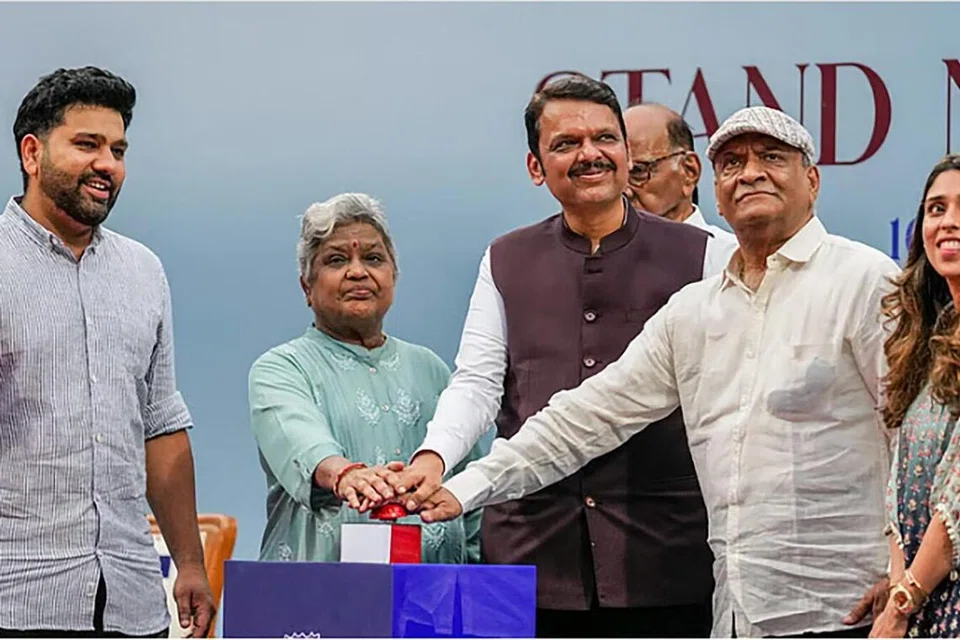
This balance between discipline and emotional grounding has shaped Rohit’s leadership as well. Gurunath beamed with pride when recalling Rohit’s selfless approach during the 2023 ODI World Cup. “He never played for milestones – just to give India a good start.” From the Ranji Trophy triple century against Gujarat in 2009 to the stand named after Rohit at Wankhede Stadium in Mumbai, Gurunath has been a quiet witness to history. But two moments stand out for him –Rohit’s two consecutive centuries in his first two Tests, and the day he unveiled the “Rohit Sharma Stand” at Wankhede with his parents by his side.
“That moment – that was emotional. From standing in lines outside the stadium as a boy to now having a stand in his name... it felt like a full circle,” Gurunath said.
He also proudly rattled off Rohit’s lesser-remembered bowling feats – the Indian Premier League hat-trick for Deccan Chargers and the scalps of Sachin Tendulkar and Harbhajan Singh – which is a testament to how attentively he has followed every chapter of his son’s career. As wannabe children around us lined up for pictures and autographs, I asked Gurunath what advice he would give to other parents hoping to support a child’s sporting dreams.
“Don’t chase results,” he said. “Let them enjoy the game. Create an environment where they can explore, fail, and grow. And above all, stay involved – not to control, but to support.”
In the cricketing world, we often celebrate centuries, titles, and trophies. But, as I walked away from that meeting, it struck me that the foundation of Rohit’s greatness lies in the unseen innings played by his father – innings of quiet support, endless belief, and old-school values that shaped a modern legend.
RELATED STORIES
27 Nov 2025 19:58
