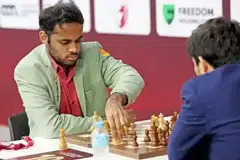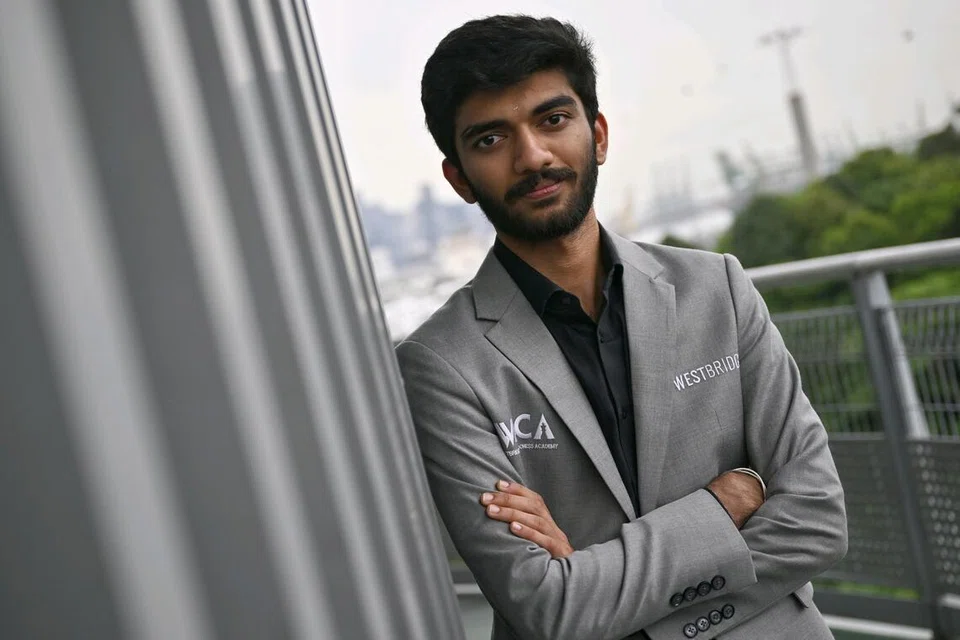

When D Gukesh conquered the chess world in 2024, becoming the youngest undisputed world champion in history, it felt like the beginning of a long era. Less than two years later, however, the narrative has shifted.
The Chennai teenager’s dip in form through late 2025 and early 2026 is real – and uncomfortable. A 10th-place finish at the Tata Steel tournament, a joint-last showing at the Prague Masters, and a noticeable drop in rating have raised questions. But to call it a crisis would be premature. This looks, instead, like the classic “champion’s hangover” – a phase even greats have endured, including China’s Ding Liren.
Too much, too soon
The first and most obvious reason is burnout.
After a draining Candidates tournament and World Championship victory in 2024, Gukesh barely paused. Invitations poured in, appearances multiplied, and like many young champions, he said yes too often. As veteran Indian Grandmaster Pravin Thipsay has pointed out, modern elite players are trapped in an unforgiving calendar – classical, rapid, blitz, online formats – with little time to reset.
The result? Mental fatigue.
At Prague, Gukesh looked, by his own admission, emotionally drained. His rare public apology to fans was telling – not of weakness, but of a player running on empty.
The weight of the crown
Winning a world title changes everything.
Suddenly, every opponent prepares for you as if it were a title match. Margins shrink. Risks multiply. Gukesh is no longer the hunter – he is the hunted.
Players now approach him with caution, forcing him to create winning chances in increasingly complex positions. That has pushed him into riskier opening experiments and sharper lines, often leading to time trouble – a recurring issue in his recent games.
As Uzbek chess grandmaster Nodirbek Abdusattorov observed, the problem may not be technical at all, but psychological: the expectation that he must win every tournament.
Losing – and rediscovering – identity
At his peak, Gukesh’s greatest strength was his defensive resilience and clarity under pressure. In recent months, both have dipped.
Part of this is experimentation. Champions often reinvent themselves after reaching the summit, trying to stay ahead of the curve. But not every experiment works. Over-reliance on engine-driven preparation – without full intuitive understanding – can blur a player’s natural instincts.
Equally, the closed nature of elite tournaments means Gukesh is repeatedly facing the same opponents. Familiarity breeds predictability – and makes innovation harder.
The distractions of stardom
There is also a uniquely Indian dimension.
Unlike many global peers, Indian chess stars today enjoy celebrity status – endorsements, media attention, public expectations. These are rewards of success, but they come at a cost: time, energy, and focus.
For a teenager still navigating his identity, that can be overwhelming.
The reset has begun
The encouraging sign is that Gukesh has recognised the problem early.
He has scaled back his schedule, opting out of long classical events to prioritise training and recovery. He is working with elite performance coach Paddy Upton – a move that signals a serious commitment to mental resilience.
This is not retreat. It is recalibration.
What must change
If Gukesh is to reclaim dominance – and successfully defend his title – three things are crucial.
First, rest and rhythm. He needs fewer tournaments, but better-targeted ones, arriving fresh rather than fatigued.
Second, a return to his core strengths. His defensive accuracy and composure under pressure made him champion; rediscovering that identity is essential.
Third, smarter preparation. Not just deeper engine lines, but positions he understands – and enjoys playing.
A temporary dip, not a decline
History suggests that this phase is not only normal – it may even be necessary.
Every great champion has faced the moment when expectations collide with reality. The difference lies in how they respond.
Gukesh is still just 19. His talent remains unquestioned. His recent struggles are not signs of decline, but of transition – from prodigy to champion, and now, to a player learning how to stay at the top.
The road back has already begun.