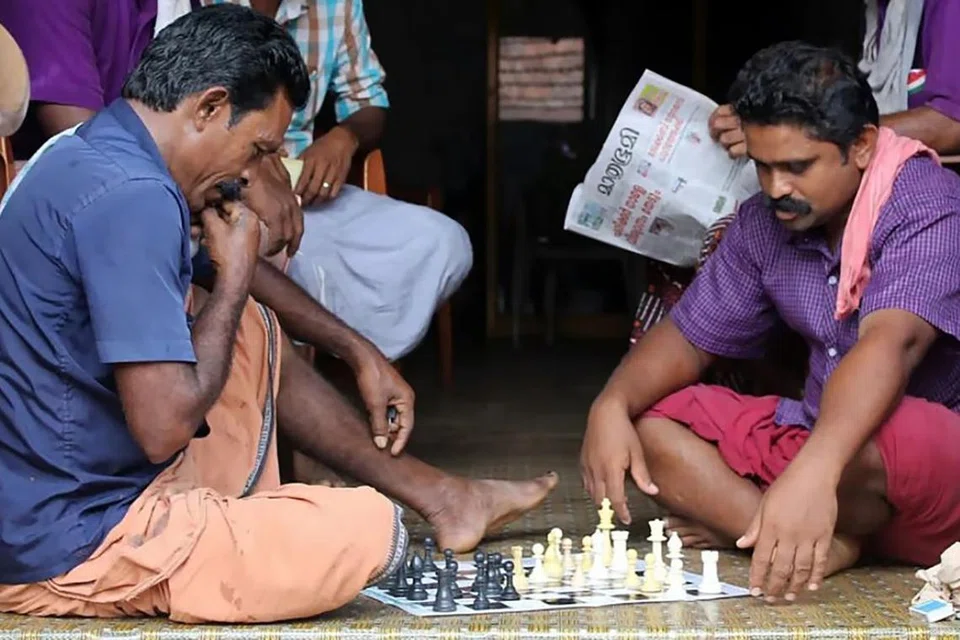

In the lush hills of Kerala’s Thrissur district, a quiet revolution unfolded – not with slogans or protests, but with bishops and pawns.
Marottichal, once infamous for rampant alcoholism and gambling, has transformed into India’s “chess village,” a remarkable story of redemption driven by the power of 64 squares.
In the 1960s, Marottichal was drowning in addiction, reported The Times of India. With few diversions, illicit liquor and gambling ruled daily life. Fights and domestic disputes were routine, and the community’s future looked bleak.
That was until a local tea shop owner, Charaliyil Unnikrishnan, decided to make a bold move – introducing chess to his customers.
What began as an eccentric experiment soon became a social movement. Chess replaced the bottle. Curiosity turned to obsession. Villagers who once passed time in smoky dens began crowding under palm trees and awnings to outthink each other over the board.
Now, Marottichal has rebranded itself entirely. Of its 6,000 residents, over 4,500 – farmers, shopkeepers, homemakers, children – are proficient in chess, reported The Indian Express.
Tea shops, bus stops, front porches, and even schoolyards have become makeshift chess arenas.
“Before chess, we were lost,” said resident Francis Kachapilly, a recovered alcoholic. “It gave us focus, dignity.”
Among the village’s rising stars is 15-year-old Gowrishankar Jayaraj, who holds a FIDE rating of 2012 and ranks among the top 600 chess players in India, reported Al Jazeera.
Jayaraj aspires to follow in the footsteps of Gukesh Dommaraju, who made history in 2024 as the youngest-ever world chess champion.
The culture of chess runs so deep that Marottichal once hosted 1,001 simultaneous games, earning it the Universal Asian Record for the most amateur matches played concurrently in Asia.
At the heart of it all is Mr Unnikrishnan, now 67, affectionately hailed as the village’s saviour. He has personally taught over 1,000 villagers. “Chess gave us our pride back,” he says.
In 2023, filmmaker Kabeer Khurana captured the village’s journey in a poignant short film, The Pawn of Marottichal, showcasing how the black-and-white squares came to symbolise a community’s fight against its inner demons.
The Kerala Tourism Department today promotes Marottichal as a unique example of social reform through a simple, affordable game.