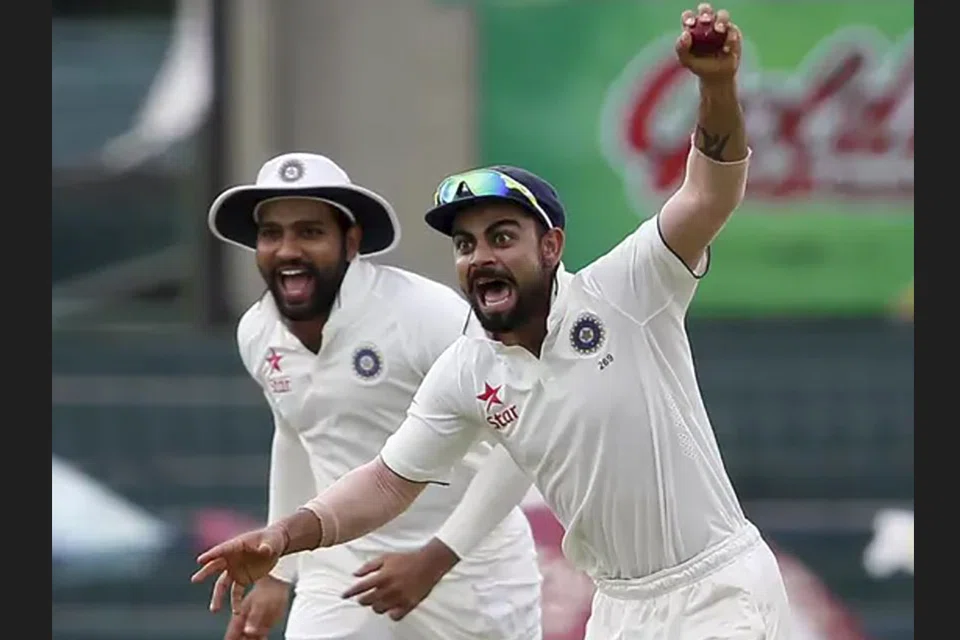


In a week that has left Indian cricket fans stunned, two of the sport’s biggest icons – Virat Kohli and Rohit Sharma – walked away from Test cricket, signalling the end of an era.
Their back-to-back retirements have not only left a void in India’s batting order but also created a leadership vacuum at the top.
As the country prepares for a gruelling five-Test tour of England beginning June 20, questions abound: Is India ready for this transition? Who steps up now? And, most importantly, can the team cope without its two modern-day greats?
Kohli, with his unmatched passion and aggression, and Rohit, with his calm precision and evolving leadership, have been pillars of Indian Test cricket for over a decade.
Kohli’s departure, in particular, felt like a jolt. In 123 Tests, he amassed 9,230 runs, including 30 centuries and seven double hundreds – numbers that place him among the elite in world cricket.
But, more than stats, it was his intensity and the aura he brought to the whites that made him a fan favourite and a feared opponent.
Rohit, who made his Test debut in 2013, found his stride later when he was promoted as an opener in 2019. Since then, he scored 4,301 runs in 67 matches and led India to a World Test Championship final.
Though not as flamboyant as Kohli, Rohit’s contribution in anchoring the top order and leading India through a transition, post-Kohli’s captaincy, was immense.
What’s most surprising is the abruptness of their exits. While reports suggested the Indian board (BCCI) had already hinted to Rohit that his time in red-ball cricket was up, Kohli’s decision seemed more personal.
According to sources, Kohli had planned to retire after the England series but decided to walk away earlier, possibly influenced by internal dynamics and the upcoming leadership shuffle.
All-rounder Ravichandran Ashwin, who himself retired recently, admitted that both Kohli and Rohit had more to offer.
“There’s definitely a leadership vacuum now,” he said. “Virat’s energy and Rohit’s composure will be missed. Kohli still had one or two years left in him.”
With these departures, India’s Test team now faces a complete reset. The torch is expected to pass to 25-year-old Shubman Gill, a stylish right-hander seen as the heir apparent.
Gill has shown glimpses of brilliance – 1,893 runs in 32 Tests – but his overseas average of 29.50 raises concerns.
He is likely to go in at No. 3, with the opening duties going to the experienced KL Rahul and the promising Yashasvi Jaiswal. The middle-order will be entrusted to Shreyas Iyer, Rishabh Pant, Sarfaraz Khan and Karun Nair.
The question of captaincy looms large. Gill is a strong contender, but Jasprit Bumrah, who has led India in two Tests, remains in the conversation.
However, Bumrah’s injury history and the demanding English tour schedule may rule him out as a full-time option.
Pant, though charismatic, has seen his leadership credentials dented by his inconsistent Indian Premier League performances.
India hasn’t won a Test series in England since 2007, and without Kohli’s fiery resilience and Rohit’s solidity at the top, the road ahead is rocky.
The task of overseeing this transition now falls on head coach Gautam Gambhir. Known for his fierce attitude and clarity of thought, Gambhir must now rebuild the team culture and instill belief in a new generation.
However, his red-ball record has been underwhelming. India’s loss to New Zealand at home and a forgettable Down Under campaign have raised concerns about tactical depth.
Still, if there’s one man who understands the pressures of transitions, it’s Gambhir – a player who stood tall during India’s 2011 World Cup win and the 2007 T20 World Cup.
Under him, can India transition smoothly after decades of relying on the old guard?
The fans are anxious, and the expectations are massive.