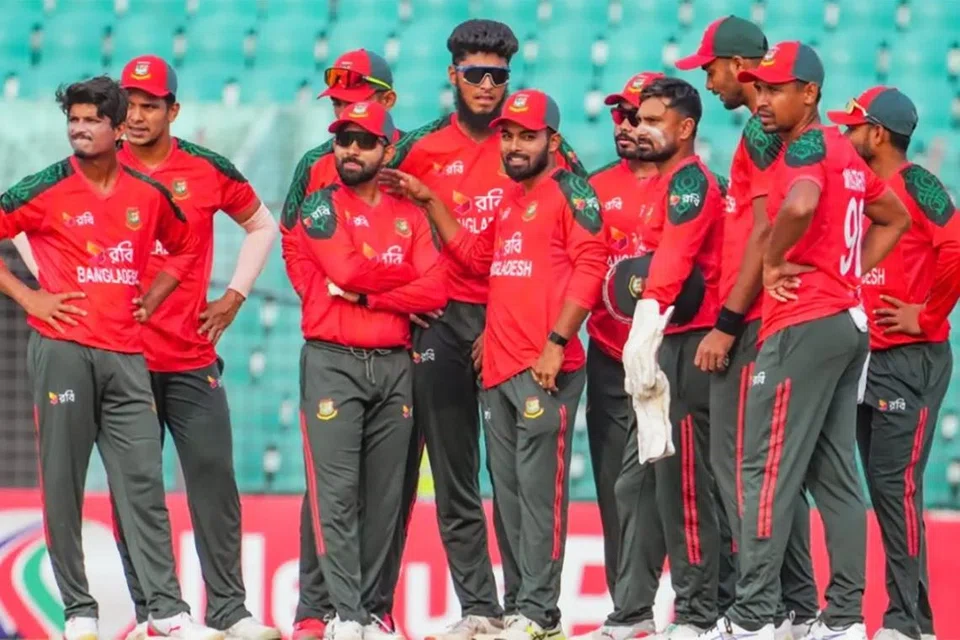
The International Cricket Council (ICC) has urged the Bangladesh Cricket Board (BCB) to reconsider its firm stance on not playing T20 World Cup 2026 matches in India, amid escalating political tensions between the two neighbouring countries.
In a video conference held on Jan 13, BCB officials – including President Aminul Islam, Vice-Presidents Shakawath Hossain and Faruque Ahmed, Cricket Operations Chairman Nazmul Abedin, and CEO Nizam Uddin Chowdhury – reiterated their request to relocate Bangladesh’s World Cup fixtures from India to co-host Sri Lanka, citing security concerns.
The standoff stems from the Indian cricket board’s (BCCI) decision to instruct the Indian Premier League franchise Kolkata Knight Riders to release Bangladesh pacer Mustafizur Rahman from their 2026 squad, reported ESPNcricinfo.
Although no official reason was given, the move is widely viewed as fallout from deteriorating diplomatic ties, following the ouster of Bangladesh’s former Prime Minister Sheikh Hasina and her continued stay in India despite Dhaka’s extradition requests.
In protest, the Bangladesh government banned IPL telecasts and the BCB formally informed the ICC it would not send its team to India for the World Cup, which begins Feb 7.
The ICC, in response, emphasised that the tournament itinerary had already been finalised and released publicly. It urged the BCB to reconsider, noting that an independent security assessment had found no specific or heightened threat to the Bangladeshi team in India – a standard risk rating used globally.
“The BCB reaffirmed its position regarding the decision not to travel to India, citing security concerns,” the board said in a statement. “The ICC highlighted that the itinerary has already been announced and requested the BCB to reconsider its stance. The Board’s position remains unchanged.”
Despite the impasse, both sides agreed to keep discussions open in the coming days to explore alternative solutions, reported NDTV.
As per the current World Cup schedule, Bangladesh are set to play three group matches in Kolkata – against West Indies (Feb 7), Italy (Feb 9) and England (Feb 14) – before facing Nepal in Mumbai on Feb 17. With just weeks to go, the uncertainty around venue and participation looms large.
Cricbuzz has reported that the ICC and BCCI are exploring potential venue alternatives within India, including Chennai and Thiruvananthapuram.
Both Tamil Nadu Cricket Association (TNCA) and Kerala Cricket Association (KCA) have reportedly expressed willingness to host the matches, although the BCB maintains that only Sri Lanka would be acceptable as a replacement venue.
The BCB’s Shakhawat doubled down after the meeting: “We are firm in the position we have taken. We are not going to India. We have stated our position, and they are looking for alternatives.”
“There isn’t much time. The dialogue is still open, but our stance won’t shift even by an inch,” he added.
Sports adviser Asif Nazrul has also been vocal in stating that Bangladesh will not compromise when it comes to the safety of its players. The BCB insists that the decision to relocate Mustafizur from the IPL and wider diplomatic tensions leave the team vulnerable.
Beyond the cricket field, the crisis threatens to inflict commercial damage, reported NDTV. Leading Indian sports equipment manufacturers such as SG and Sareen Sports – who sponsor Bangladeshi players and source production from the country – have reportedly paused renewals or cancelled manufacturing contracts.
Players, including national captain Litton Das, may see sponsorship deals affected.
With just over three weeks left before the tournament kicks off, the situation presents a serious logistical and reputational challenge for the ICC.
The governing body must now weigh Bangladesh’s refusal, player safety concerns, political sensitivities, and tournament integrity – all within a rapidly closing window.
While dialogue continues, the outcome remains uncertain. What is clear is that unless a mutually acceptable compromise is reached soon, one of cricket’s marquee events risks being overshadowed by diplomatic discord.