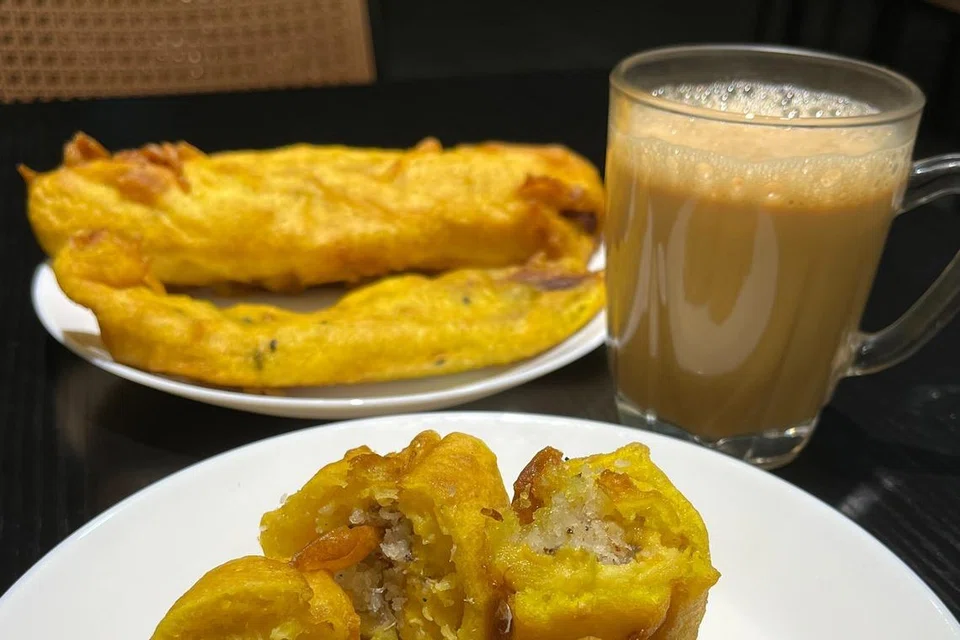

Tucked away in the rows of shophouses next to City Square Mall is Monsoon Masala, an Indian restaurant that specialises in Kerala cuisine with an Arabic twist. Upon entry, diners are greeted by a large, tiered glass display with plates of golden-hued, frittered treats.
As your eyes survey each level, you will notice that most of these deep-fried delicacies either hail from or are inspired by the Malabar Coast, a historic shoreline that stretches across Northern Kerala. To the unfamiliar eye, these dishes may appear wonderfully exotic.
Except for one – the pazham pori or fried banana fritters, which can be best described as the goreng pisang’s Malabar cousin. This version uses a specific variety of banana known in Malayalam as the nenthra pazham, which is native to Kerala.
In English, it can be referred to as the Nendran banana or plantain, characterised by its elongated shape, larger size, distinct angular ridges, firmer texture due to a higher starch content, and a mild sweetness.
The banana’s texture and flavour can also vary a lot according to the level of ripeness, which makes it versatile and ideal for a multitude of sweet and savoury applications.
For pazham pori, a more ripened banana is preferred to create a caramelised depth and a juicier bite.
“We only use the Kerala bananas. Otherwise, the texture and everything else are different,” said Mr Jasarath, 29, the sales manager at Monsoon Masala. He added that the restaurant goes through around 25 kilos of bananas every few days.
The bananas are purchased in bulk, and are delivered unripe to the restaurant, where they are stored until it is ready to be cooked. The bananas are then sliced into halves, and dipped into a plain-flour-based batter before being deep-fried to golden-brown perfection.
In addition to the pazham pori, the restaurant also offers two types of stuffed banana fritters called pazham nirachath. There is a vegetarian option made with a nutty, desiccated coconut mixture, while the non-vegetarian version is filled with curried beef.
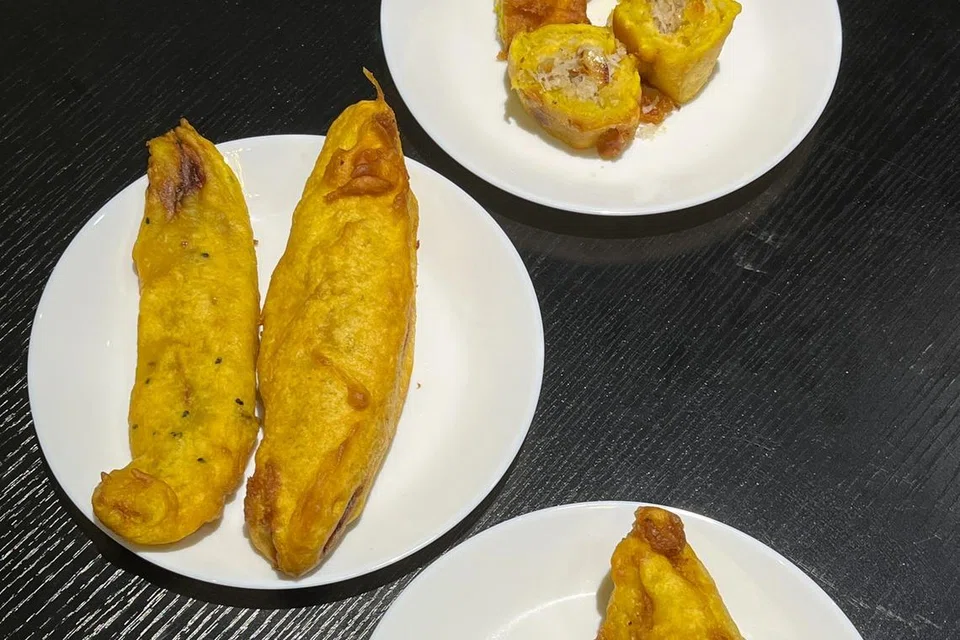
The banana is slit lengthwise, stuffed with the mixture of choice, and then fully submerged in the same batter before being deep-fried. The main difference is that the entire fruit is used to make one stuffed fritter, which makes it look gargantuan in comparison to a slim piece of pazham pori.
“On the weekends, when it is more crowded, we may use up to two days’ worth of supply of bananas in one day to meet the increased demand,” noted Mr Jasarath, who relocated to Singapore a year and a half ago when Monsoon Masala opened its doors.
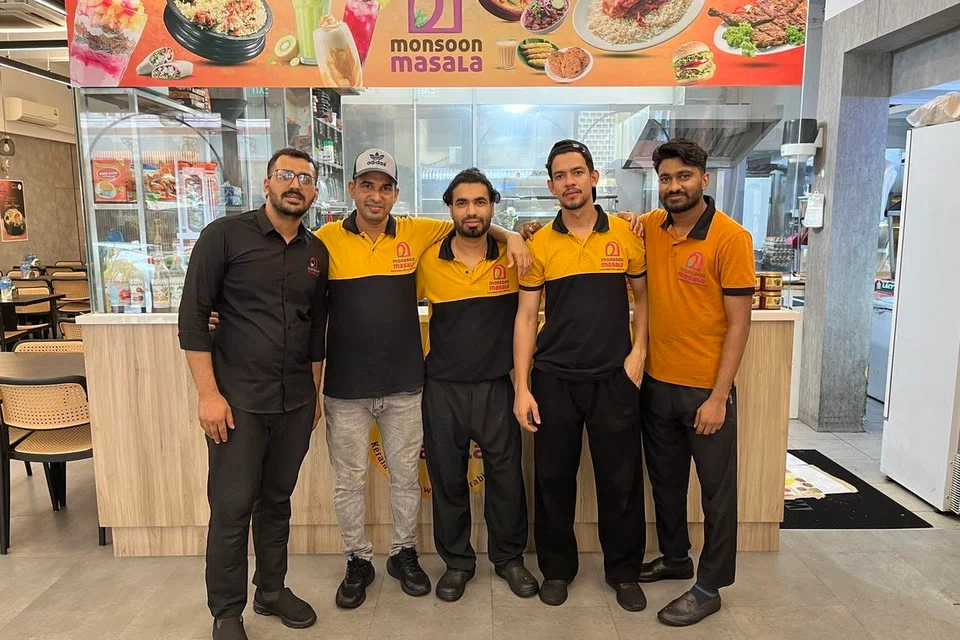
As a Malayalee, he explained that the stuffed banana fritters are usually served to guests along with a cup of hot tea or coffee at home as a form of hospitality.
Unlike the store-bought versions, the home-style preparation takes a lighter approach, where just the slit is coated with a thick layer of batter, and the stuffed banana is pan-fried.