
Life is riddled with many uncertainties, but one thing is absolute: You will never leave a Gujju event with an empty stomach.
Around 700 guests were treated to a lavish vegetarian spread at the Singapore Gujarati Society’s (SGS) 70th anniversary celebrations on Feb 28. An array of dishes from savoury mains to delectable desserts were catered from Brinda’s – a local restaurant that specialises in a variety of regional Indian cuisines.
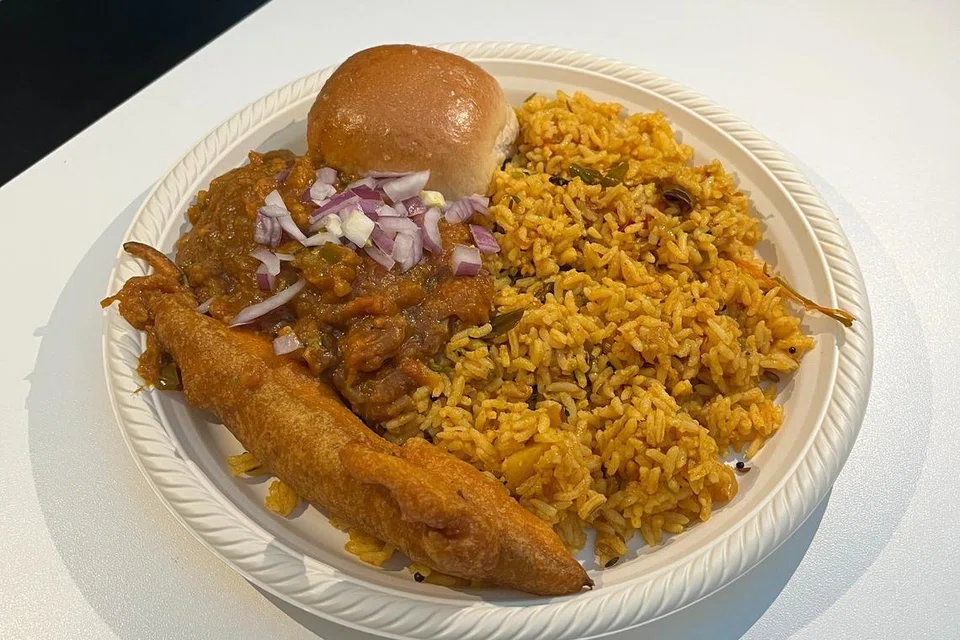
Among the dishes were street food staples such as pav bhaji (a mash-style vegetable curry served with a soft, heavily-buttered bread roll), samosa (a deep-fried pastry filled with spiced potatoes) and mirchi bhajiya (gram flour-battered green chili fritters).
Perhaps less familiar to the Singaporean palate is the Bombay Green Sandwich, which is made by layering white bread with a zesty coriander mint chutney, and crisp sliced vegetables, topped with a chaat-style masala powder for an added kick of spice.
Desserts included a perennial crowd pleaser, the ras malai (soft and spongy cheese discs soaked in a saffron-infused cream sauce) and a dry fruit halwa, which tasted nutty and had a smooth, velvety texture thanks to a liberal use of ghee.
Many of the featured dishes were inspired by the Mumbai food scene as a nostalgic tribute to the Gujaratis who had migrated to Singapore from the Mahashatrian capital, noted Ms Khyati Chandrakant Patel, 44, a longtime SGS member.
The highlight of the spread, however, was a Gujarati-style fried rice called vagharelo bhaat. The name is quite straightforward: “bhaat” refers to rice, and “vagharelo” means tempered with spices.
There are other regional variations, but the Gujarati version typically repurposes leftover rice, which is stir-fried with mustard seeds, curry leaves, turmeric, chili powder, and cumin.
For a tangier flavour profile, finish the dish with a generous squeeze of lemon or lime juice.
Some recipes call for basmati rice, while others include extra ingredients, such as toasted groundnuts, cubed potatoes, diced onions or capsicums, and fresh coriander leaves.
Brinda’s take on the dish reflected a local sensibility by using Thai jasmine rice (hom mali), which is more commonly consumed in Singapore. The rice grains were well-separated, and had an al dente bite to them – the hallmark of an expertly prepared fried rice.
The turmeric gave the rice a vibrant marigold hue, and the tempered oil with the warm spices infused the entire dish with an earthy aroma. With its perfect balance of simplicity and homely flavours, it is no wonder that the vagharelo bhaat is the ultimate Gujju comfort food.
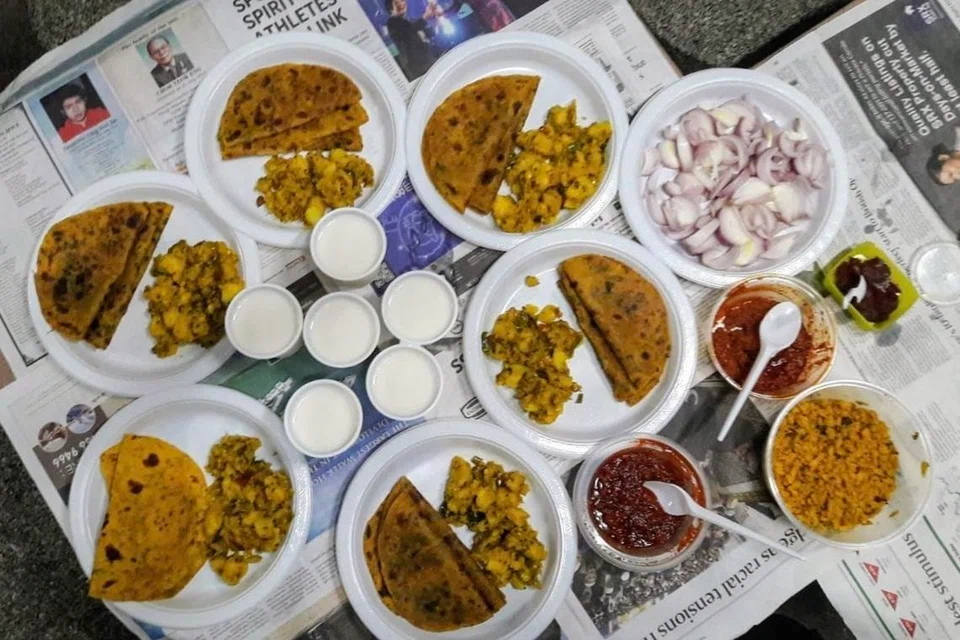
For Ms Khyati, a former SIA stewardess who relocated to Singapore in 2005, the Gujarati dish that reminds her of home is the thepla – a spiced flatbread made with whole wheat flour.
Her family usually serves thepla with garlic chutney, sliced raw onions, potato sabji, and buttermilk. The flatbread is notable for its long shelf life, and can last for several days at room temperature.
“When we travel on the trains or long distances, we would carry the thepla from home, and have it together as a family,” Ms Khyati said.