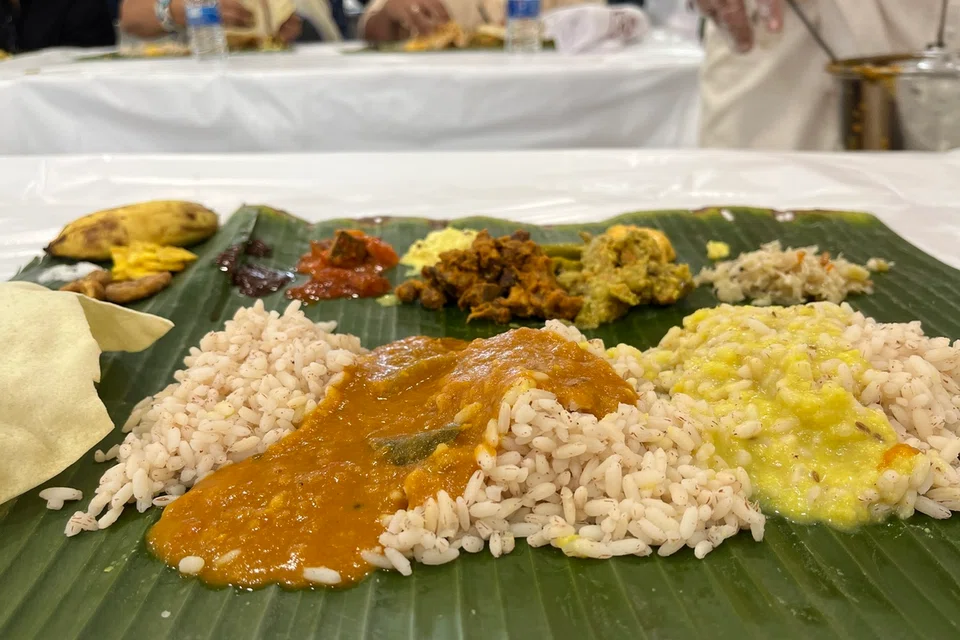

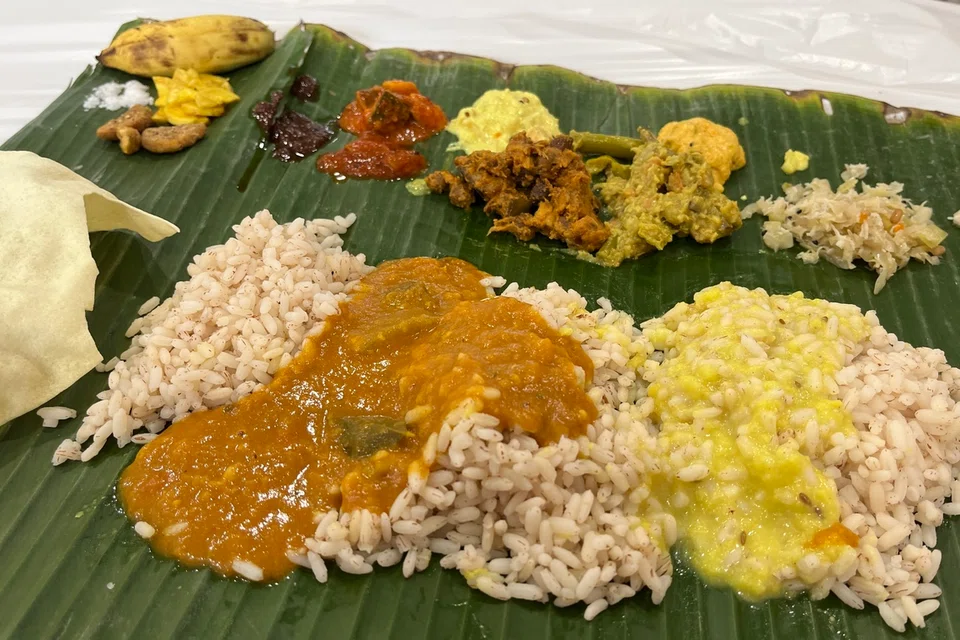
In Kerala, sadhya is more than just a meal. It is a gastronomical ritual that involves a lavish spread of assorted vegetable dishes and curries laid out across a fresh blade of banana leaf.
Some sadhyas can feature up to 30 dishes or more. From zesty, spiced pickles made with ginger, lemon and mangoes to hearty, lentil-rich gravies that pair perfectly with matta rice, also known as Keralan red rice, which has a firm, chewy texture and a nutty flavour.
The grain holds its shape well and does not get mushy despite the onslaught of the many coconut milk and yoghurt-based curries. Add to that a medley of pachadis (fruit chutneys) and thorans (stir-fried vegetables), which ensures that no two mouthfuls taste entirely alike.
An essential dish is the avial – a thick stew made from a mix of long-cut seasonal vegetables like drumsticks, ash gourd, raw banana, carrots, pumpkin, and broad beans. The ingredients are tossed with green chilies, cumin and curd that lends an elevated tartness.
As expected, this feast is reserved for special occasions such as weddings, Vishu (Malayali New Year), and Onam – a grand 10-day harvest festival to celebrate a bountiful crop and the return of King Mahabali.
According to legend, the benevolent ruler was sent to the netherworld, but his spirit returns to Kerala each year to bestow blessings of peace, joy, and agricultural abundance upon every household.
This year’s Onam began on Aug 16, and will conclude with Thiruvonam – the tenth and most significant day marked by family reunions and floral pookalams (floor murals) – on Aug 26.
The Singapore Kairalee Kala Nilayam (SKKN) organised its own Kampong Onam event on Aug 15. It featured a festive lineup of cultural performances and beauty contests, themed decorations, and an Onam sadhya lunch set catered by Alankar Restaurant.
Around 920 attendees tucked into the sumptuous feast, which came with a side of banana chips, deep-fried banana chunks coated in jaggery (sharkara upperi), and a ripe banana. It comes as no surprise that Kerala loves its plantains.
The components of the sadhya can also differ between regions. “The sambar you get in Kochi or Ernakulam is not the same as the sambar you get in Thiruvananthapuram,” said Ms Meenakshi P.R., 28, a university student.
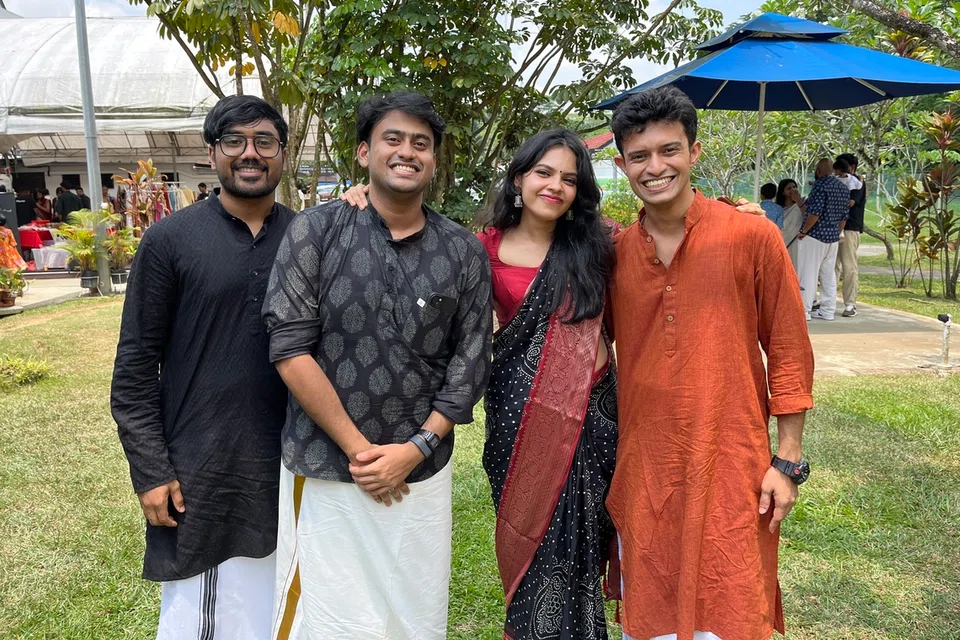
She attended Kampong Onam alongside her three friends, who had all moved from Kerala to Singapore six months ago to pursue their further studies.
One of them, Mr Saheer Anas, 25, explained that “in the Northern part of Kerala, they also add meat to their sadhya, but in the South it is usually vegetarian.”
Another noted that the spices used in Singapore are milder compared to back home. “We use a lot more pepper,” said Mr Sourabh S, 26, whose favourite sadhya dish was the kootu or black chickpea curry.
His friend, Mr Pranav R, 25, liked the palada payasam, which was the less sweet of the two payasams (creamy milk and lentil puddings) served to conclude the decadent meal.